The essentials
- A RIB ride is different from a cruise: 2.5 hours from Funchal, live guide in English, French and Portuguese, from US$62.[1]
- Bottlenose dolphins and short-finned pilot whales are seen all year round off Madeira, with Atlantic spotted dolphins common from March to November.[2][3]
- Vessels must keep 50 meters away from whales and dolphins, stay 25 meters clear of turtles, and slow to 12 knots or less within 300 meters.[4]
- Just five kilometres offshore, water depth goes beyond 3,000 metres, letting deep-water whales approach the coast.[5]
- Book now and settle payment later; cancel free of charge up to 24 hours before, and rebooking costs nothing.[1]
- Top choice RIB Whale Watching from US$62 Duration2.5 hours[1]Rating4.70[1]Reviews2,070[1]Who it's forFast-paced dolphin watching Check availability
- Dolphin Spotting by VMT from US$46 Duration3 hours[6]Rating4.20[6]Reviews1,590[6]Who it's forClassic boat sightseeing See this tour
- Nuns Valley Half-Day from US$32 Duration3.5 hours[7]Rating4.53[7]Reviews2,333[7]Who it's forLand-based mountain views See this tour
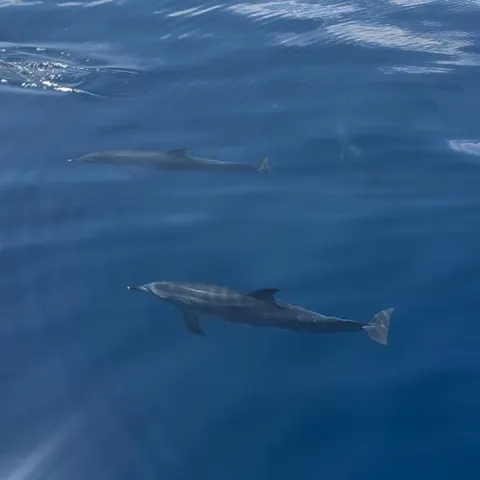

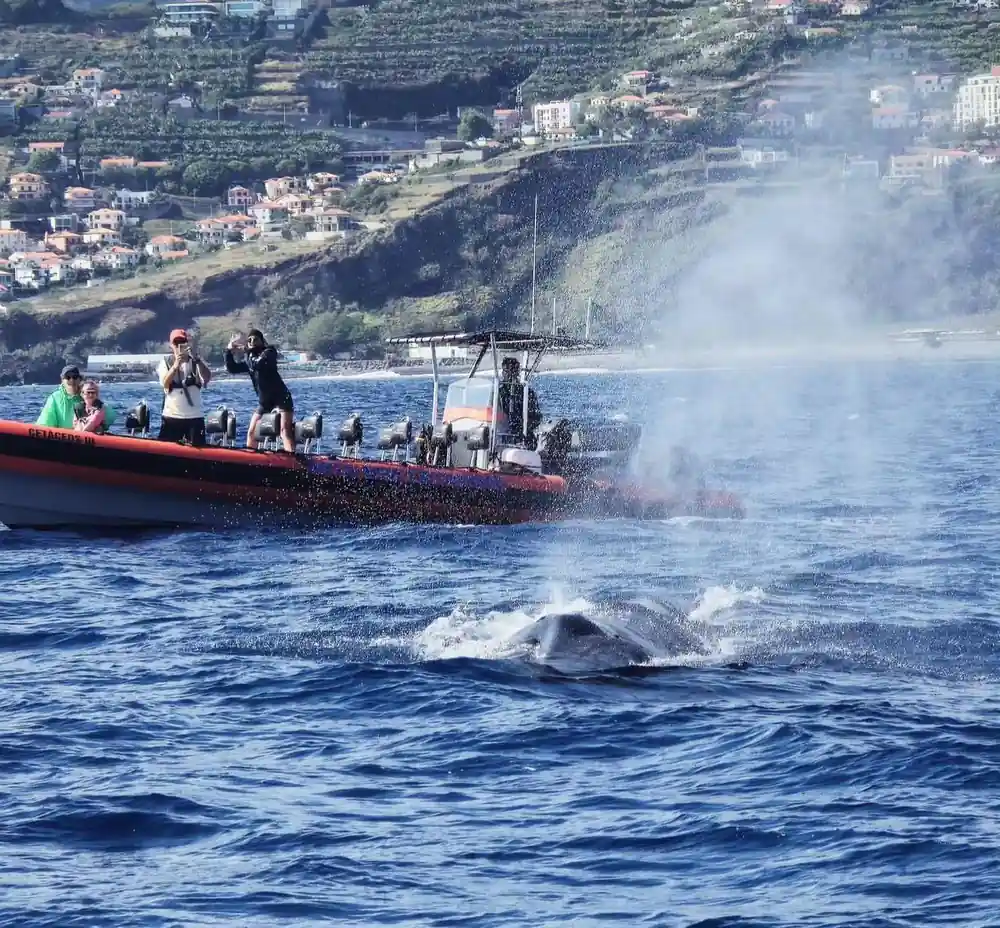
So far, researchers have confirmed 27 species of cetacean in the waters of Madeira, which is equivalent to almost a third of the planet’s known species!
The RIB is the thrilling way to meet Madeira's dolphins
At a glance
What a semi-rigid boat actually is
A RIB is a rigid-hulled inflatable boat. It has a solid hull for strength and a large inflatable collar around the outside for buoyancy and cushioning. That combination makes the boat light enough to accelerate quickly and sturdy enough to handle Atlantic conditions. On the From Funchal Whale and Dolphin Watching tour you spend 2.5 hours at sea with a live guide in English, French and Portuguese.[1]
The design is no novelty in Madeira. The local operator Rota dos Cetáceos runs its whale watching trips in three fast semi-rigid type boats.[9] You sit on the collar as often as in the hull, which means you are part of the boat. Every wave, every turn, every pause is felt. That is exactly why people choose a RIB.
If you have only ever watched whales from a big boat, the first minutes on a RIB are a surprise. The engine is loud, the deck is small and the water is very close. It feels more like a sports car than a ferry, and that is precisely what makes it memorable.
Why speed matters here
Whales and dolphins travel, and time at sea is limited. A fast boat gives the crew the option to cover more water while the animals are still visible. A land-based spotter guides the skippers with exact details such as mileage and landmarks to where the animals are.[10] The speed is the tool; the spotter is the eyes. Without them, a RIB would be just an expensive ride.
Once the animals are near, the rules take over. A minimum of 50 meters for whales and dolphins and 25 meters for sea turtles applies to boats; within 300 meters speed must be no more than 12 knots, and within 100 meters no more than 8 knots.[4] The approach is quick, then calm. The rules sound strict, but they are what makes a respectful encounter possible.
The deep water close to shore is what makes all this possible. Just five kilometres offshore the water depth can exceed 3,000 metres, and the steep underwater landscape brings deep-ocean cetaceans closer to land.[5] It explains why a short RIB trip can produce sightings that would take all day elsewhere.
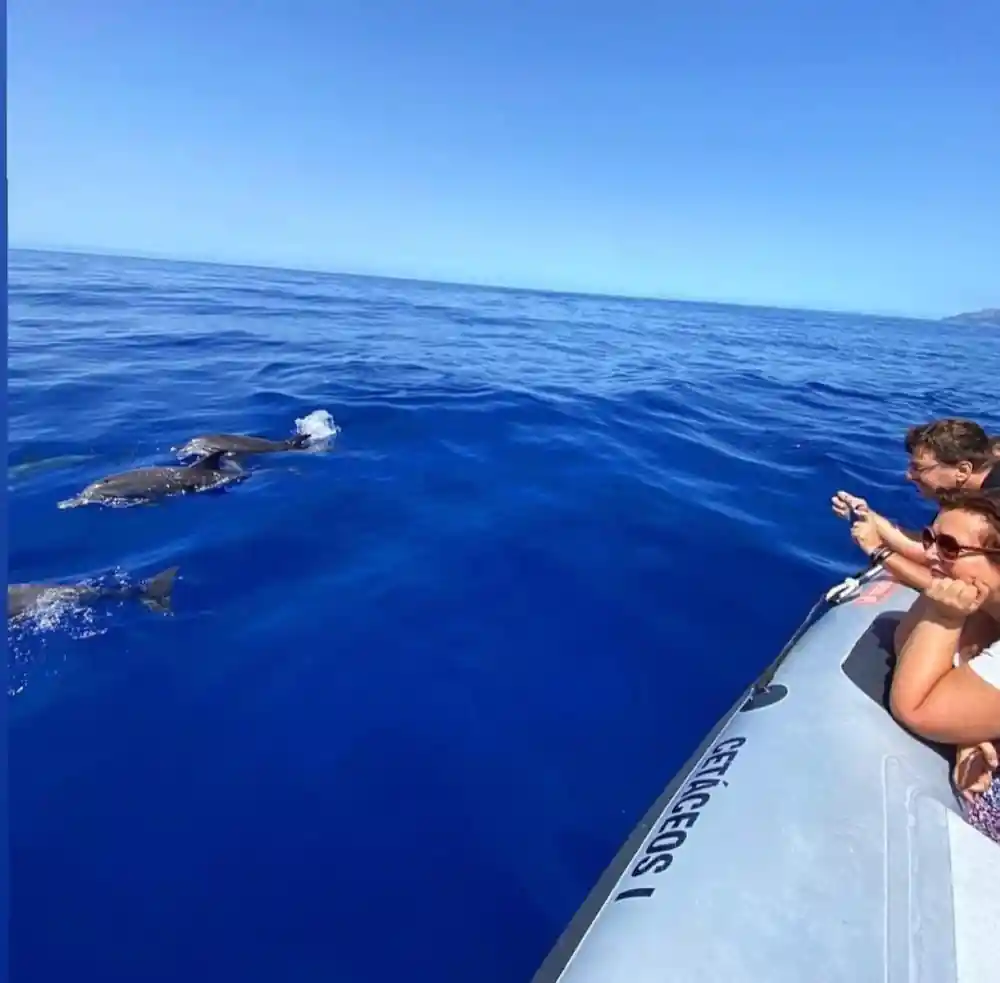
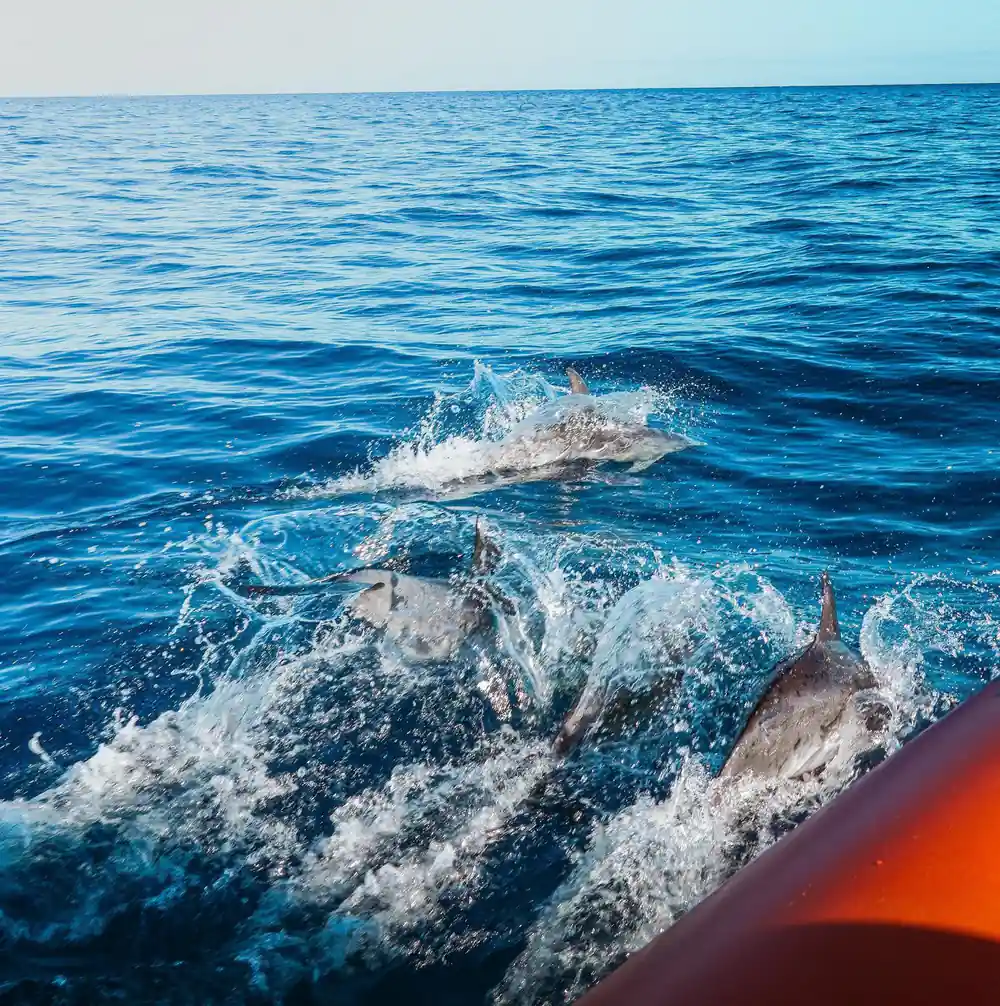
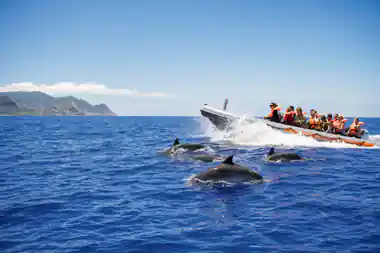
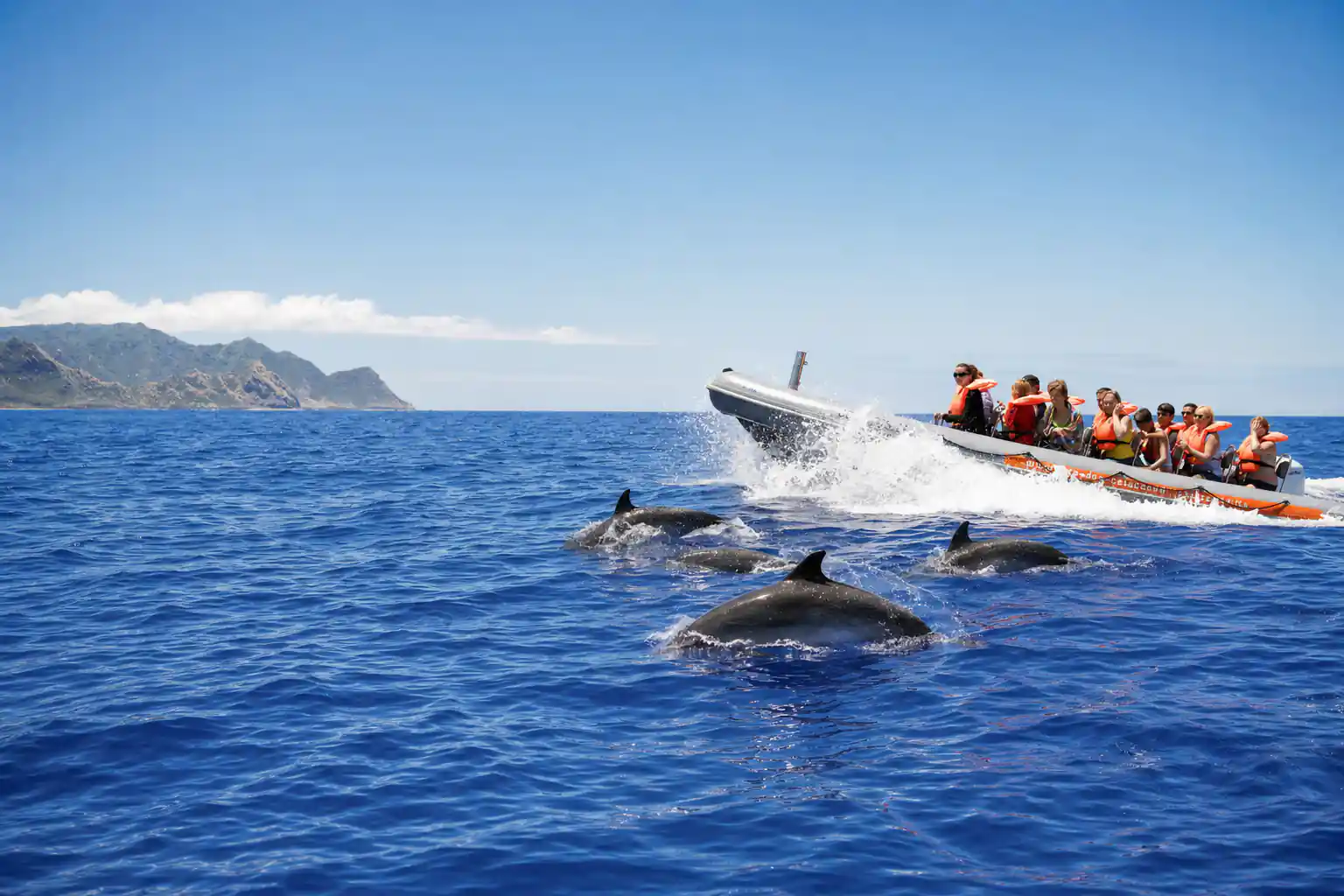
Guests in orange life jackets watch a pod of dolphins from a fast RIB off Madeira.
How the ride feels
The first few minutes are a burst of noise and wind. The engine opens up, the hull lifts onto the plane, and the inflatable collar begins to flex over the chop. Off Funchal, water temperatures are about 18°C during winter and 24°C during summer; a moving breeze can make things feel cold even on sunny days.[8] If the sea is calm, the ride is smooth and thrilling; if there is swell, it becomes a rollercoaster.
Conditions are often kind here. The south coast lies in the rain shadow of the mountains, where the trade winds arrive in a weakened form, creating a drier and sunnier climate.[11] That is the stretch of coast you leave from in Funchal, and it makes for bright, breezy rides more often than not.
It is worth sitting near the back if you want less wind. The collar absorbs some of the impact, but you still feel the swell. That is part of the appeal, and it is what makes the boat feel alive.
Being close to the water
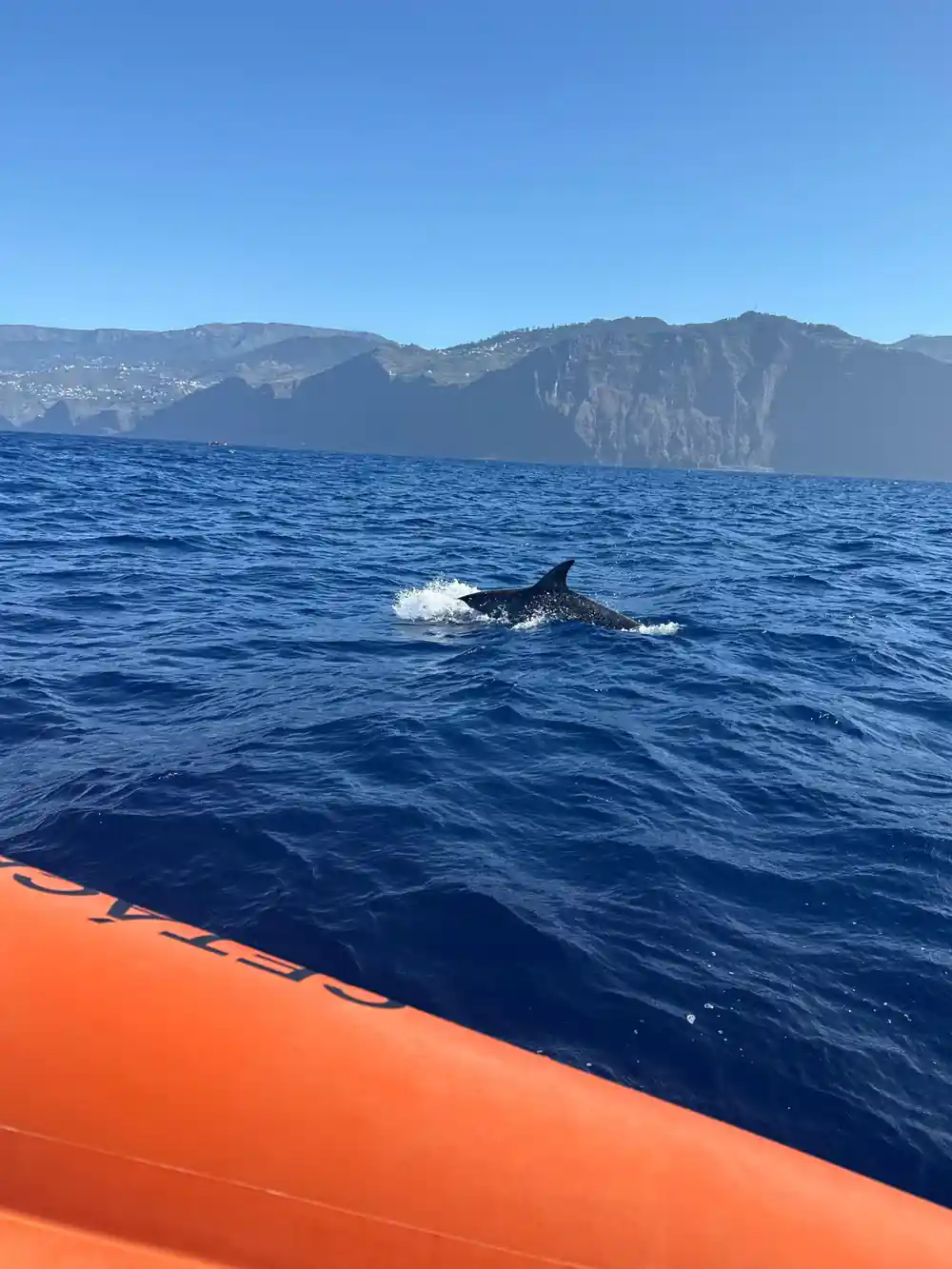
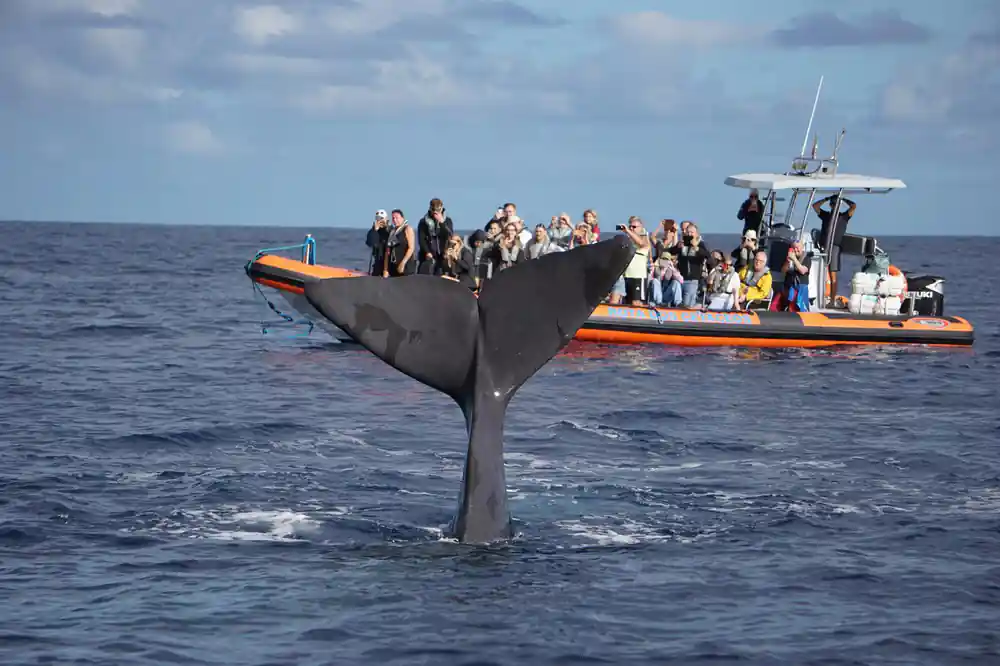
This is the RIB's great gift. You sit low, with the water around you rather than far below. When a dolphin surfaces, you are level with it. That low perch is why photographers love it. Scientists have verified 27 cetacean species around Madeira, which equates to almost a third of all known species globally.[2]
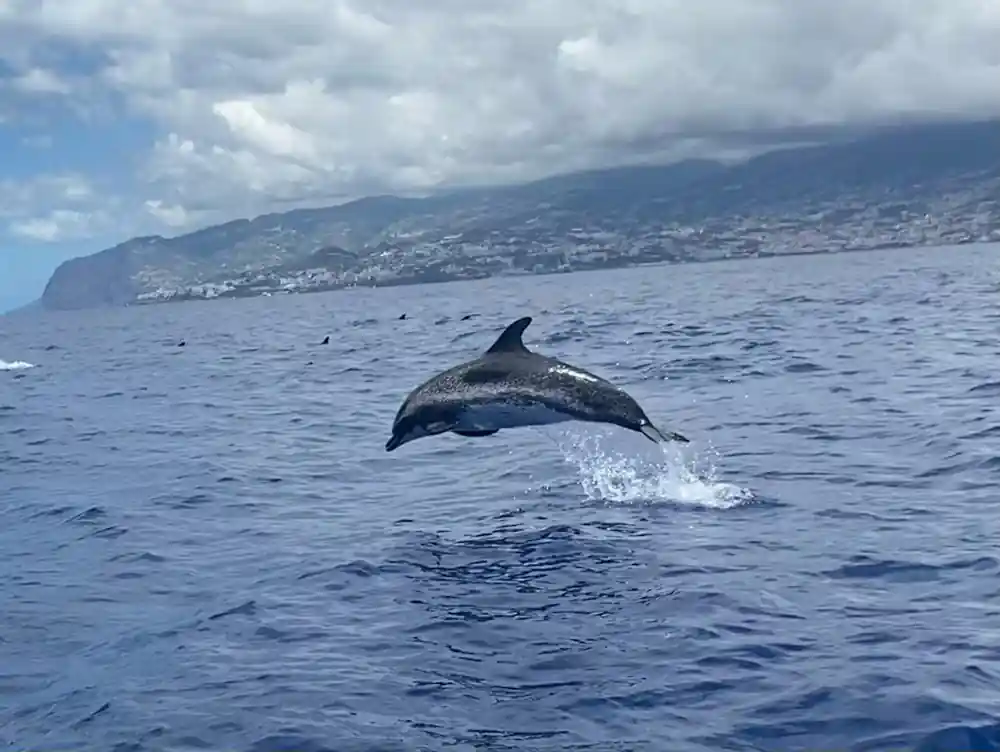
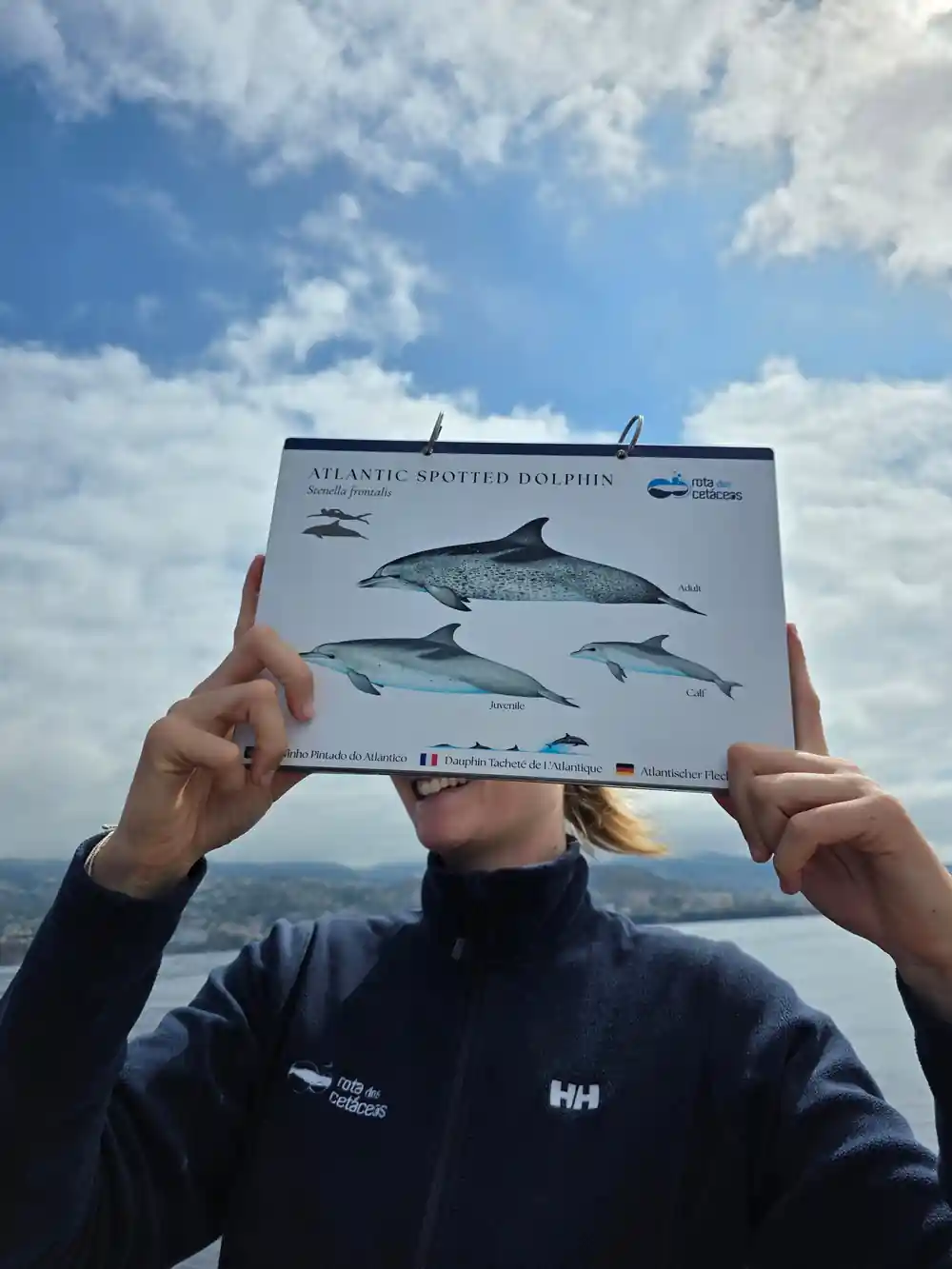
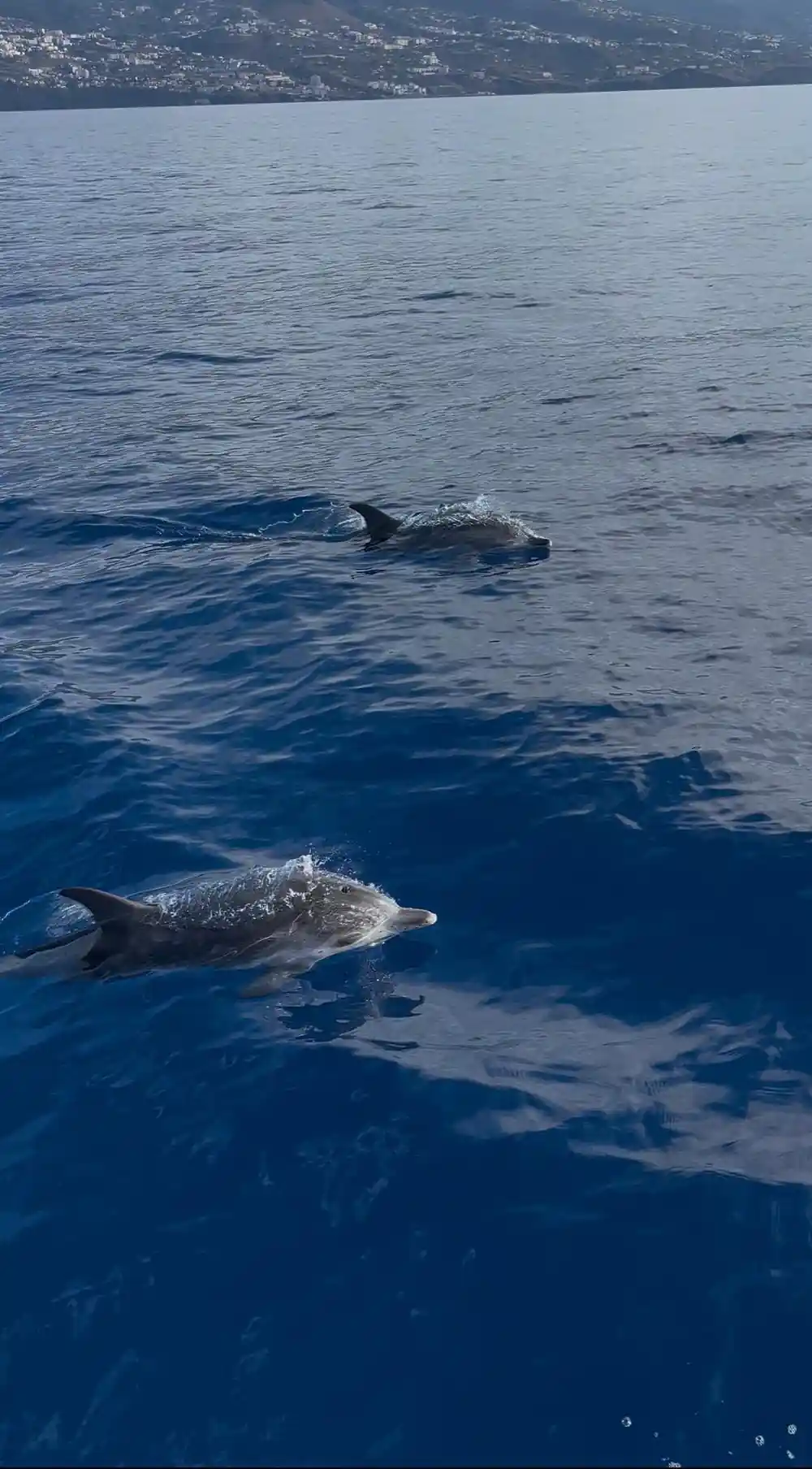
Your guide will help you tell them apart. You can encounter bottlenose dolphins and also short-finned pilot whales all year, plus deep divers such as sperm whales and beaked whales. Atlantic spotted dolphins and sometimes blue whales come in certain seasons; orcas and humpback whales only rarely show up.[2] Atlantic spotted dolphins are most commonly encountered on Madeira whale watching tours between March and November.[3]
There is no guarantee on any wild animal sighting, but Madeira's numbers are encouraging. With 27 species confirmed in these waters, the odds of seeing something are part of the appeal.[2] Even a quiet trip shows you a different side of the Atlantic.
from US$62
A 2.5-hour Funchal whale and dolphin watching RIB trip, with live guide, free rebooking and free cancellation up to 24 hours.[1]
What it asks of you
This is not a catamaran with a bar. You need a windproof layer, even on a warm day, and something to keep sun off your face. A neck buff or a thin hat can make a huge difference. Winter sea temperatures sit near 18°C, while summer reaches around 24°C. A light jacket is your best friend.[8] Shoes that can get wet are sensible, and a dry bag is worth its weight.
The practical side is easy. If your plans shift, you can rebook free; otherwise, pay later after reserving now, or cancel with a full refund up to 24 hours before.[1] The live guide speaks English, French and Portuguese, so you can ask questions as you scan the horizon.[1]
If you are unsure about motion, choose a seat over the hull rather than on the side, and keep your eyes on the horizon. A light snack beforehand helps more than a heavy breakfast. There is no shame in enjoying the ride from the calmest seat.
How it compares with the catamarans
The main alternative is a catamaran. A Funchal dolphin and whale watching catamaran cruise costs from US$40 and runs for 3 hours.[12] The RIB tour is from US$62 and lasts 2.5 hours.[1] You pay a little more for the RIB, and you get a smaller, faster, more immediate boat. It is a trade-off between comfort and adrenaline.
Catamarans have twin hulls and a higher deck. They are more stable underfoot and easier for photography. A semi-rigid boat sits close to the surface and leans into turns. The same distance limits apply to both: 50 meters for whales and dolphins, 25 meters for sea turtles, plus slower speeds when close to wildlife.[4]
If you want an all-inclusive catamaran experience, an all-inclusive luxury tour is from US$91 for 3 hours.[13] But for raw connection and speed, the RIB remains the more exciting choice.
Getting the most from the seat you have
Choose your seat thoughtfully. A forward seat gives the best view but the most wind; a rear seat is calmer and still close to the guide. Hold on when the boat is planing and keep your camera in a dry bag until the captain slows. It helps to know the boat will slow before each sighting, so you can have the camera ready. The trip from Funchal lasts 2.5 hours, so there is time to scan the sea properly.[1]
Know the cast list. Atlantic spotted dolphins occur mainly from March to November, while short-finned pilot whales and bottlenose dolphins remain year-round.[2][3] The steep underwater terrain close to the coast allows deep-water whales to come near, so keep watching even when the sea looks empty.[5]
Remember the rules exist to protect the animals. The boat will keep at least 50 meters from whales and dolphins, so binoculars or a zoom lens are more useful than expecting a close-up.[4] Respect that distance and the sighting lasts longer for everyone.
From-price comparison
How much for a Funchal boat trip?
From prices on GetYourGuide, in US dollars:[1][12][14].
Best times for a Funchal RIB trip
How to plan a Funchal RIB trip
Pick a date
Use the booking calendar to check available starting times. The tour lasts 2.5 hours, so it fits neatly into a half day.[1]
Dress for the sea
Wear a windproof layer, shoes that can get wet and sunscreen. In winter the sea is about 18°C, while in summer it reaches around 24°C.[8]
Meet in Funchal
The trip sets out from Funchal, so arrive with plenty of time. Listen for the live guide's call in English, French or Portuguese.[1]
Watch the water
Look for year-round bottlenose dolphins and pilot whales, and Atlantic spotted dolphins between March and November.[2][3]
Respect the distance
Within 300 meters, boats reduce speed to 12 knots or less and remain at least 50 meters away from dolphins and whales.[4]
Keep plans flexible
Book now and pay later, with no cost cancellation up to 24 hours before departure and a full refund.[1]
Ready to feel the spray on a Funchal whale watching RIB trip?
from US$63Reserve now & pay later