The essentials
- From US$62[1], this 2.5-hour[1] RIB trip leaves Funchal with live guiding in English, French and Portuguese.[1]
- Bottlenose dolphins can be seen all year round, and so can short-finned pilot whales; Atlantic spotted dolphins, along with occasional blue whales, show up only seasonally.[2]
- Madeira's waters contain 27 cetacean species, according to research.[2] The sea, only five kilometres from land, exceeds 3,000 metres in depth.[3]
- Boats keep a minimum of 50 meters from whales and dolphins and 25 meters from sea turtles. The speed limit drops to 12 knots inside 300 meters and to 8 knots inside 100 meters.[4]
- Cancel without charge up to 24 hours ahead, book today and pay later, and rebooking is free.[1]
| Tour | Duration | From price | |
|---|---|---|---|
| RIB with guarantee | From Funchal: Whale and Dolphin Watching | 2.5 hours[1] | from US$62[1] |
| Catamaran classic | From Funchal: Ecological Catamaran Dolphin Whale Watching | 2.5 - 3 hours[5] | from US$40[5] |
| Sailing trip | Funchal: Dolphin and Whale Watching Sailing Trip | 3 hours[6] | from US$47[6] |
| Speed boat | Funchal: Whale and Dolphin Watching Speed Boat Tour | 2 hours[7] | from US$63[7] |
Boats must keep a minimum distance of 50 meters from whales and dolphins and 25 meters from sea turtles. Speeds must be gradually reduced: no more than 12 knots within 300 meters, and 8 knots within 100 meters.
A respectful, well-guided way to look for Madeira's whales and dolphins
Before you board
Pack for the boat
- Sunscreen and a hat for open water
- Windproof layer for spray
- Grippy, non-slip shoes
- Dry bag for phone and camera
Why two and a half hours is the right length
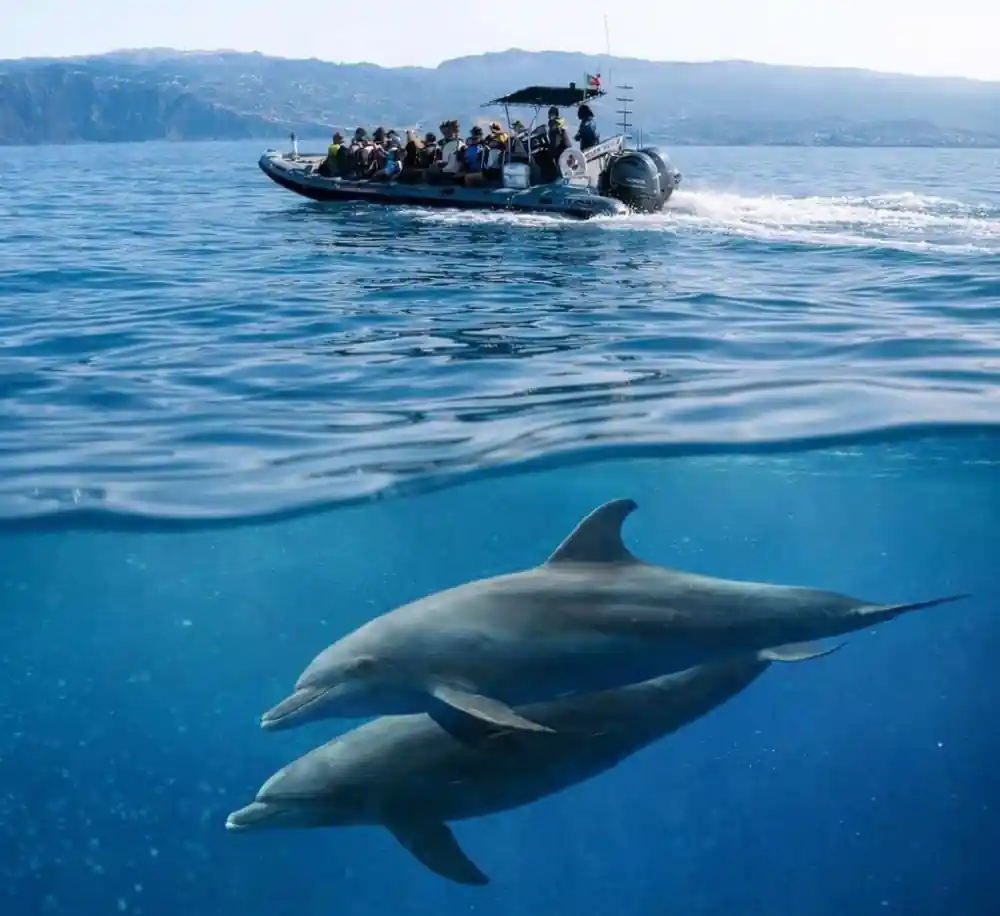
This RIB tour from Funchal lasts 2.5 hours[1] and costs from US$62[1]. The open boat is a fast, manoeuvrable way to work the water close to the coast, and the live guide speaks English, French and Portuguese.[1] The length is generous enough to reach deeper water, spend time scanning for blows and splashes, and still be back in Funchal with the afternoon free.
The sea just off Madeira works in your favour. At just five kilometres from the coast, water depths exceed 3,000 metres, and the rugged seafloor lets deep-water whales approach land.[3] Madeira's waters contain 27 cetacean species, according to research.[2] A focused two and a half hours gives the crew a real chance to find something.
The tour is rated 4.70 from 2,070 reviews, with a guide score of 4.8, transportation 4.8 and value for money 4.6.[1] Those scores suggest travellers value the guiding and the boat itself as much as the sightings. It is the kind of trip you can slot into a full day without feeling rushed.
Before the clock starts
Sort the practical side before boarding. The trip starts in Funchal[1], so plan to arrive at the marina with time to find the check-in desk. The live guide speaks English, French and Portuguese.[1] When making an advance booking, you can hold your reservation now and pay afterwards; cancellation at no cost is possible until 24 hours before.[1]
A RIB is open and fast; spray travels. Bring a windproof layer, sunscreen and something to protect a phone or camera from salt water. Sea temperatures in Madeira range from around 18°C in winter to 24°C in summer.[8] Even in warm months, the water can feel fresh on a moving boat, and a light waterproof jacket is more useful than a heavy coat.
If you are prone to seasickness, take any remedy before boarding and sit where the crew suggests. The motion of a RIB is very different from a large ferry, and most people settle once the boat picks up a rhythm. Keep your eyes on the horizon and enjoy the ride.
A RIB full of guests passes a green volcanic headland on the way back into Funchal.
The run out
Once the lines are off, the RIB picks up speed and Funchal slides astern. From the water, Madeira shows its terraced slopes and volcanic cliffs. The south coast lies in the rain shadow of the mountains, where the trade winds arrive in a weakened form.[9] Funchal Bay is a sheltered spot to set out from, and the open boat moves through it quickly.
The crew scans the water as the boat settles into a searching speed. Whale-watching vessels are directed by an observer on land who passes along distance readings and landmarks to the boat captains.[10] The RIB can then head toward the last reported position. Meanwhile, keep an eye on the shore; the sea cliffs and old fortifications make the ride out a sight in itself.
As the speed drops, the atmosphere changes from a thrill ride to a wildlife watch. It helps to follow the crew's hands rather than your own guess: a blow is easy to miss, but a skipper who knows the local habits will often pick it up before you do.
The search
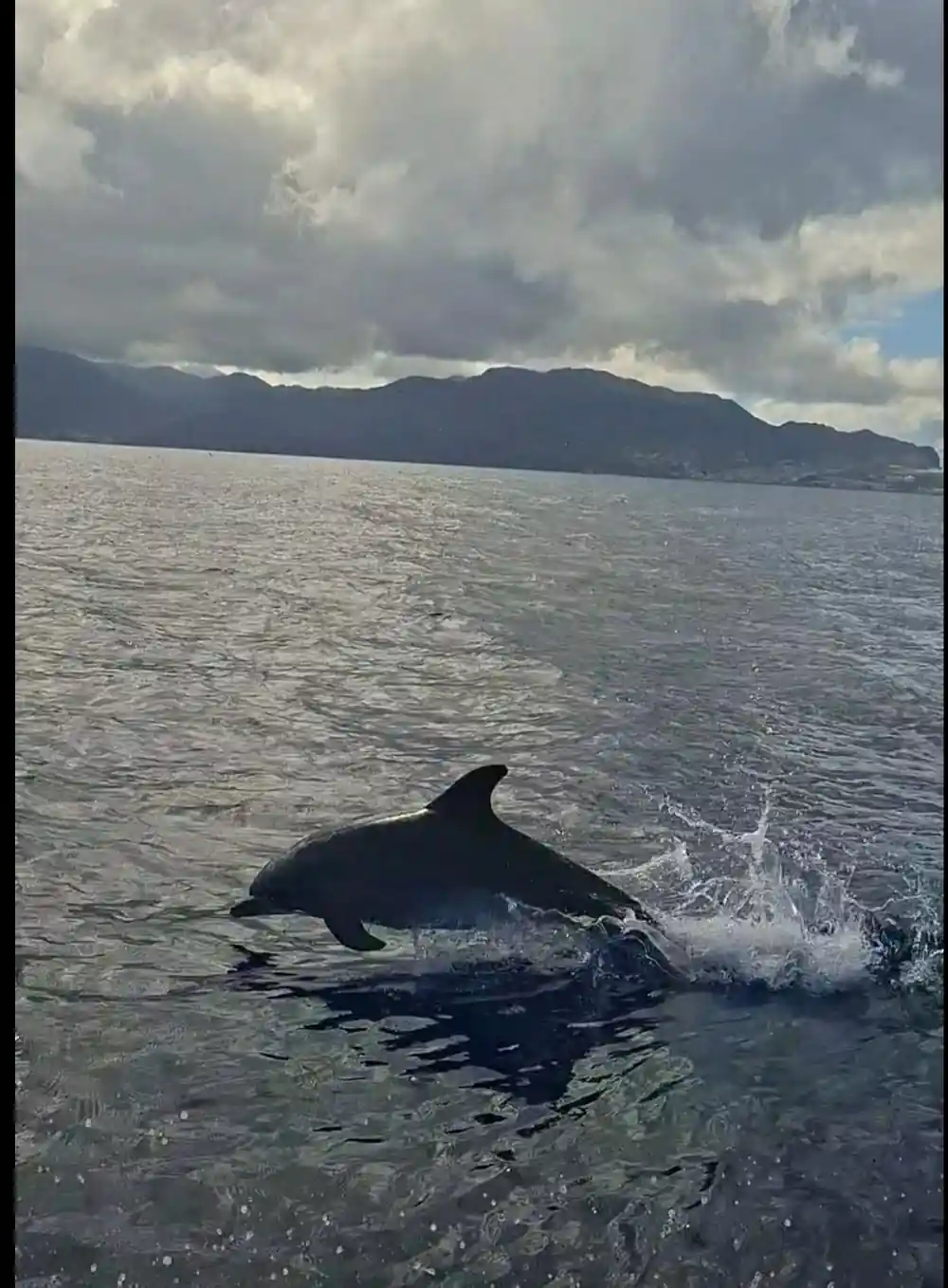
Whale watching is a search, not a show. The crew watches for blows, splashes and feeding birds. Bottlenose dolphins, along with short-finned pilot whales, are present off Madeira year-round; Atlantic spotted dolphins and some blue whales visit seasonally, whereas orcas and humpback whales show up rarely.[2] Those resident species are the backbone of most encounters.
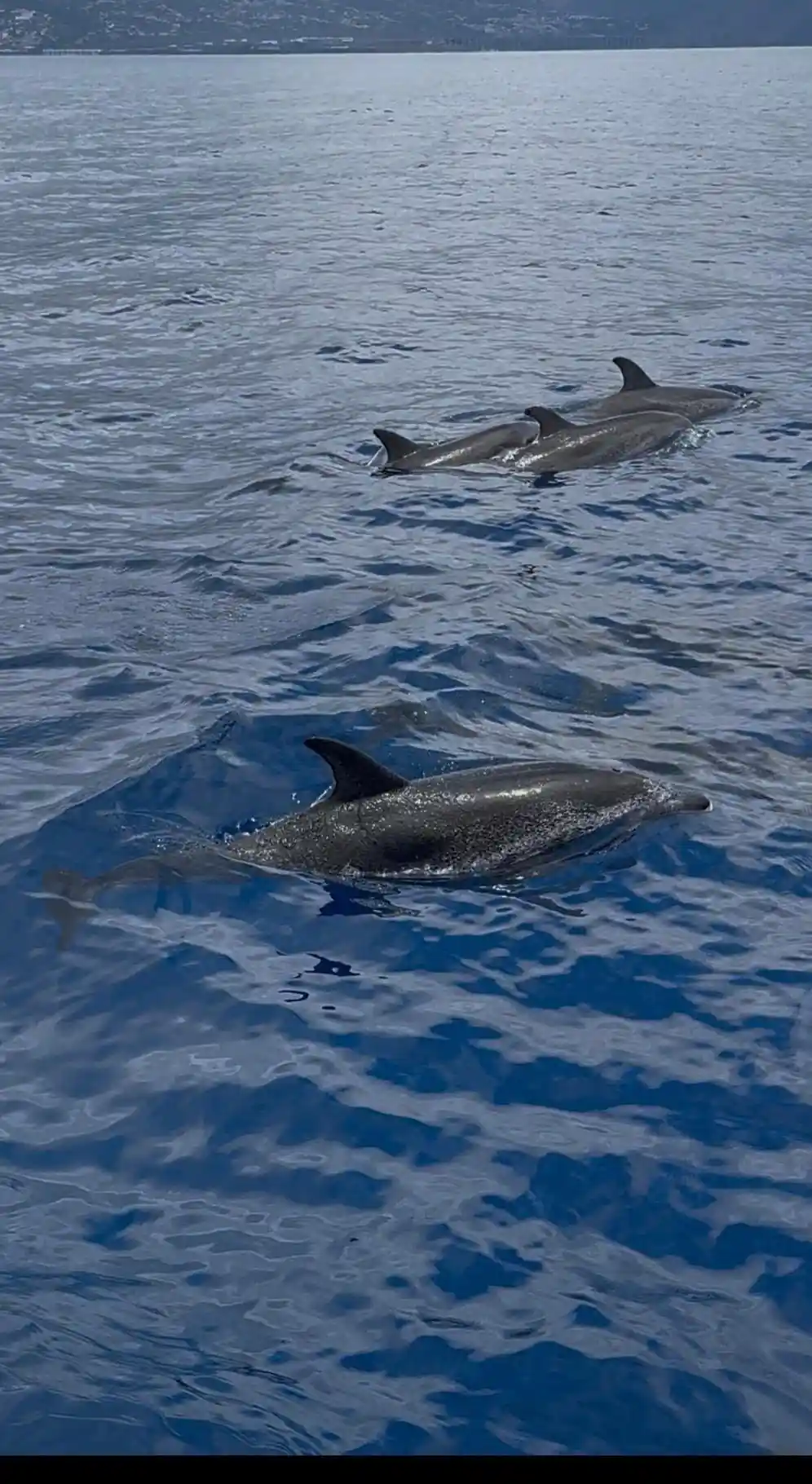
Atlantic spotted dolphins are a common transient species during the summer months in Madeira, and they are the most commonly encountered species on whale-watching tours between March and November.[11] Short-beaked common dolphins are frequently encountered off Madeira in winter.[12] The guide will normally share what the boat is looking for and what your chances are that day.
Madeira's relationship with whales has changed over time. Today, boats follow responsible viewing rules and keep a respectful distance from the animals.[4] Encounters are more likely to be met with cameras than harpoons.
from US$62
From Funchal, this RIB trip has live guides in English, French and Portuguese, with free rebooking and free cancellation.[1]
Time with the animals
When the animals are found, the approach follows Madeira's responsible-watching rules. Boats need to give whales and dolphins at least 50 meters, and sea turtles 25 meters. Vessels must slow down progressively, keeping to 12 knots or less inside 300 meters and 8 knots or less inside 100 meters.[4]
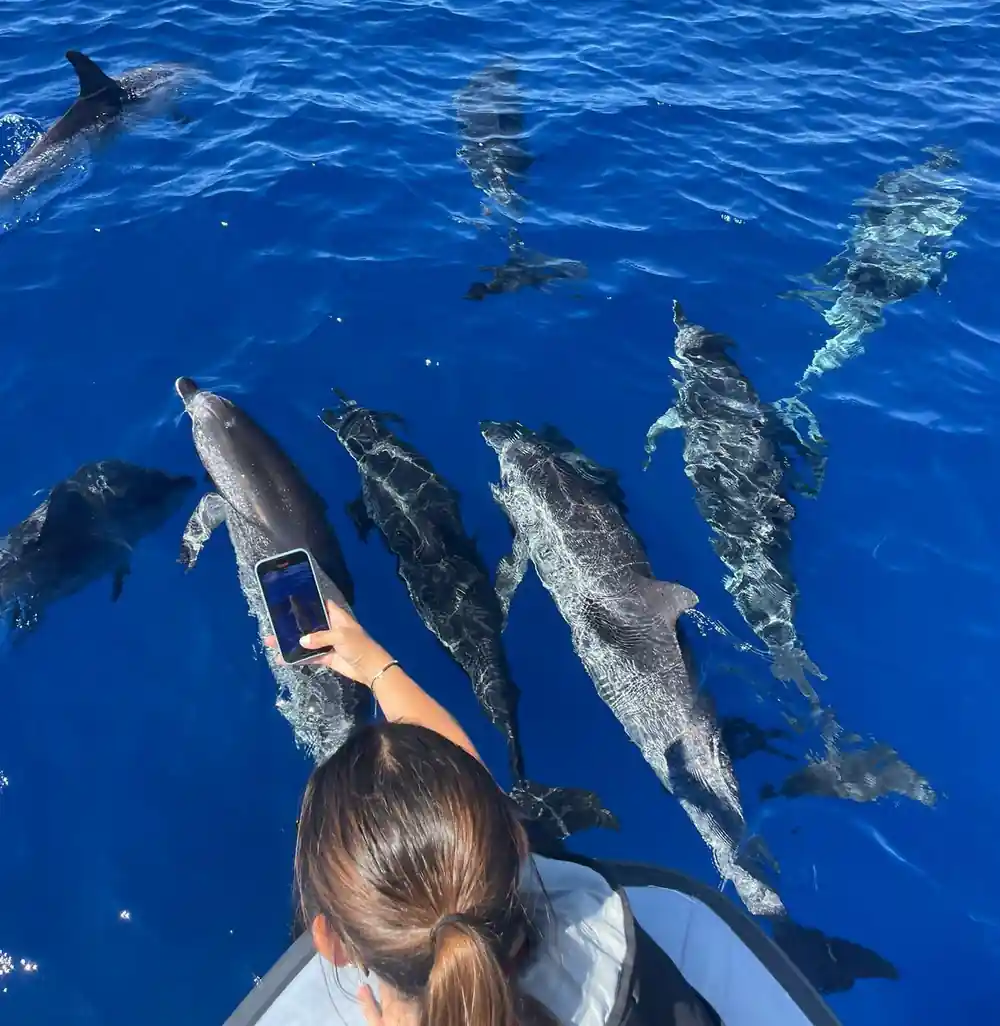
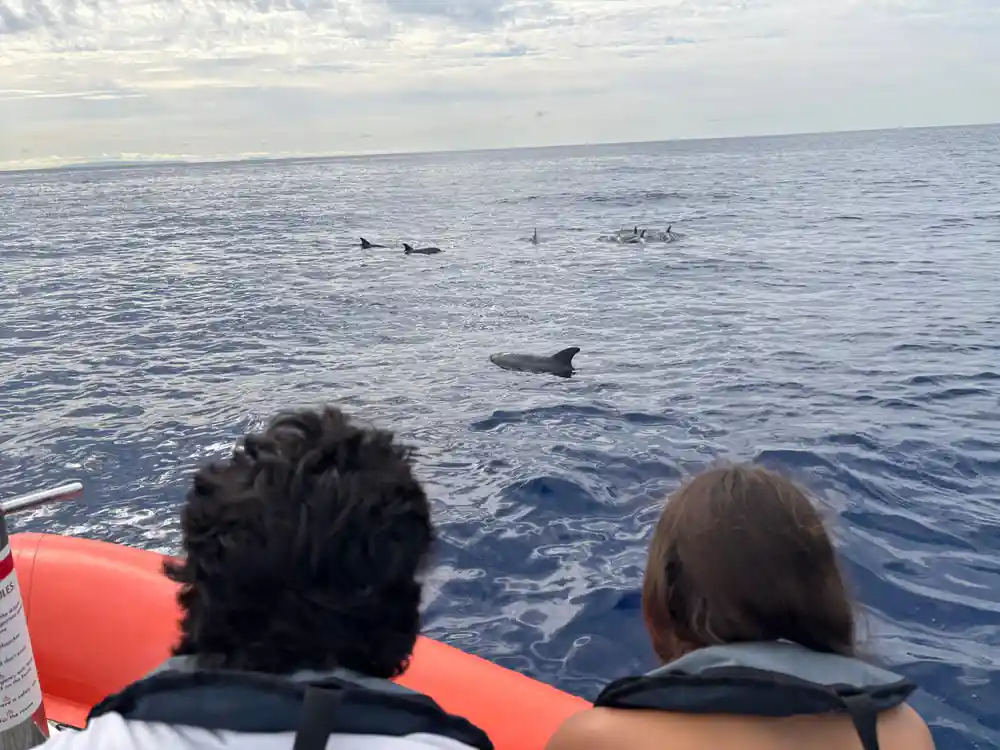
From a low RIB, dolphins often come close enough to hear their breathing. Keep movements smooth, hold on to hats and cameras, and let the crew set the pace. That keeps the encounter calm for animals and passengers alike. It also gives you a different view of a coastline that is usually seen from above.
Patience matters. The engine may cut to a low rumble, and the boat may drift while the animals decide what to do next. Those quiet minutes are often the ones travellers remember most.
The return
Heading back, the boat turns toward the harbour and the city spreads along the bay. The return is a good moment to shake off spray, check photos and let the guide answer questions. The tour ends back in Funchal.[1] If you want more time on the water, the marina has several other operators and tour styles.
If the sea has whetted your appetite, other boat trips reach the Desertas Islands, three small islands southeast of the island of Madeira.[13] For a different style of whale watching, an ecological catamaran trip runs 2.5 - 3 hours and costs from US$40.[5] You could follow a fast RIB morning with a gentler catamaran afternoon, or save the longer sail for another day.
Whale watching is a seasonal dance. The resident species stay close all year, while visitors come and go with the calendar.[2] Ask the crew what has been seen recently; their answer shapes where the boat will point next.
Morning or afternoon
Choosing between morning and afternoon comes down to light and wind. Early trips catch the sea before the breeze builds, while afternoon runs can feel warmer and the sun sits lower for photography. The south coast lies in the rain shadow of the mountains and has a drier and sunnier climate.[9]
The tour's free rebooking option makes this easier: if the forecast turns lively, you can move your booking rather than cancel.[1] Give yourself time after the trip, too. The duration is 2.5 hours.[1] The harbour can be busy at peak season, so leave a little slack in your day. No two trips are identical, and that unpredictability is part of the appeal.
Whichever session you choose, the trip will follow the same careful search: out through the bay, along the coast, and into the deeper water where the animals travel. The 2.5-hour format works well for a first visit and for anyone who wants to fit the ocean into a Madeira itinerary without taking over the day.[1]
Duration of popular Madeira whale watching trips
Duration values from GetYourGuide listings: 2 hours[7], 2.5 hours[1], 2.5 hours[14], 3 hours[6], 3 hours[15], 3 hours[16].
Compare from-prices in US dollars
From prices in USD from GetYourGuide listings: US$62[1], US$40[5], US$47[6], US$63[7], US$40[15].
When to watch different species
How to book and go
Pick your date
Check availability for starting times. The tour lasts 2.5 hours.[1]
Claim your spot
Book online and pay later. Free cancellation is available up to 24 hours before.[1]
Prepare layers
Bring sunscreen, a windproof layer and a dry bag for electronics.
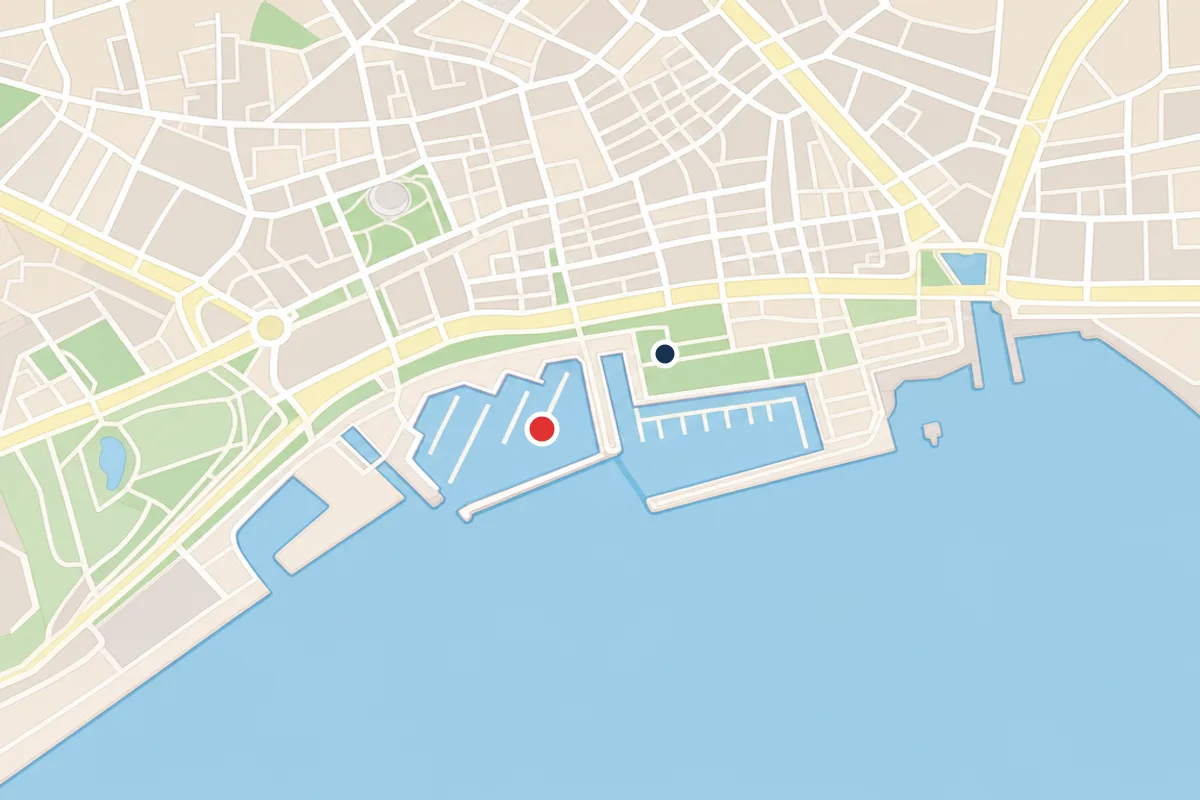
Meet at Funchal
The start is in Funchal. Confirm the meeting point when you book.[1]
Enjoy the search
Follow the crew's directions, watch the horizon and enjoy the ride.
Ready to trade the harbour for open water?
from US$63Reserve now & pay later