









What the trip actually is
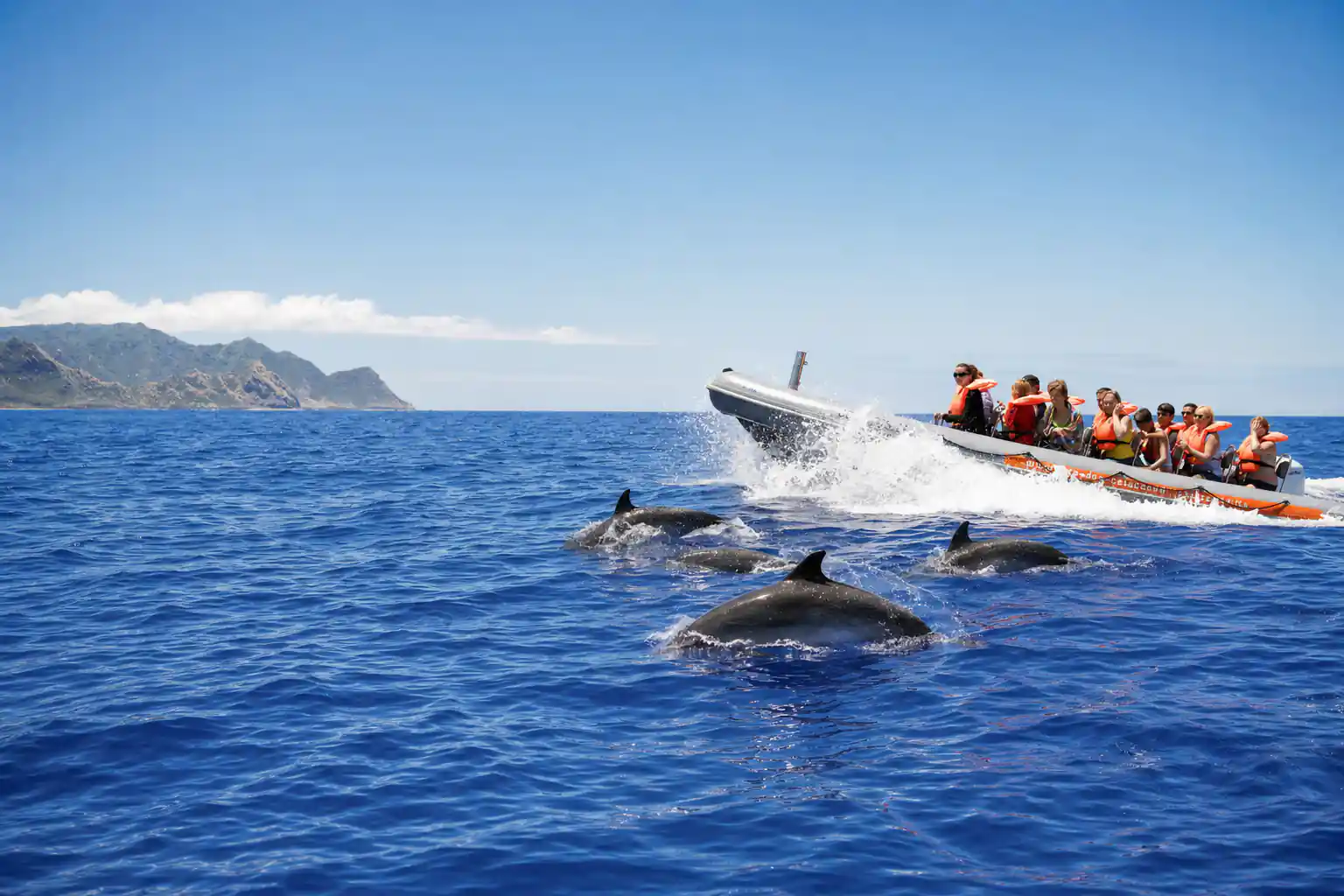
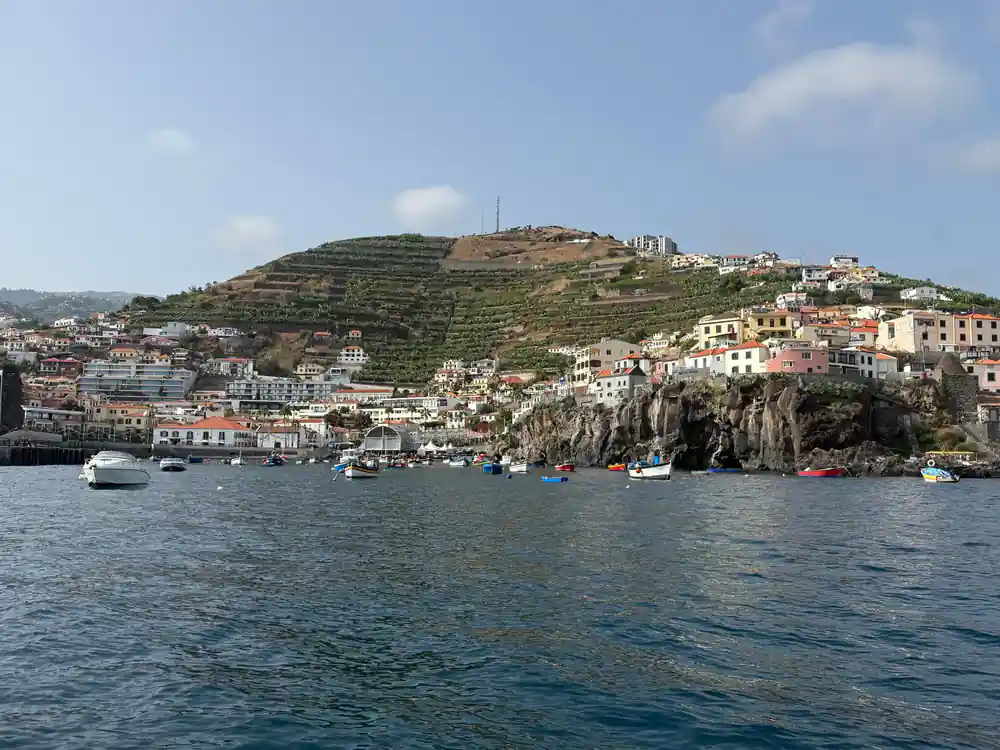
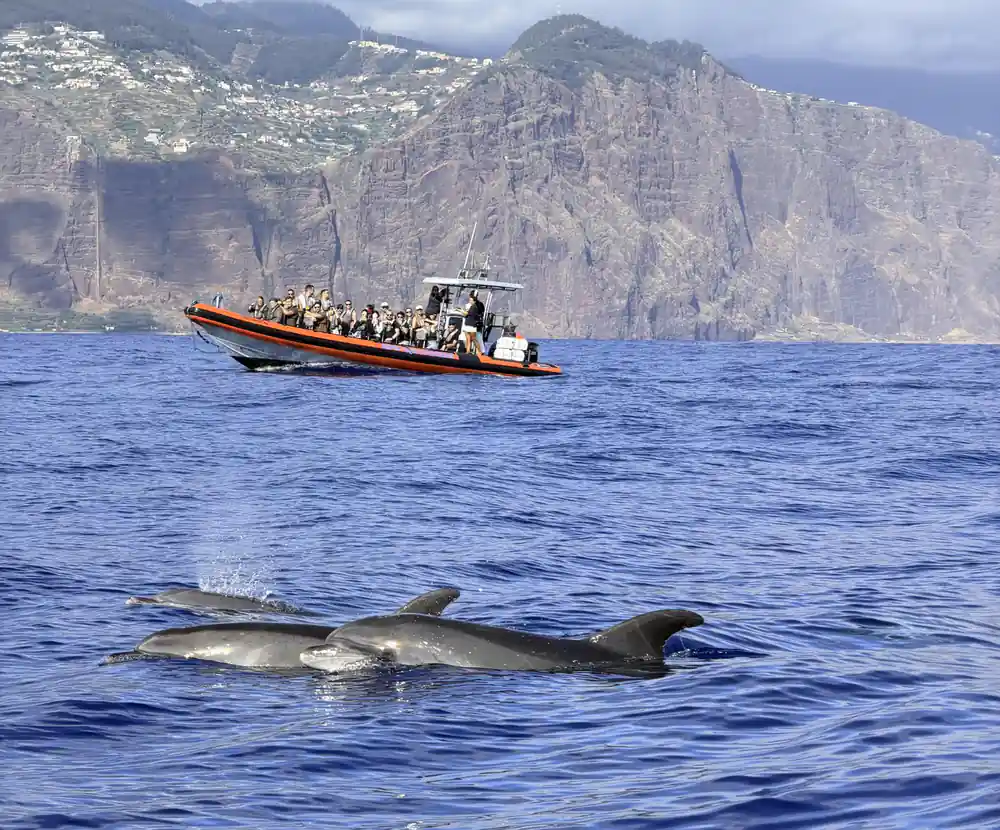
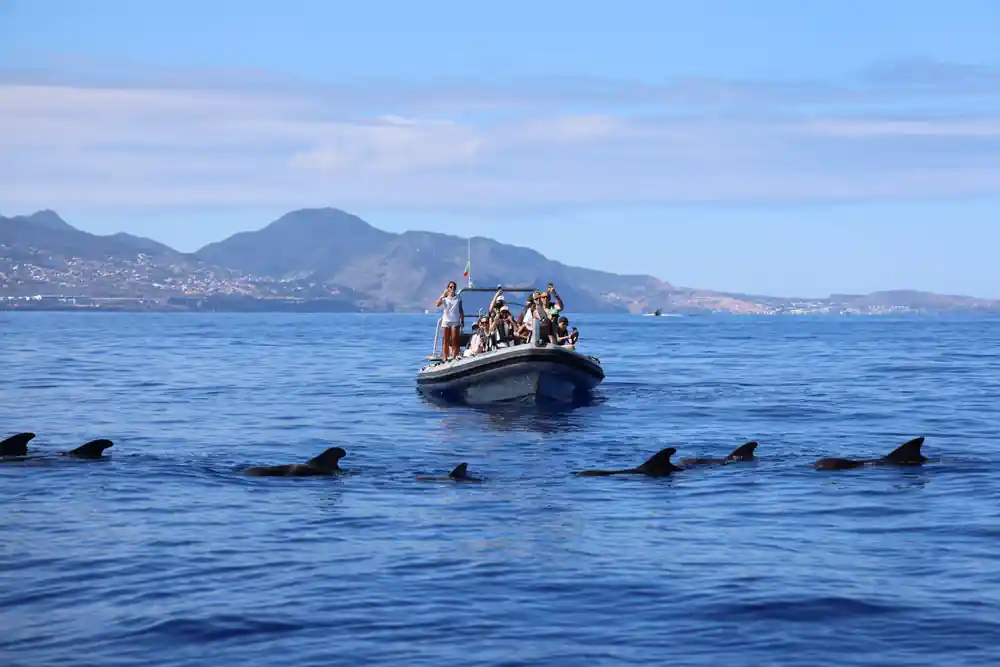
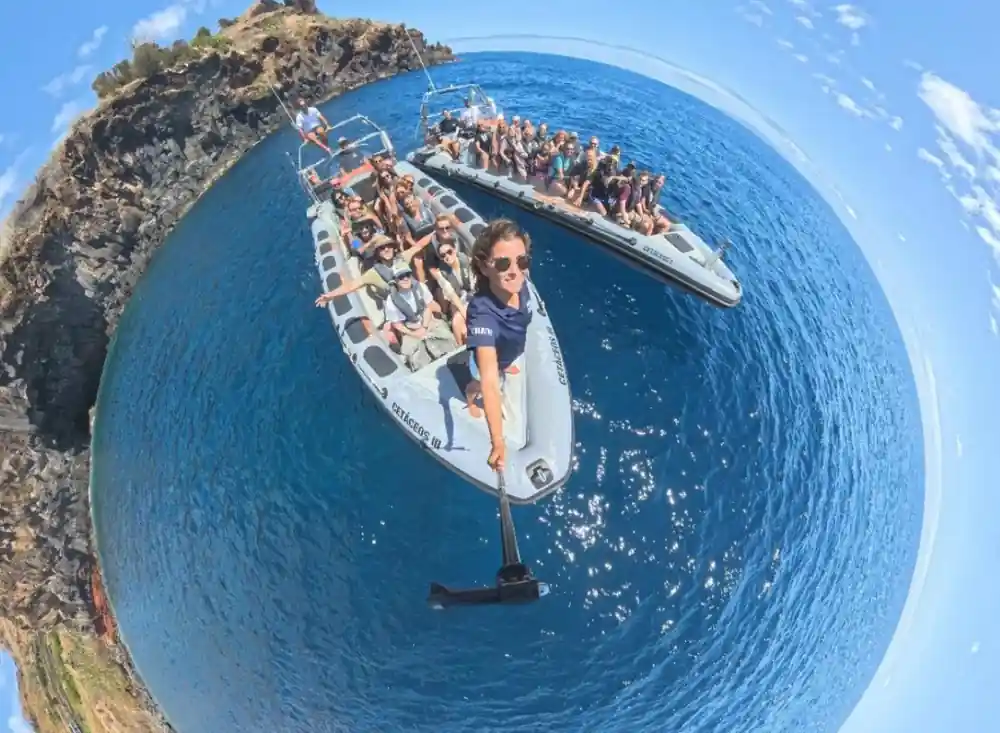
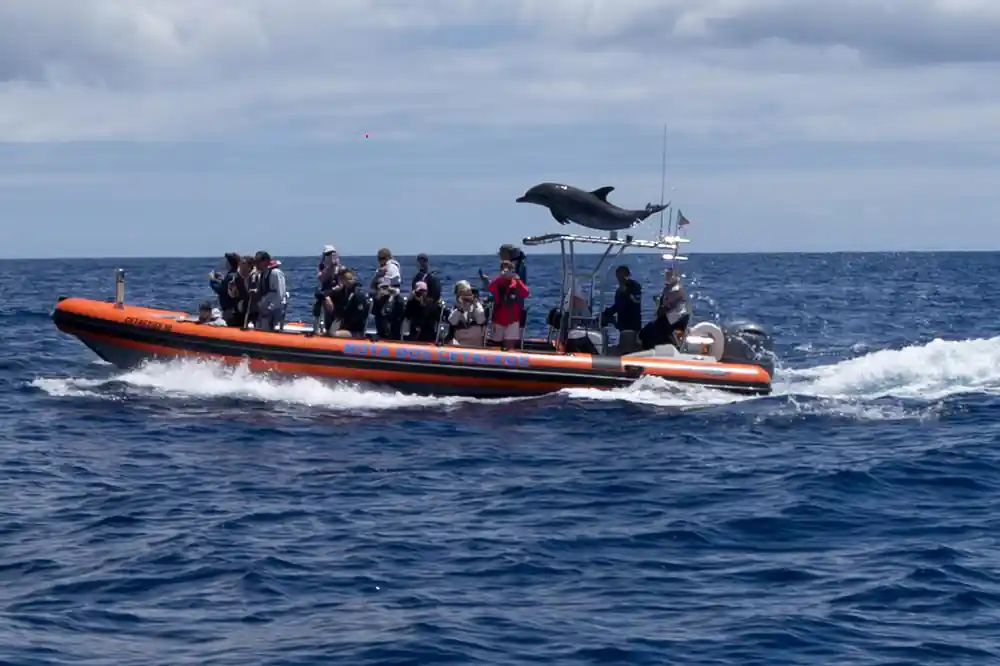
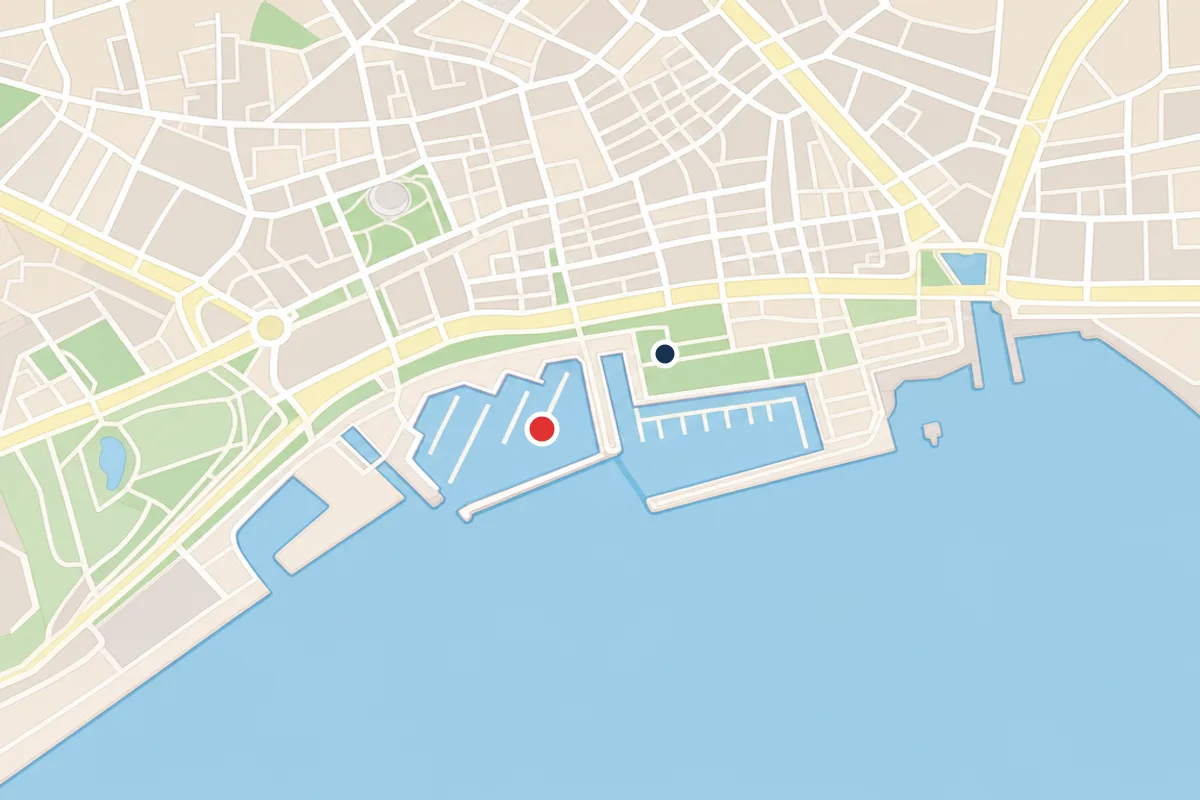
A fast semi-rigid boat leaves Marina do Funchal and spends two and a half hours searching the water off Madeira's south coast for whales and dolphins. There is a marine biologist aboard, there are lookouts stationed on the land above, and the operator guarantees you will see cetaceans.
That combination is unusual enough to be worth stating plainly. Plenty of boats go looking for dolphins off Funchal. Fewer put a biologist on board rather than a commentary track, fewer still coordinate with observers on the clifftops, and almost none of them are willing to write a guarantee into the booking.
The result is a trip that behaves less like a sightseeing cruise and more like a short field expedition with passengers. That is the right frame for what you are getting.
Why the boat is a semi-rigid
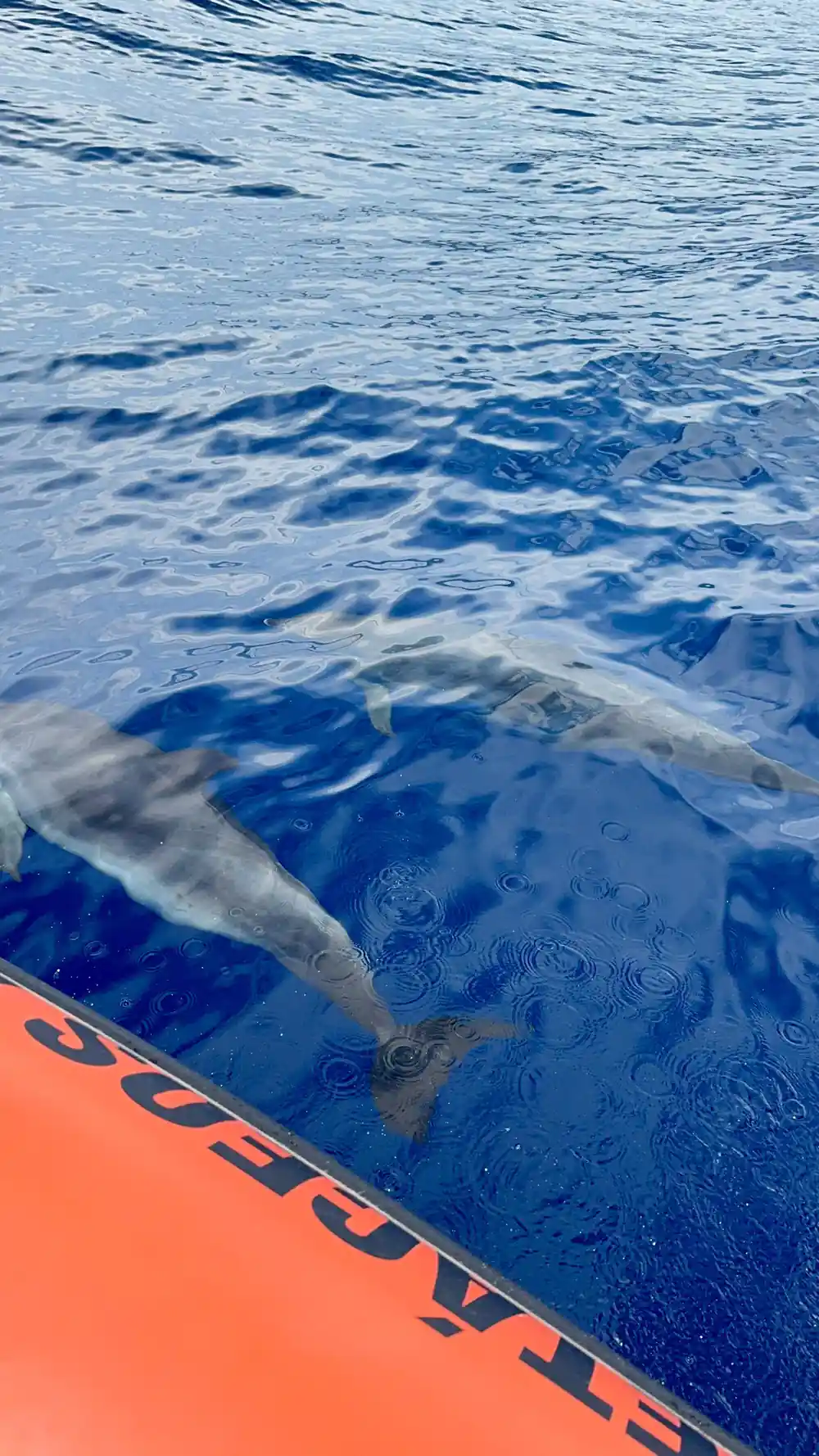
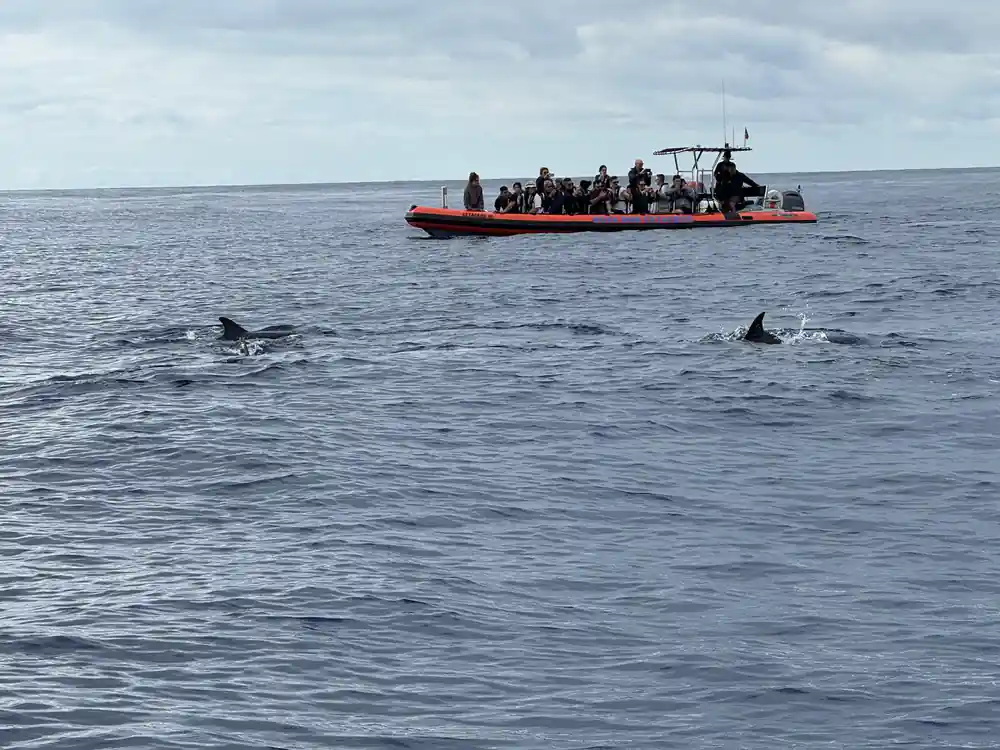
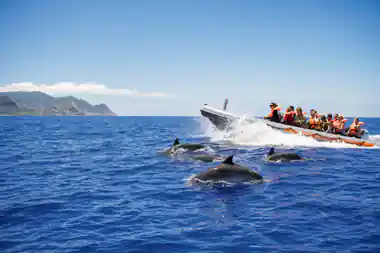
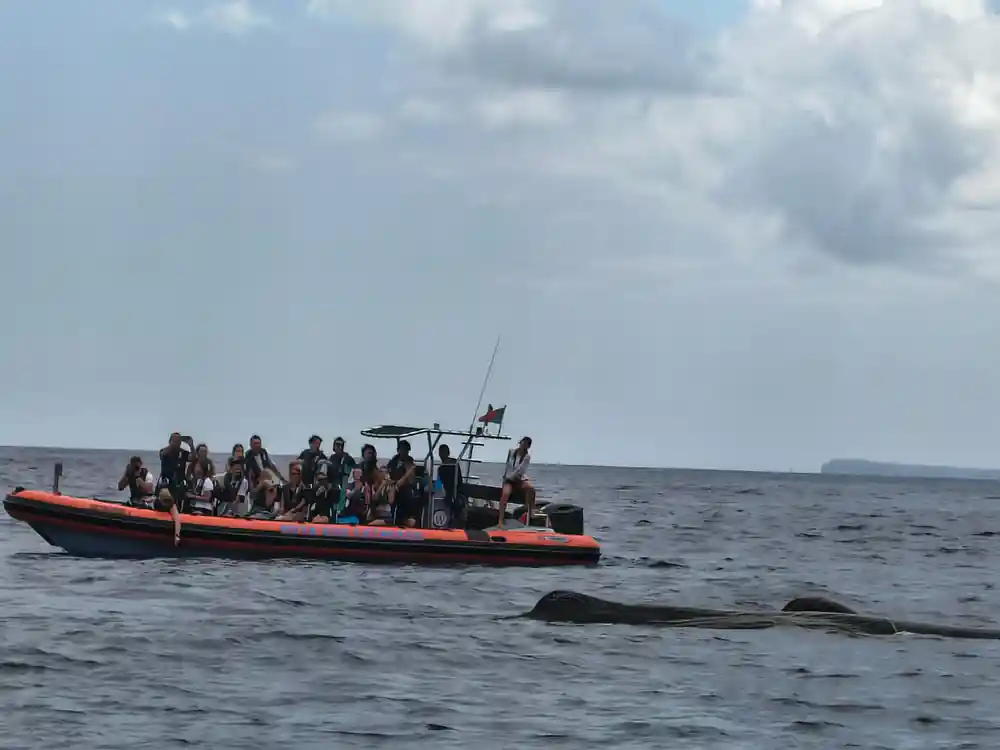
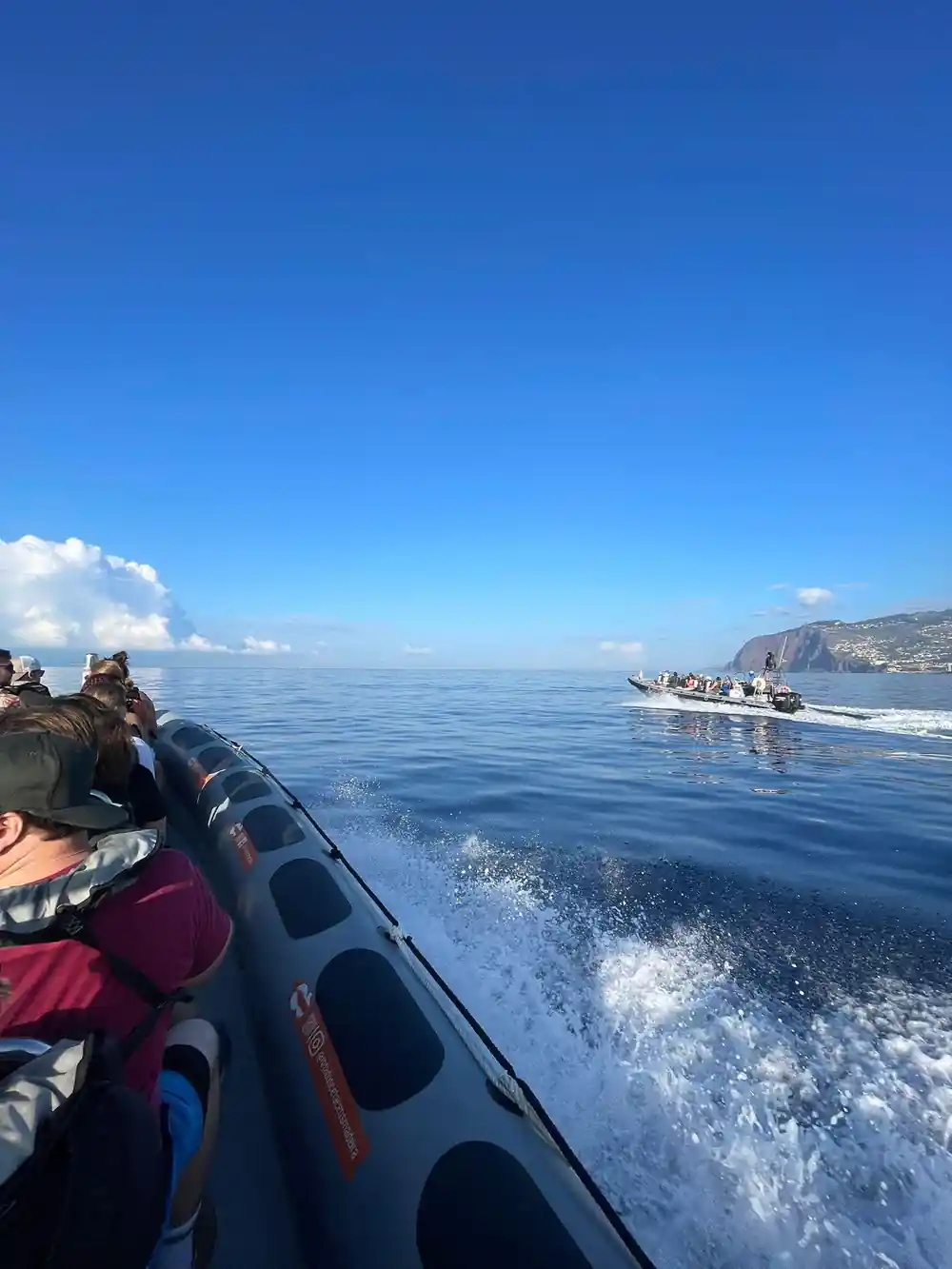
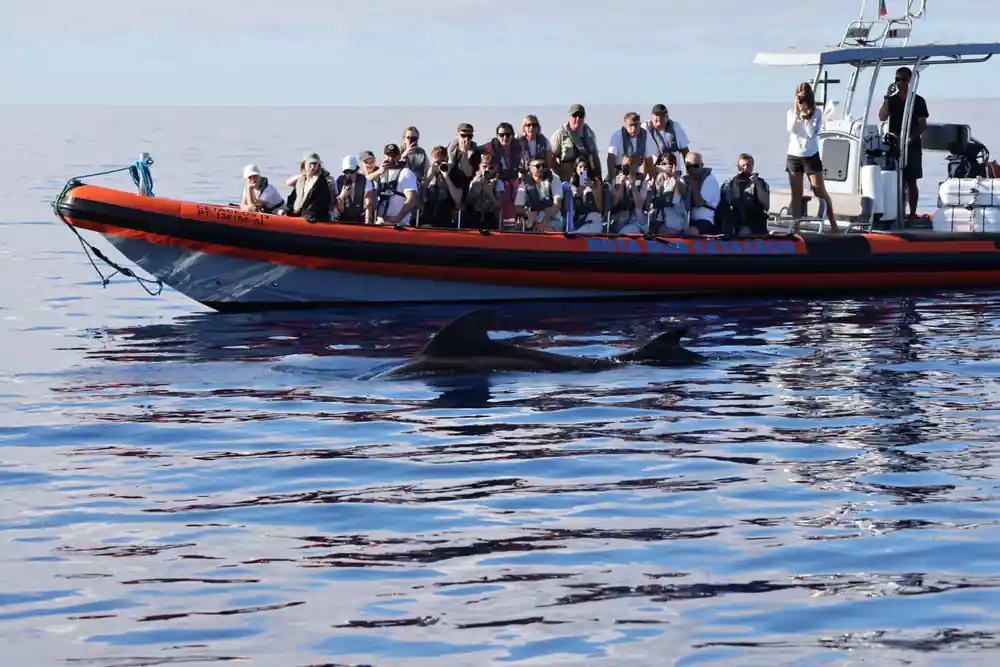
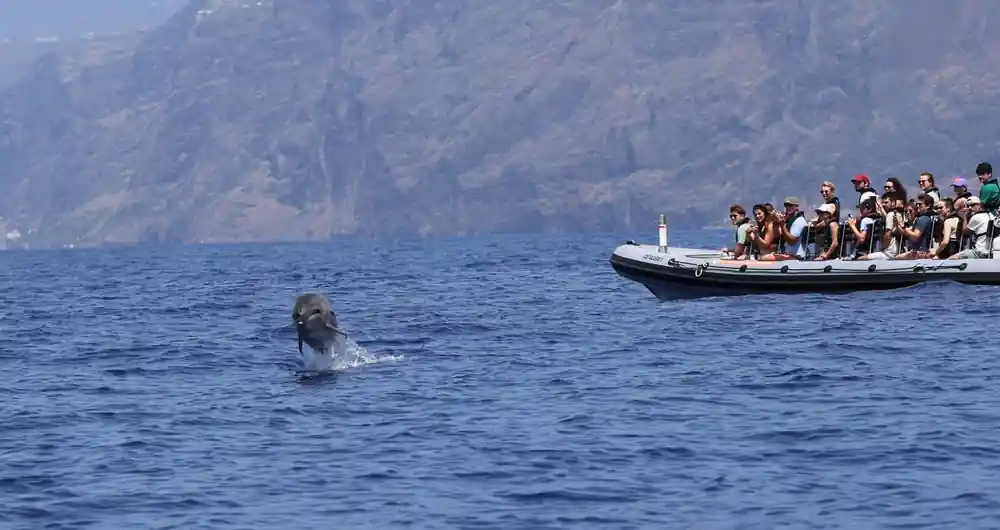
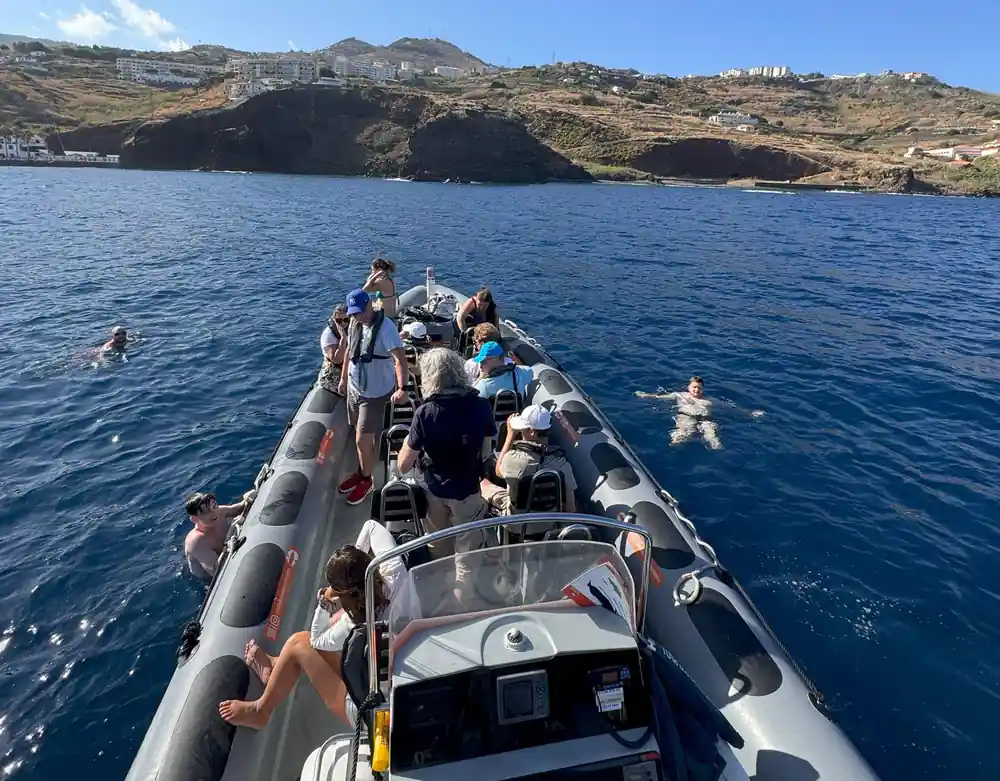
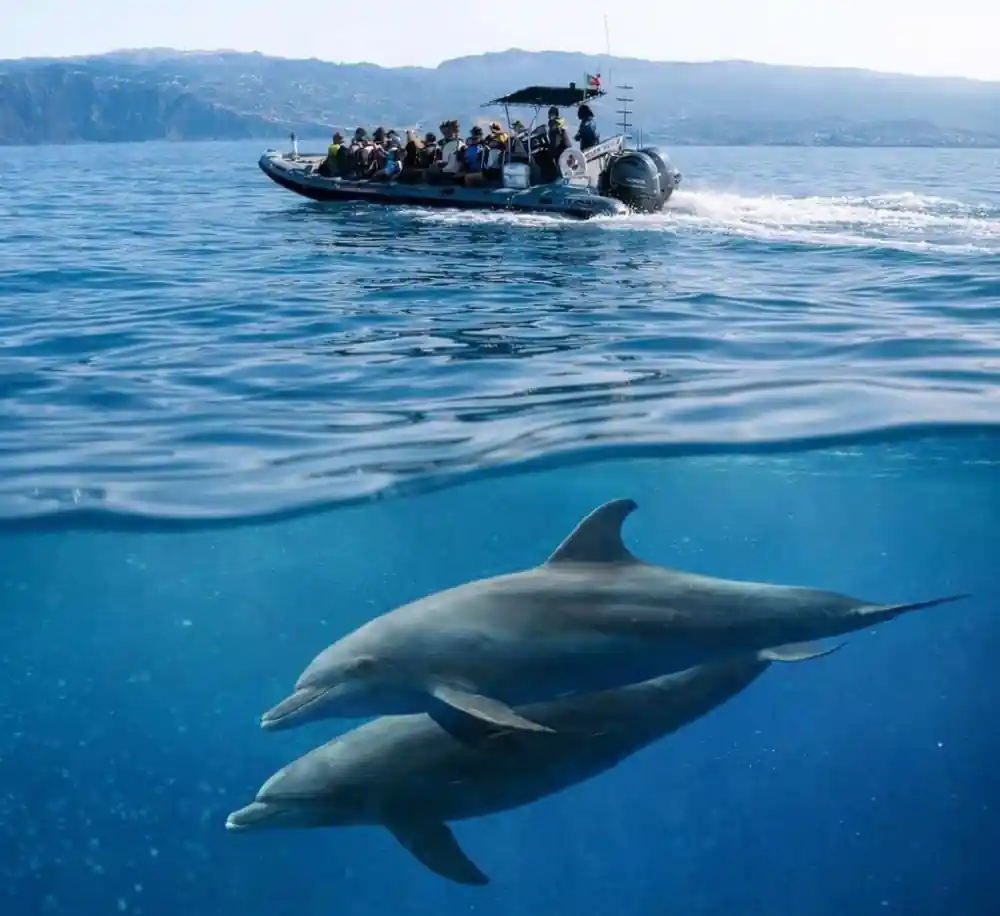
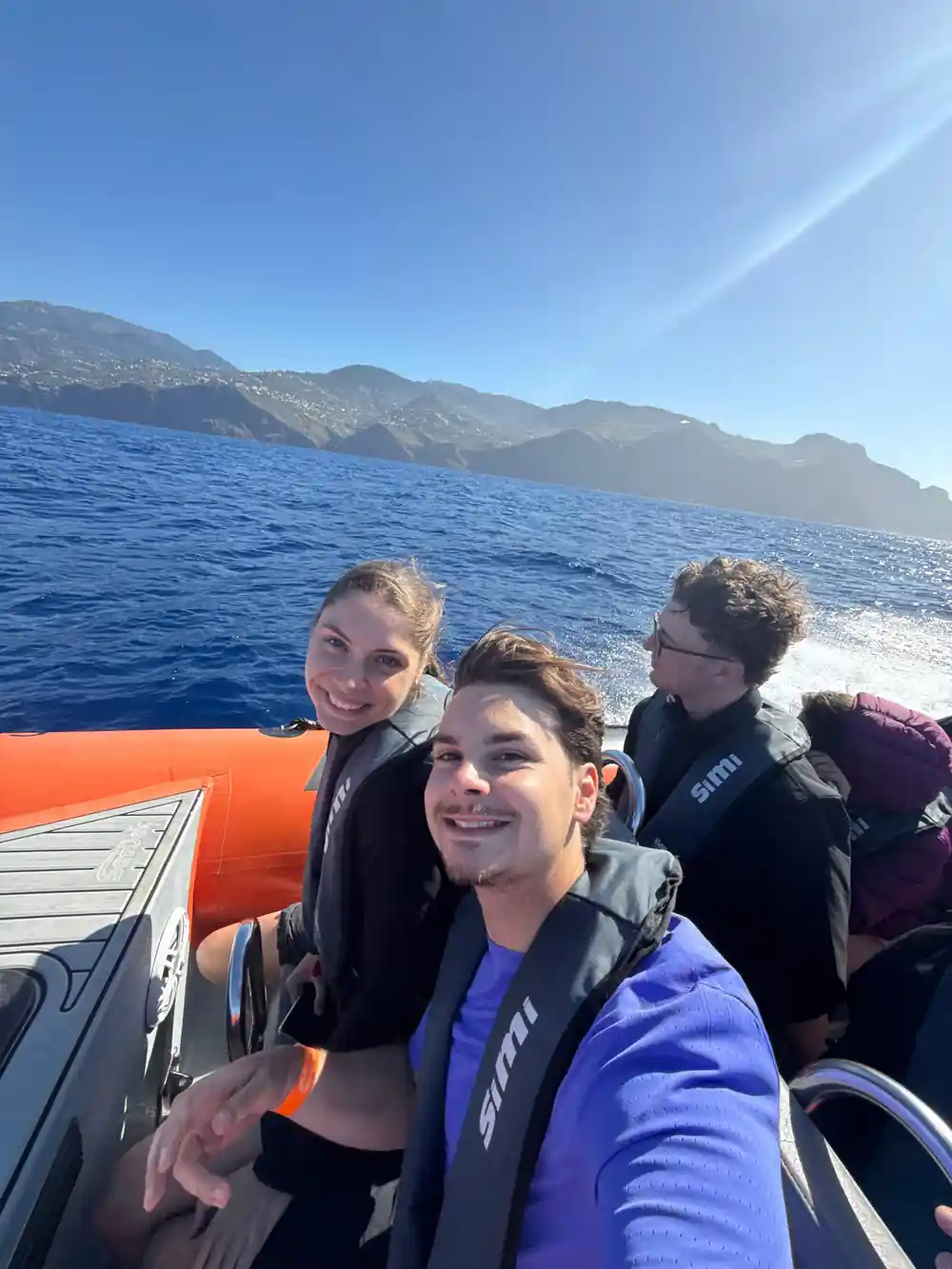
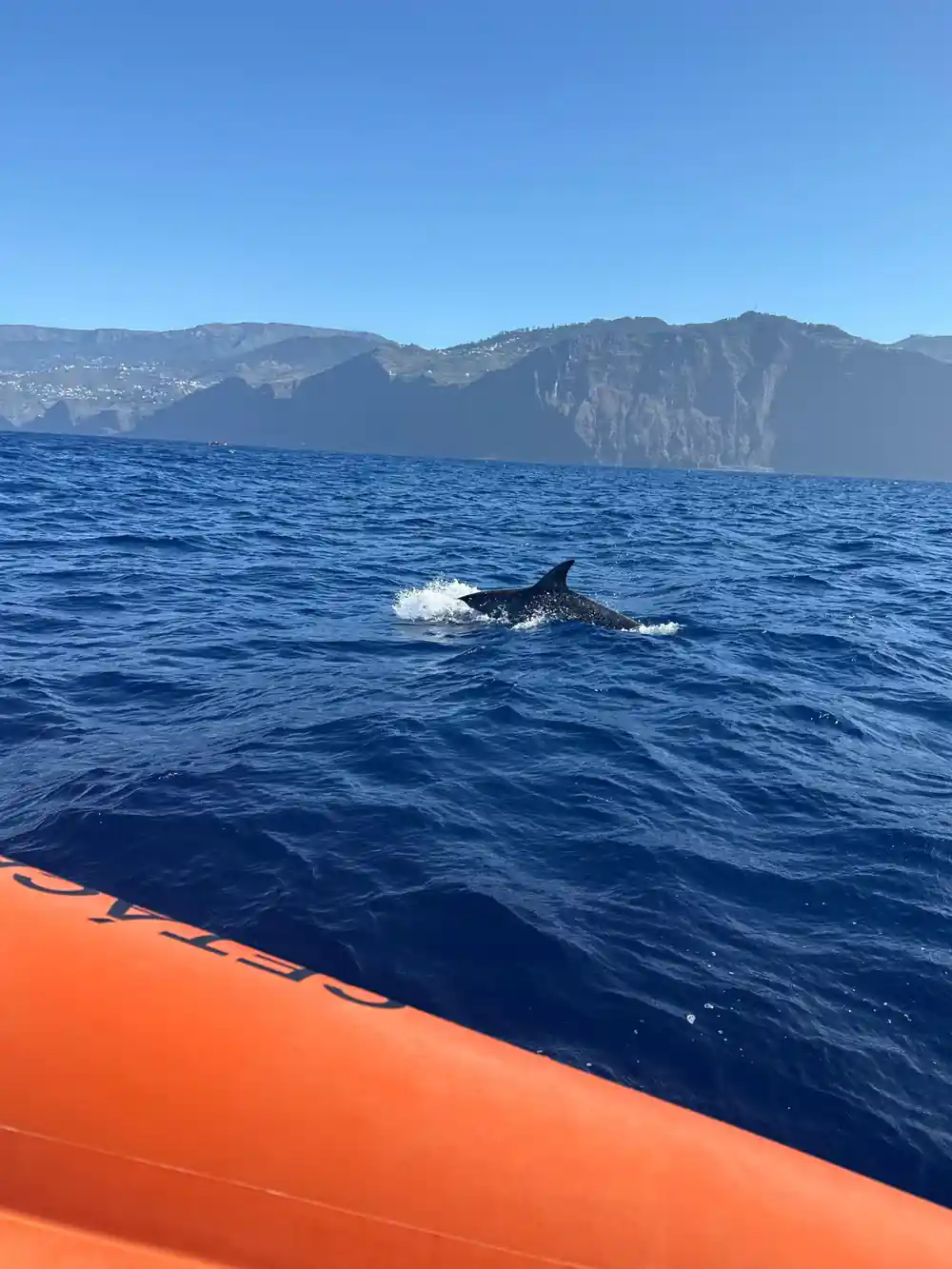
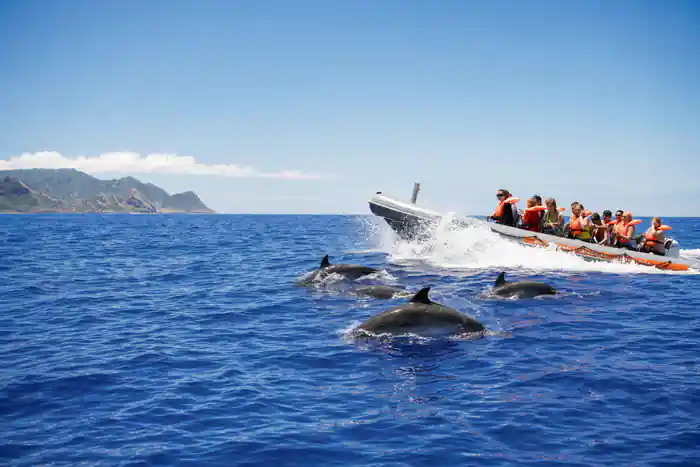
A semi-rigid inflatable has a solid hull with inflated tubes along the sides. It is fast, it turns tightly, it sits low so the water is right there beside you, and it can get to a sighting quickly when a position comes down from the lookouts.
That speed is the point. A catamaran that takes twenty minutes to reach a pod may arrive to find the animals have moved on. A boat that covers the same distance in seven has a far better chance of still finding them there.
It also means a livelier ride, spray when the sea is up, and no shade at all. Whether that reads as a benefit or a drawback depends entirely on what you want from a morning, and the honest answer is that it suits some people much better than others.
A biologist rather than a commentary
The guides on this boat are marine biologists, and the difference shows in what happens during a sighting. A species is identified out loud, the behaviour is explained while it is happening, and questions get answered rather than deflected.
Guests write about being told not only what they were looking at but what else lives in the same water and might appear. That is the shape of a conversation with somebody who knows the subject, rather than a set of memorised lines delivered at the same points every trip.
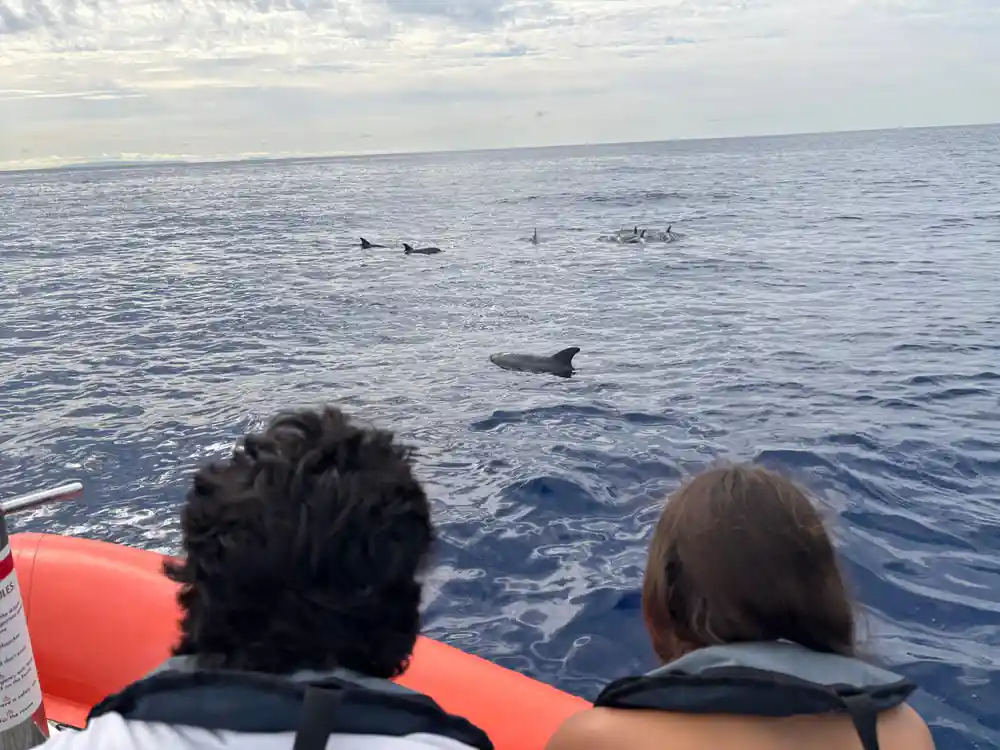
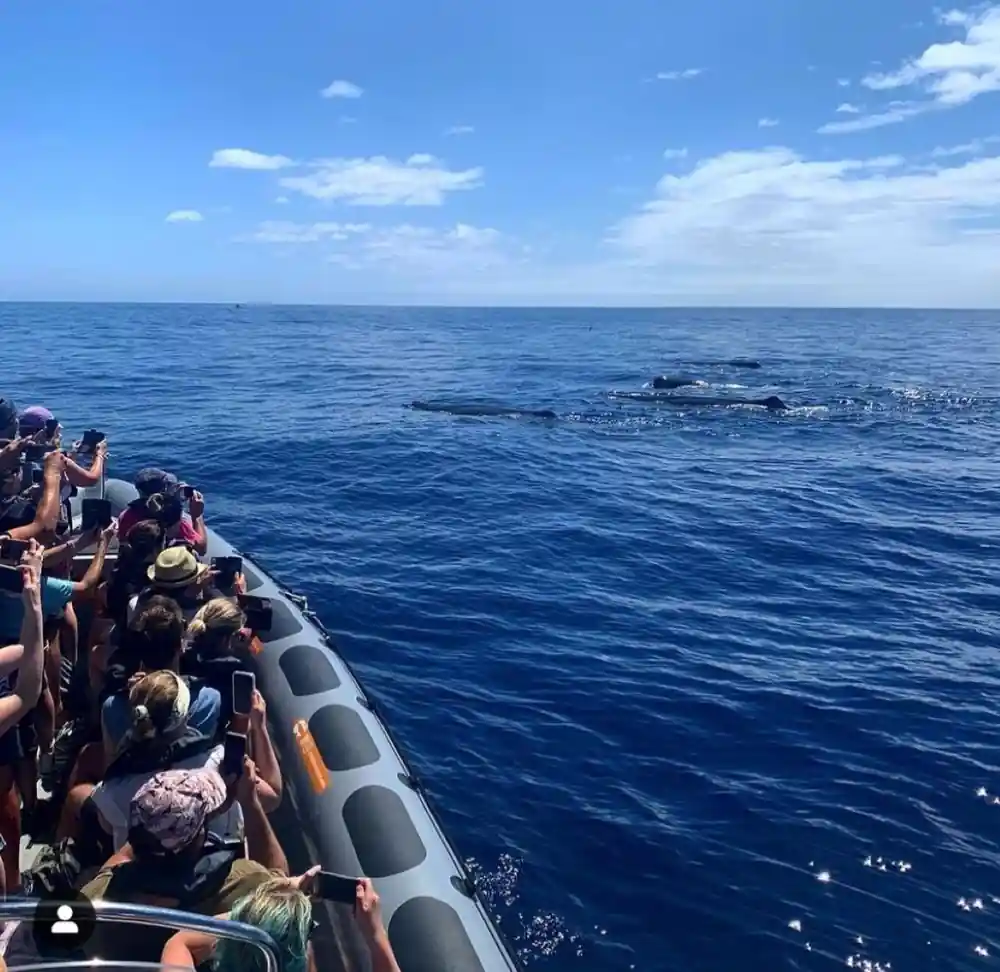
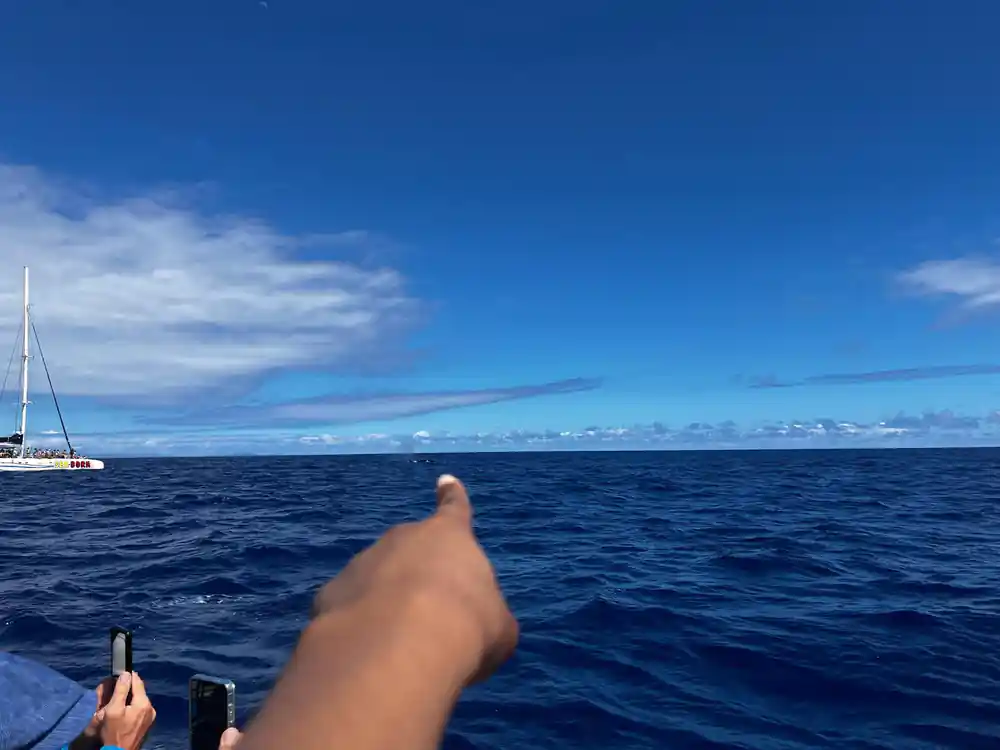
There is a briefing before departure covering how to sit, how to hold on, and how to help detect animals. Passengers are asked to watch for foam, a blow, concentrations of birds, and fins. Everybody on board becomes an extra pair of eyes, which is both useful and the reason the trip feels participatory.
Funchal dolphin watching and the lookouts on land
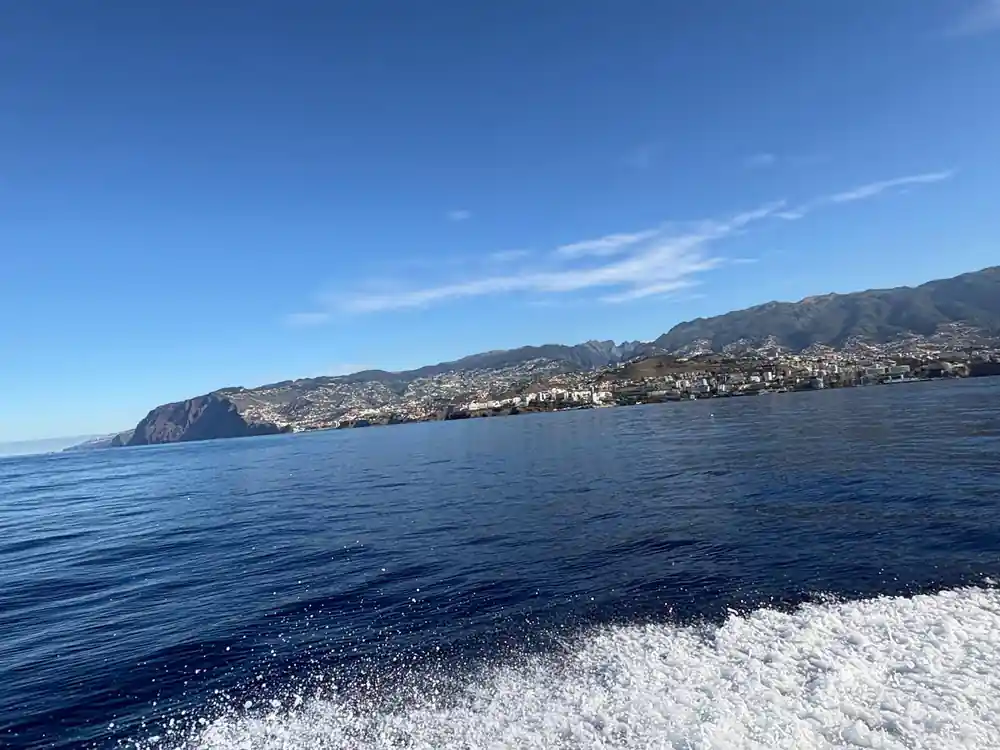
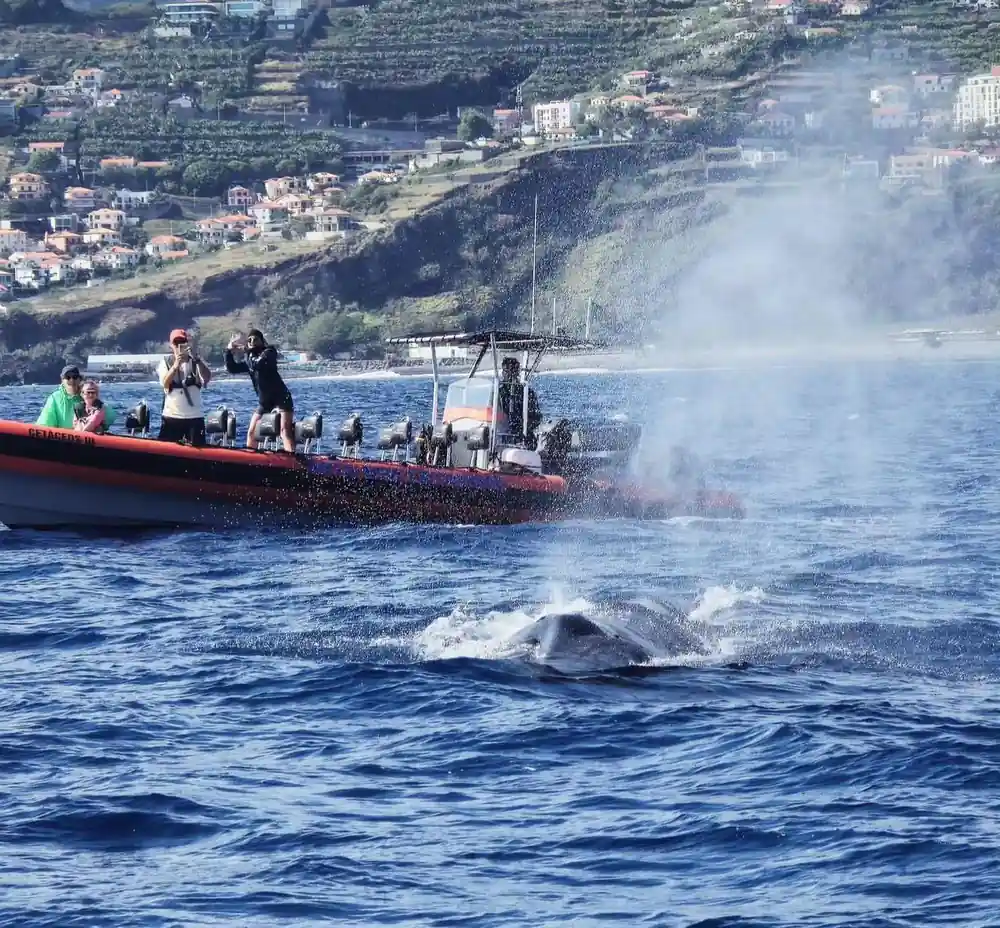
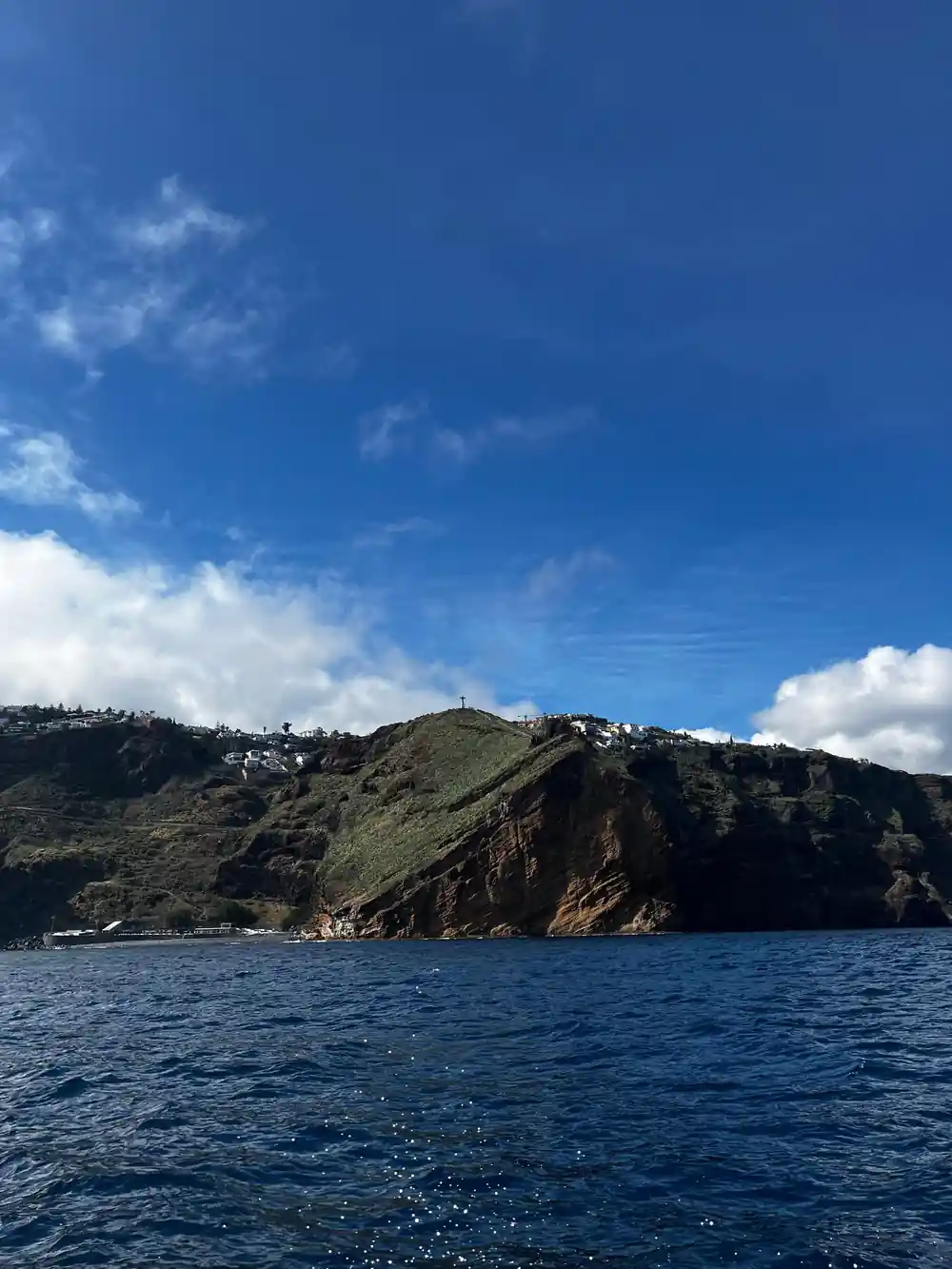
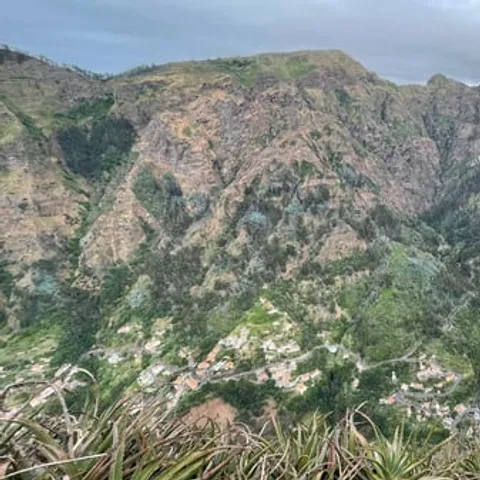
Madeira rises steeply from very deep water, which means observers standing high on the coast can see across a great deal of sea. This operator has a team doing exactly that, and they radio the boat towards whatever they find.
It converts the search from wandering to navigating. The boat is not hoping to stumble across something; it is being directed to a position that somebody has already confirmed. Combined with a hull that can cover ground quickly, that is the mechanism behind the guarantee.
It also means less engine noise for the same encounter, because a boat that runs once to a known position disturbs far less water than one quartering a wide area under power for two hours.
The sighting guarantee
The operator states that cetaceans are guaranteed, and that a trip which fails to find any earns you a second one at no charge. That is a real commitment rather than a marketing line, and it only makes sense for an operator confident in its own method.
It also quietly aligns everybody's interests. A boat with a guarantee has every reason to keep looking rather than to turn for home early, and the reviews reflect that. Guests describe crews staying out past the scheduled time when a whale surfaced late.
What it does not do is promise a particular animal. Madeira's waters hold resident dolphins year round and migrating whales in season, but which of them appears on your morning is not something anybody can arrange.
Whale watching in Funchal and what turns up
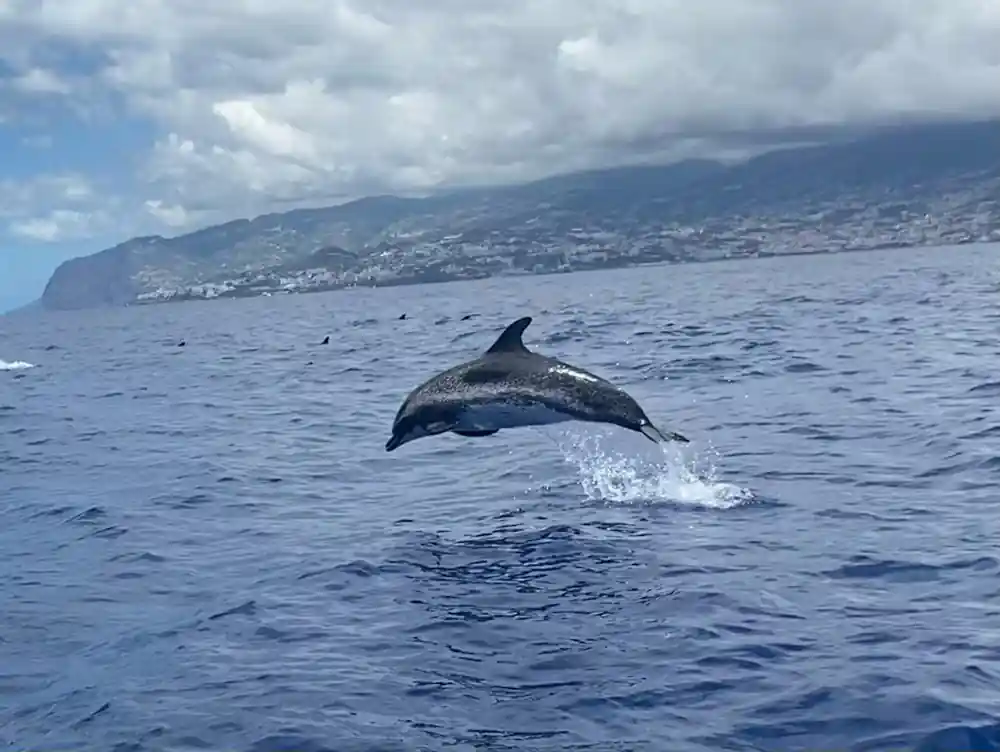
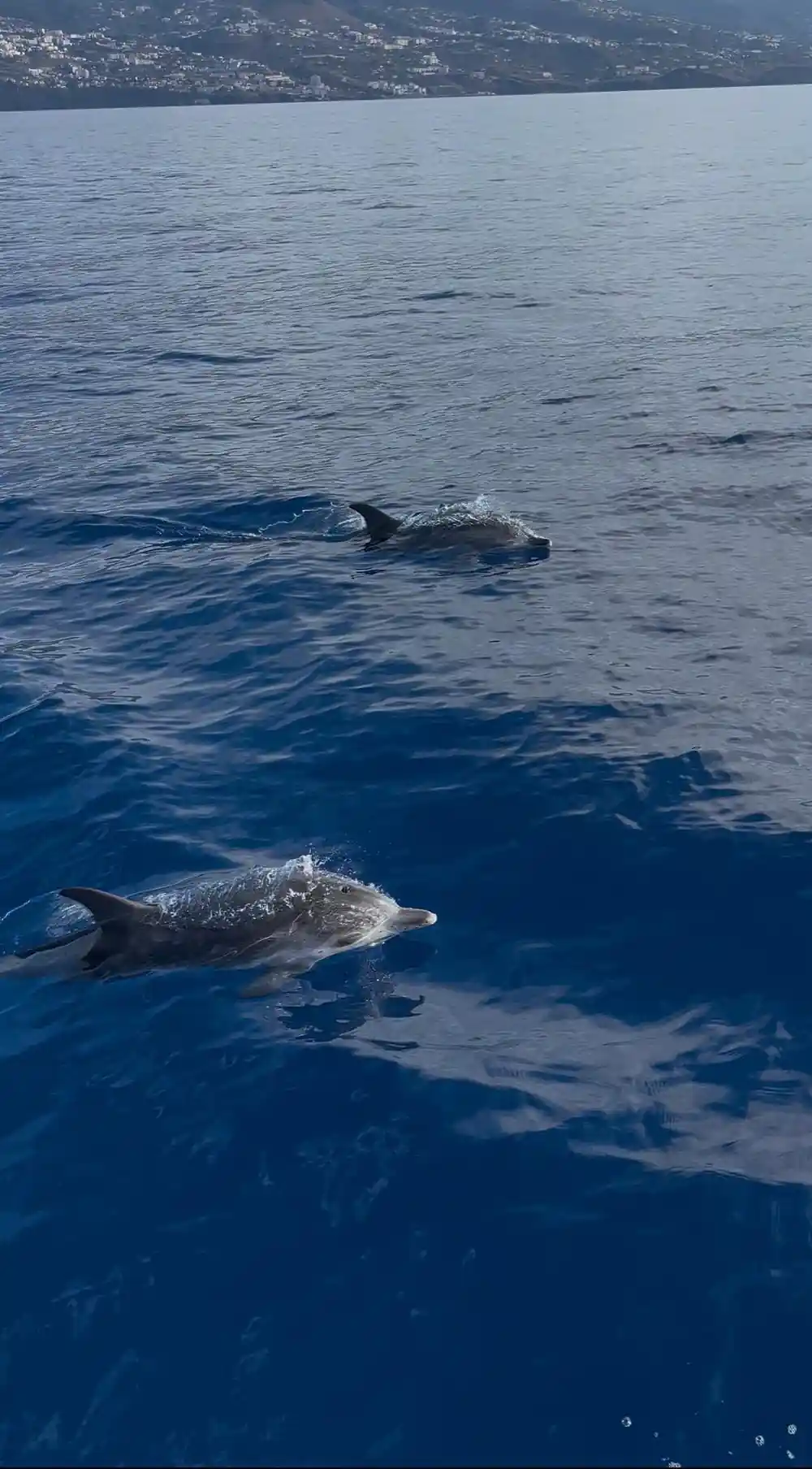
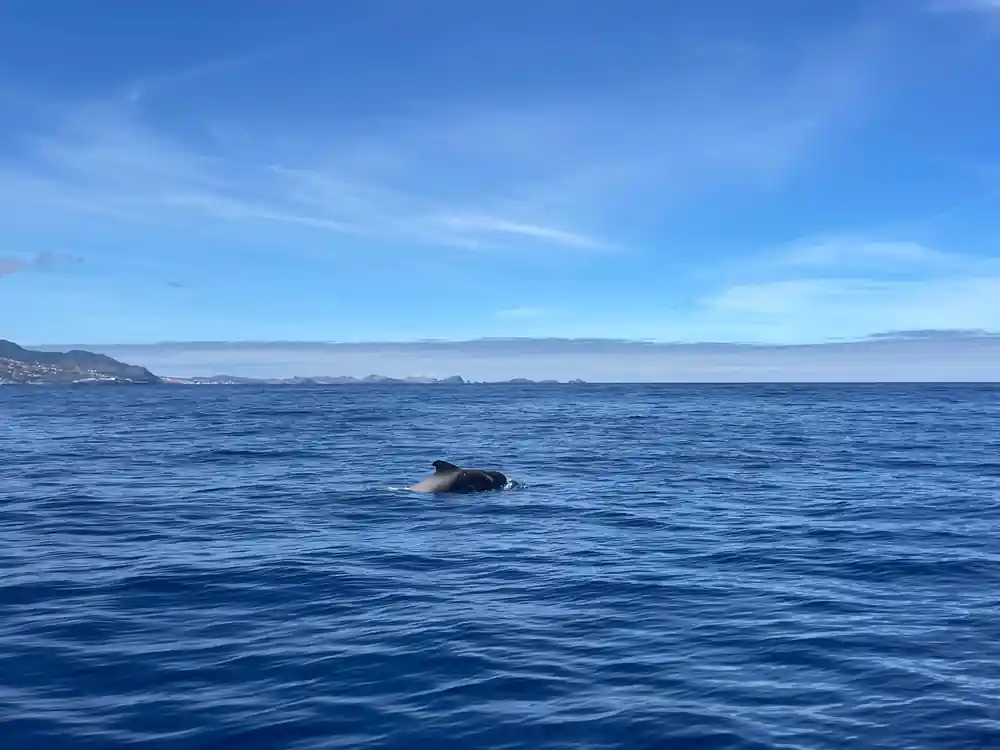
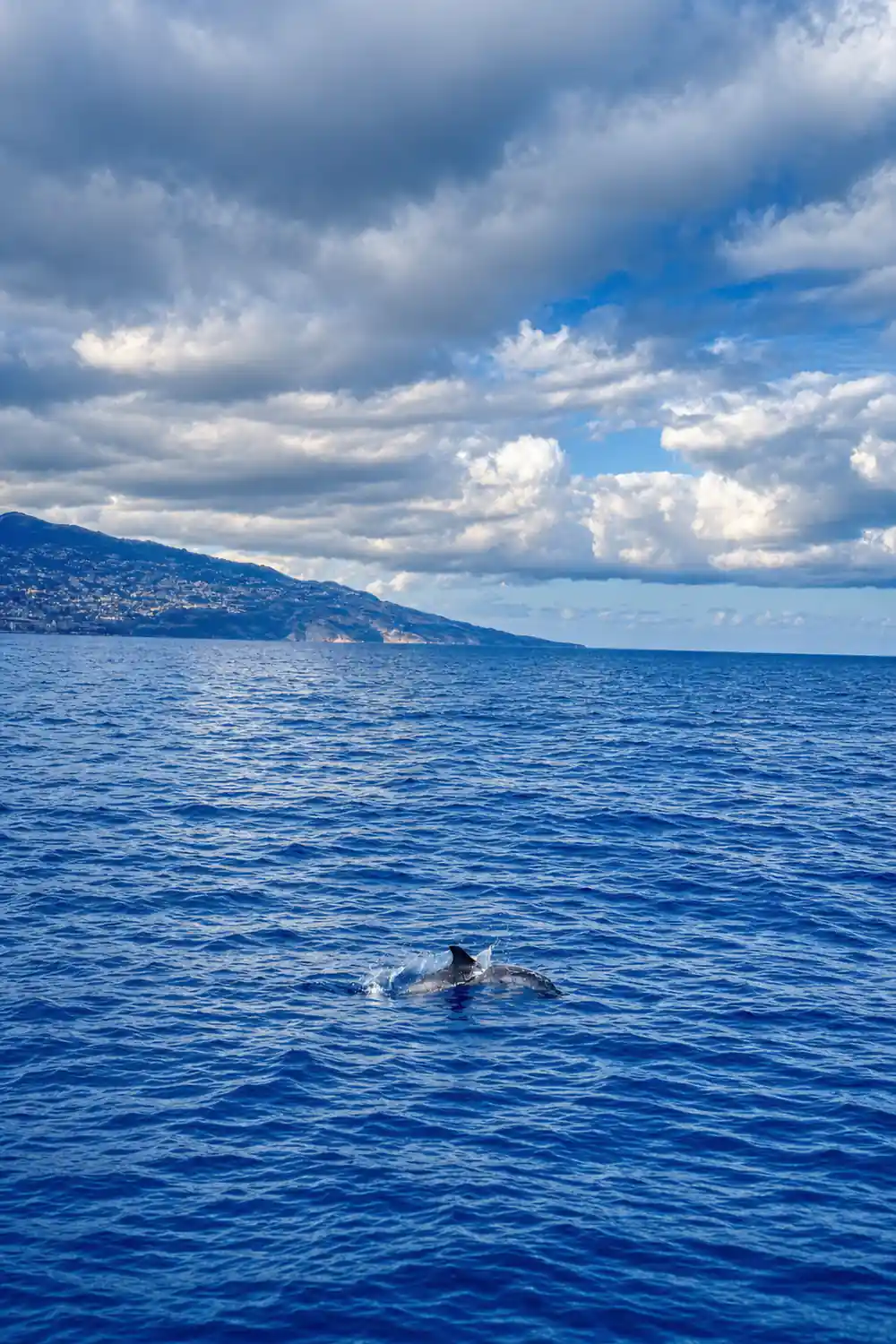
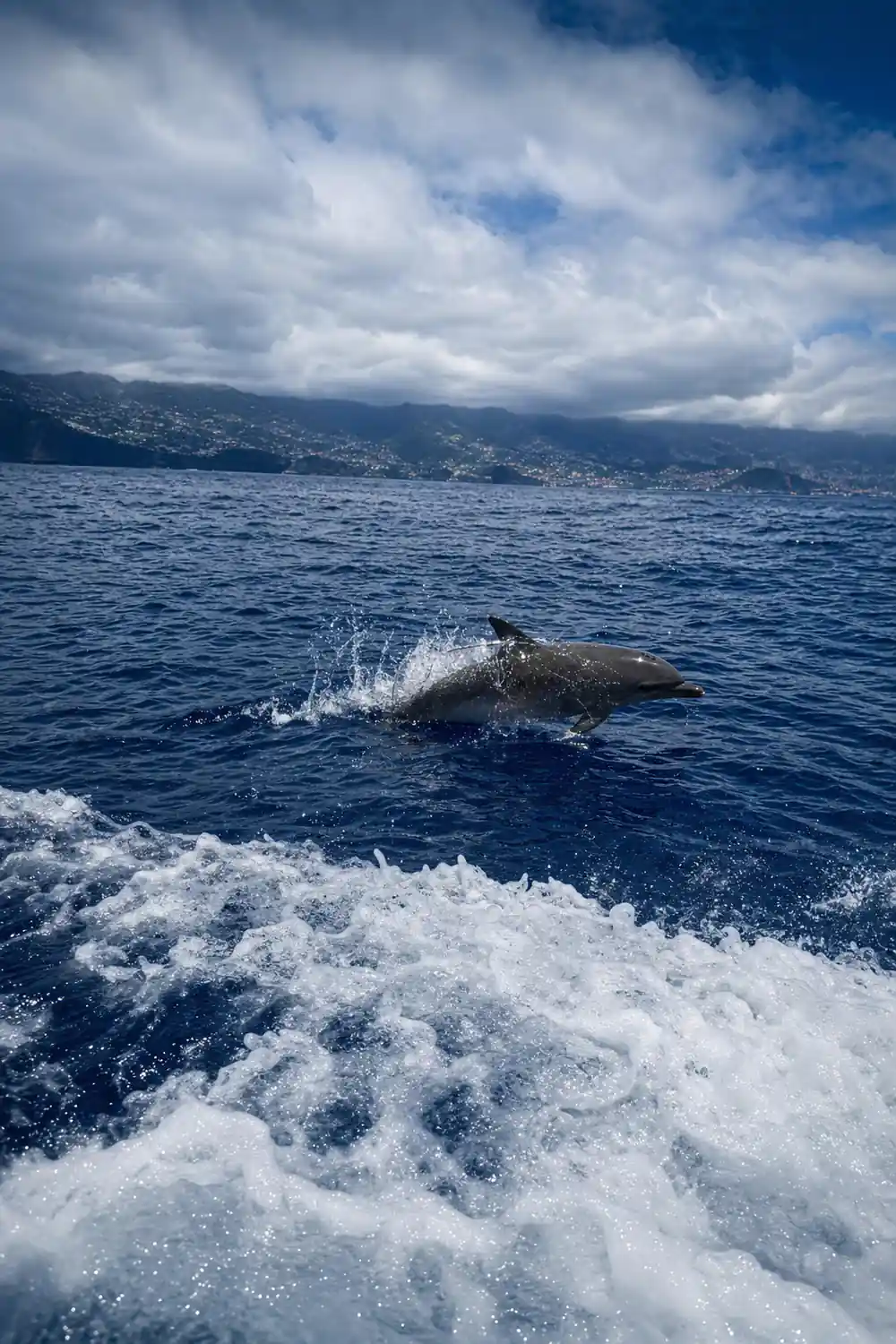
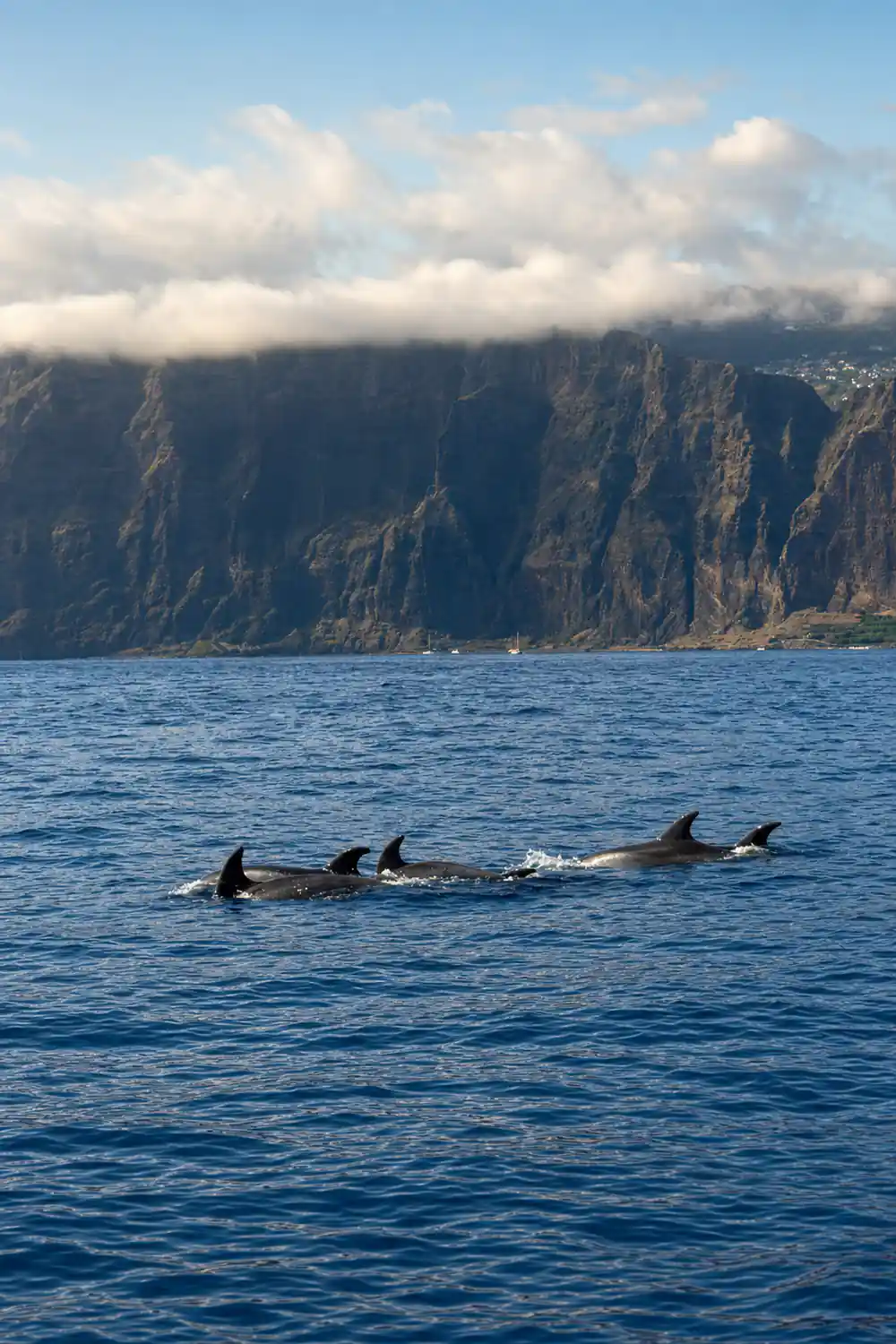
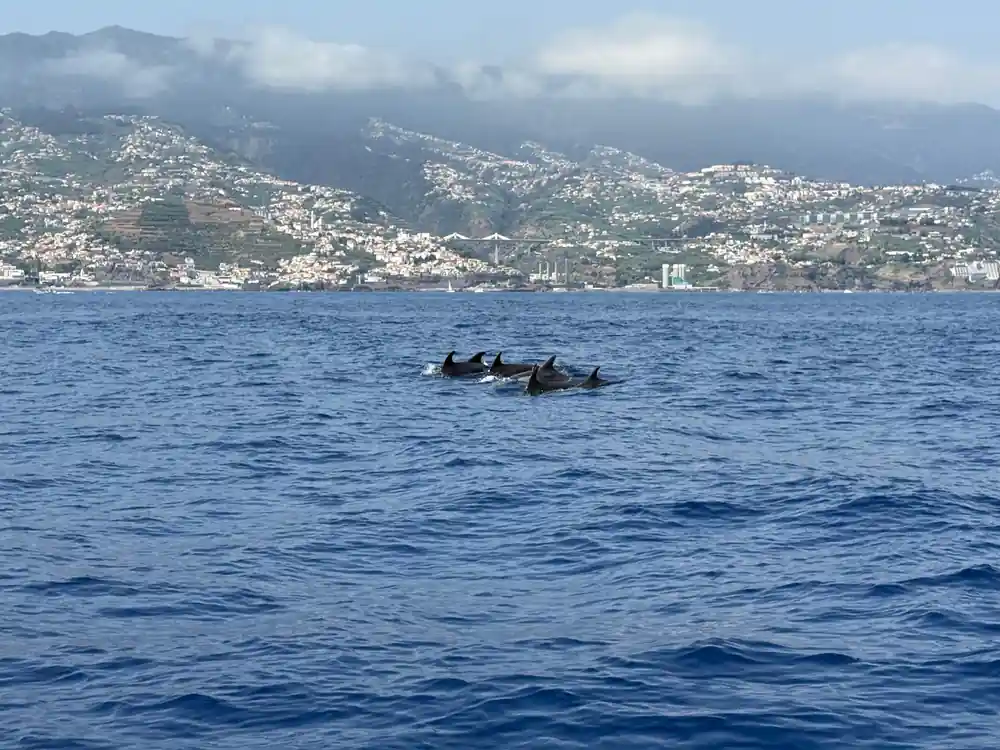
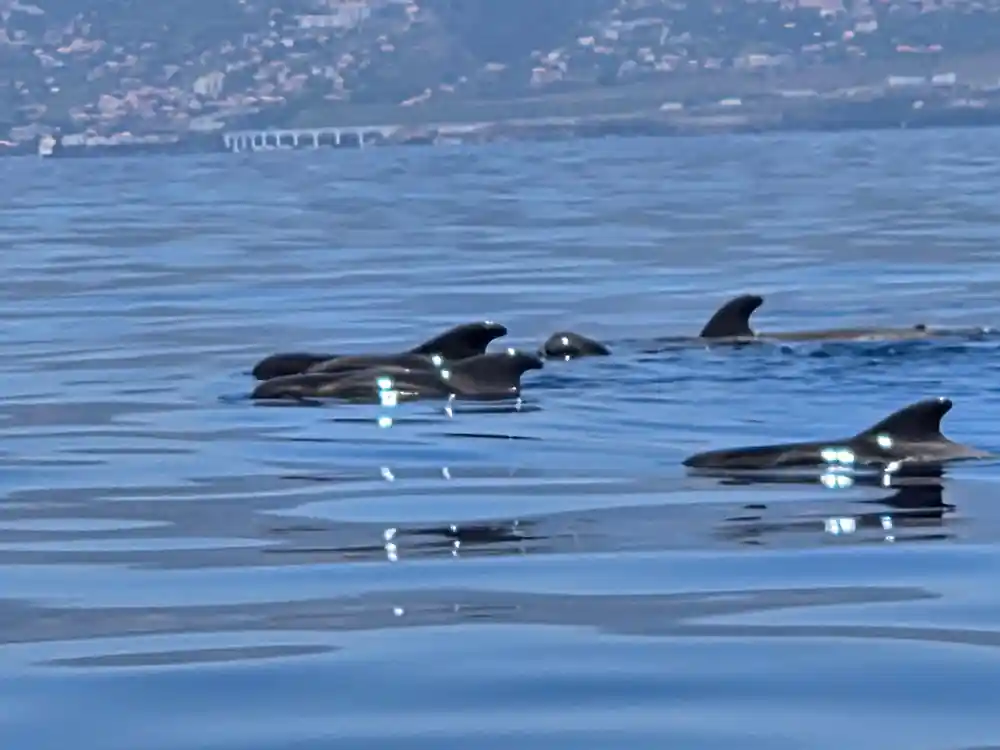
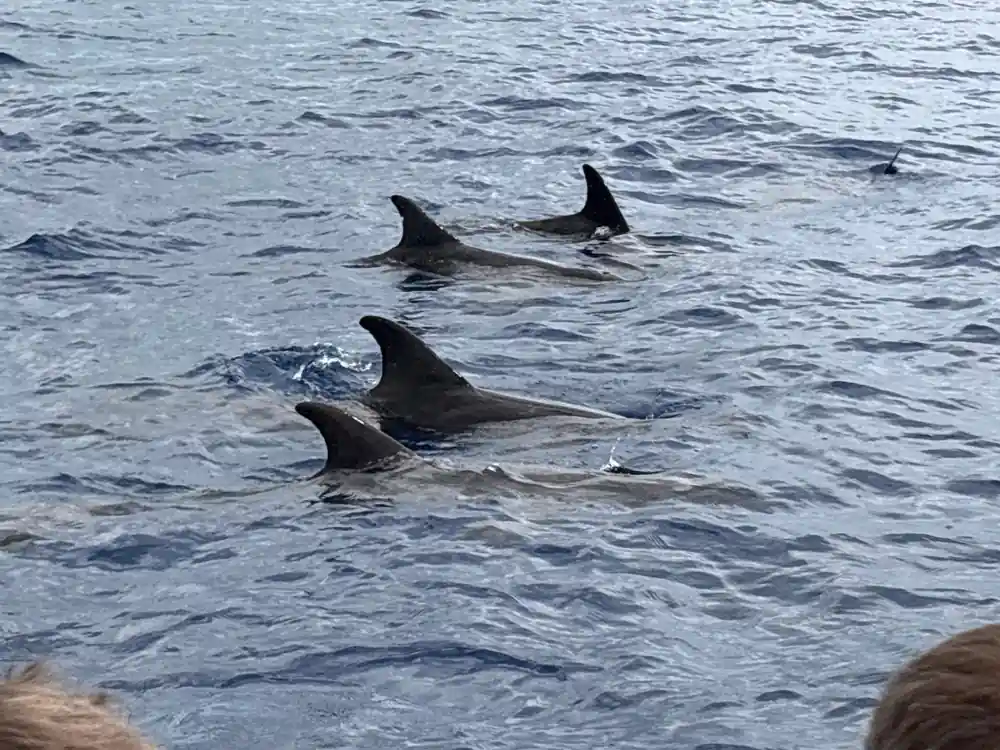
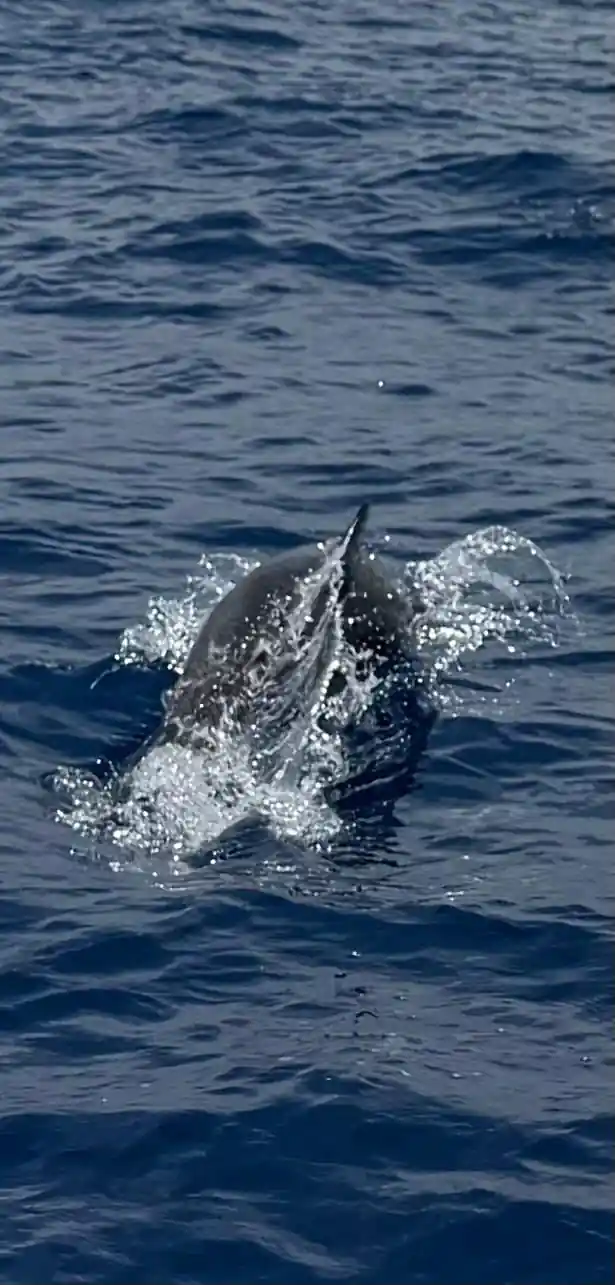
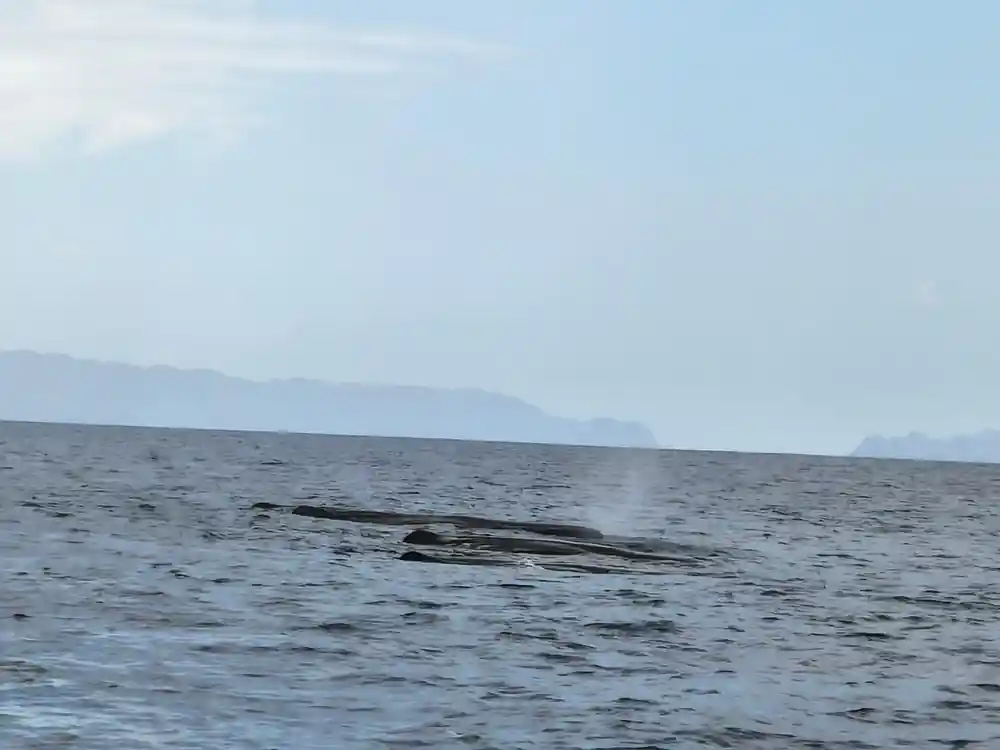
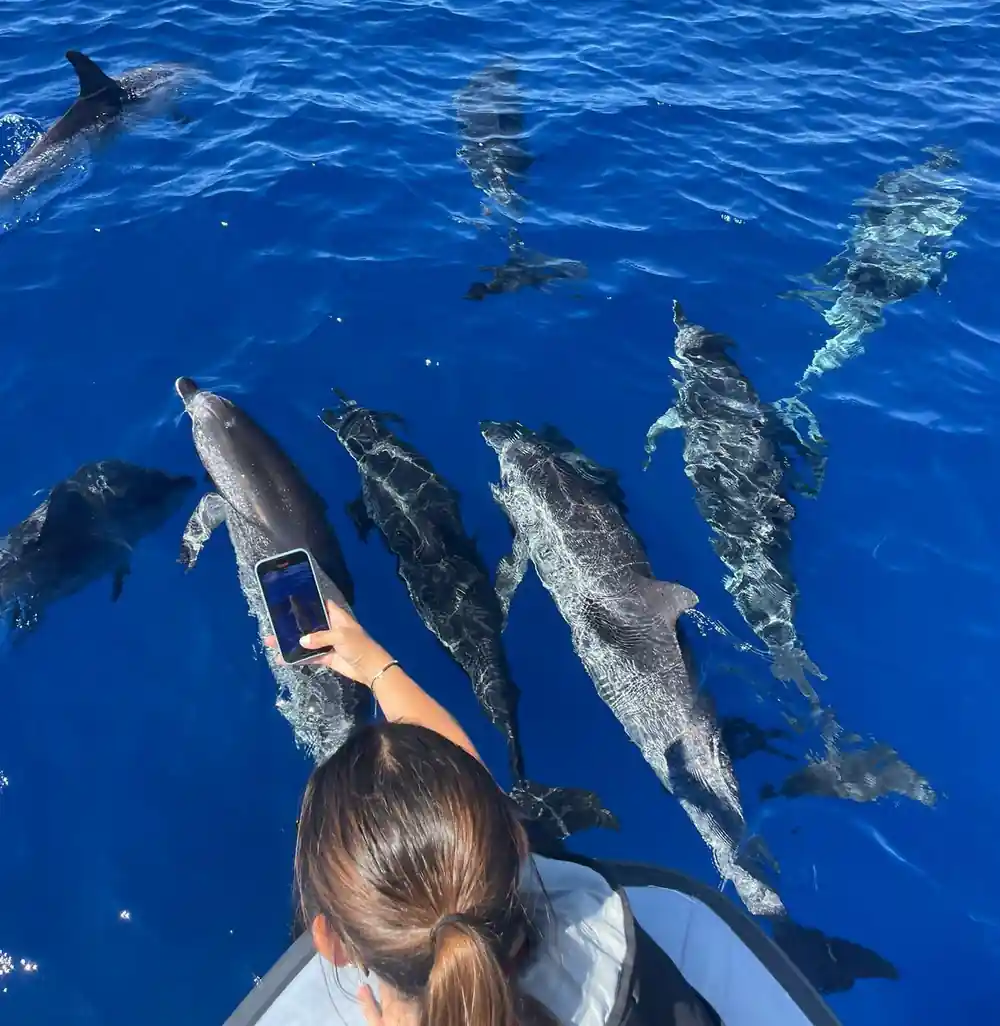
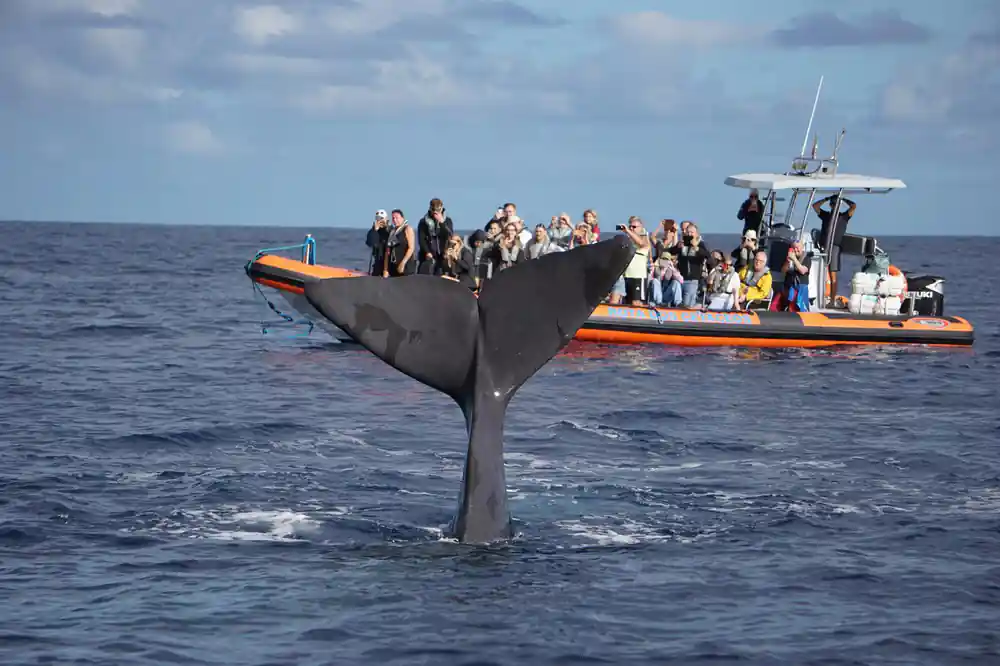
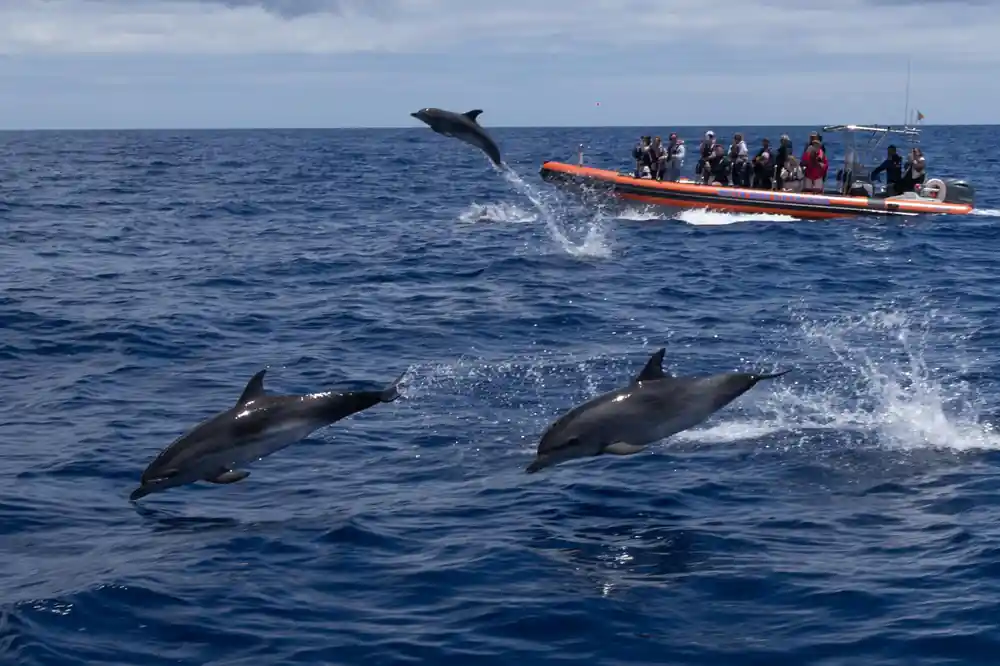
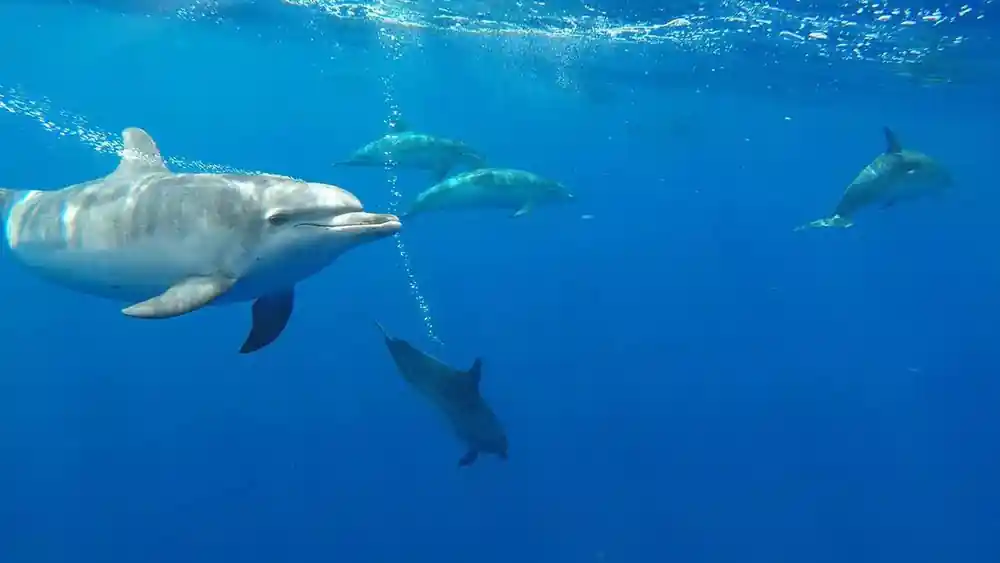
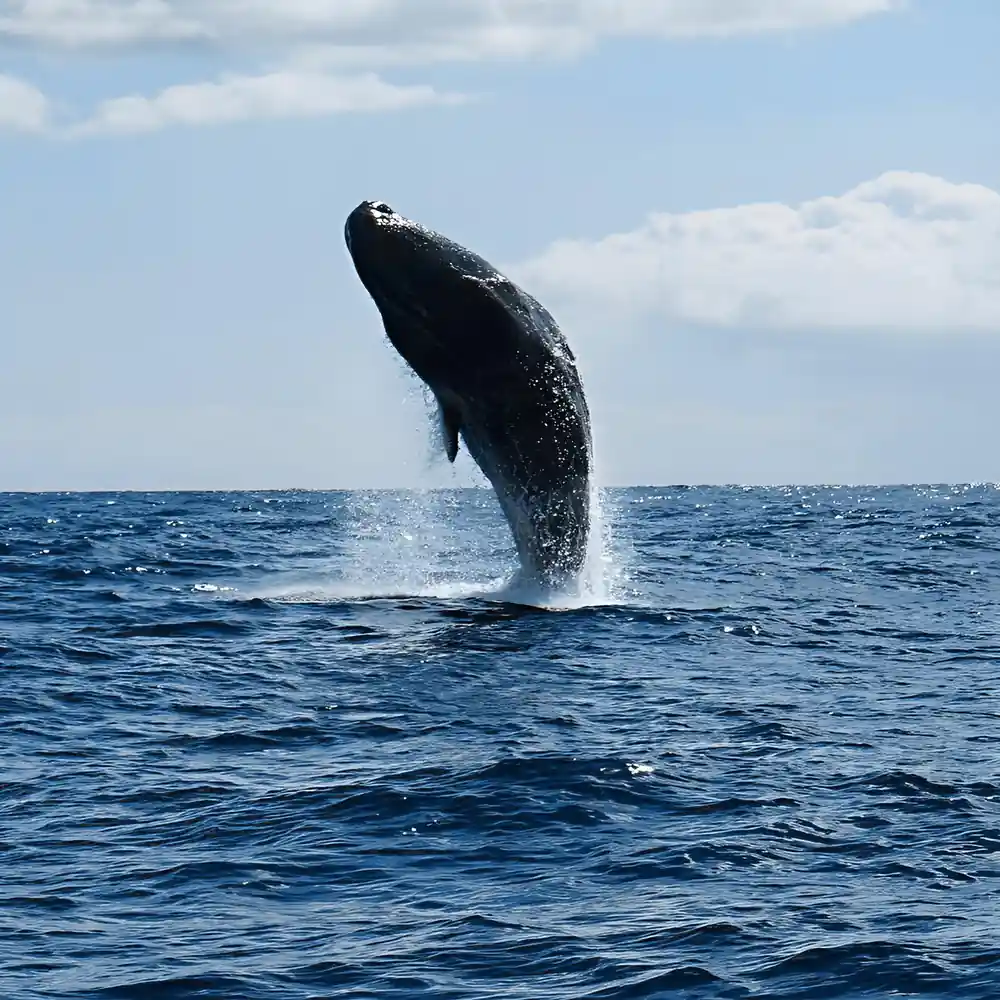
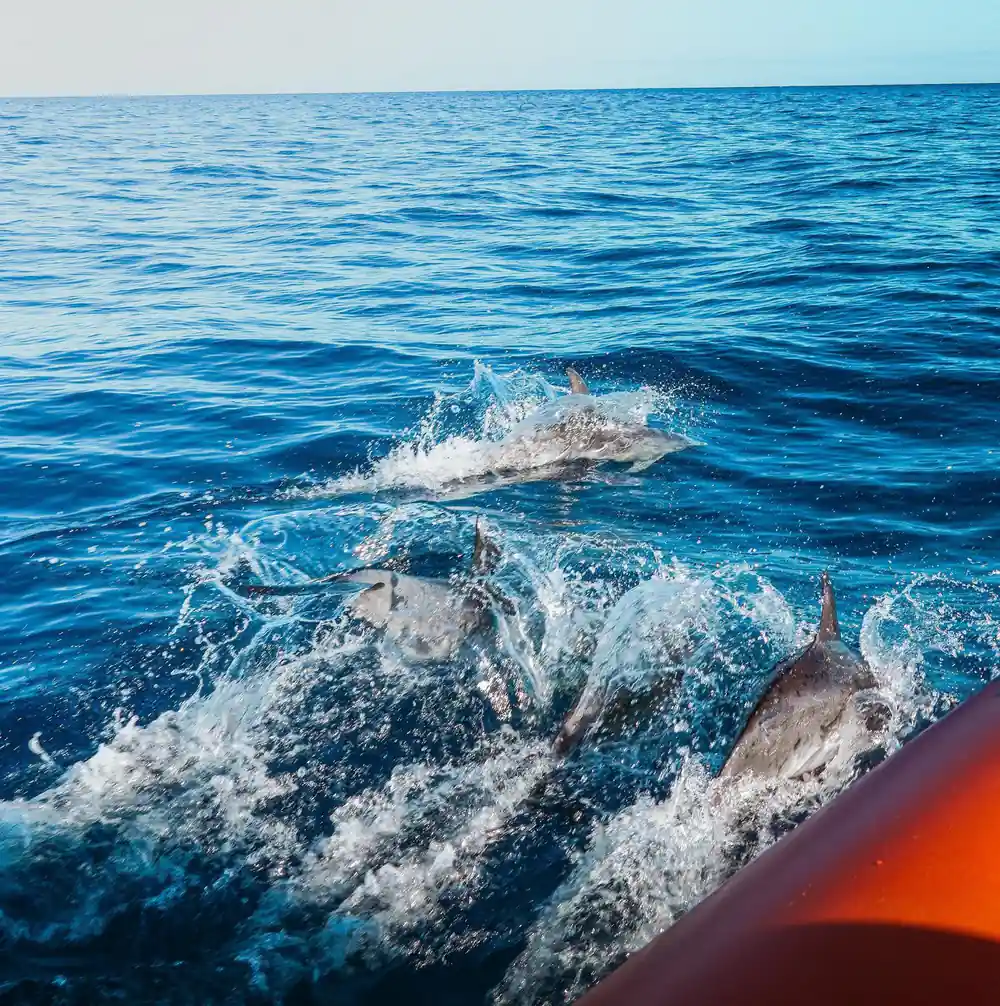
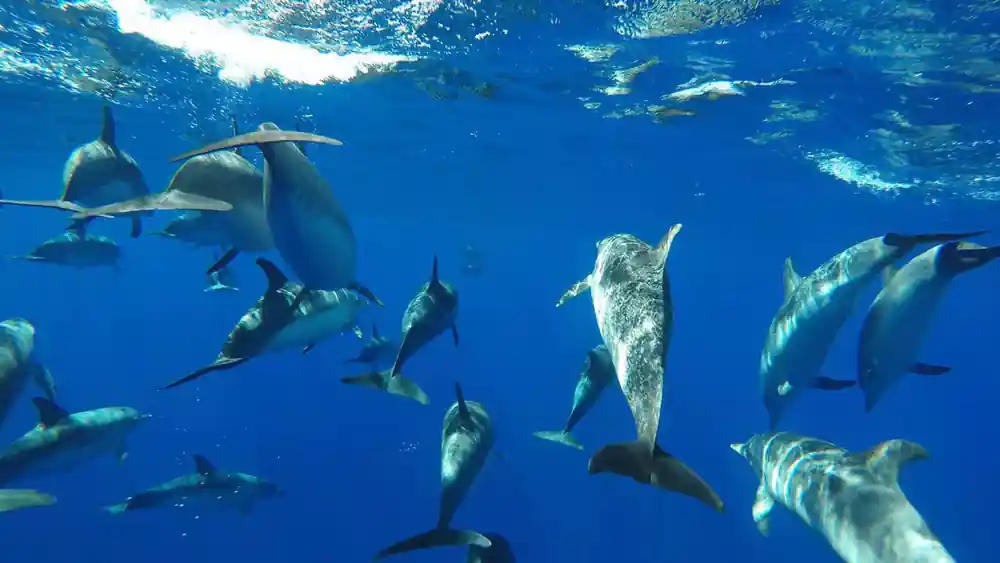
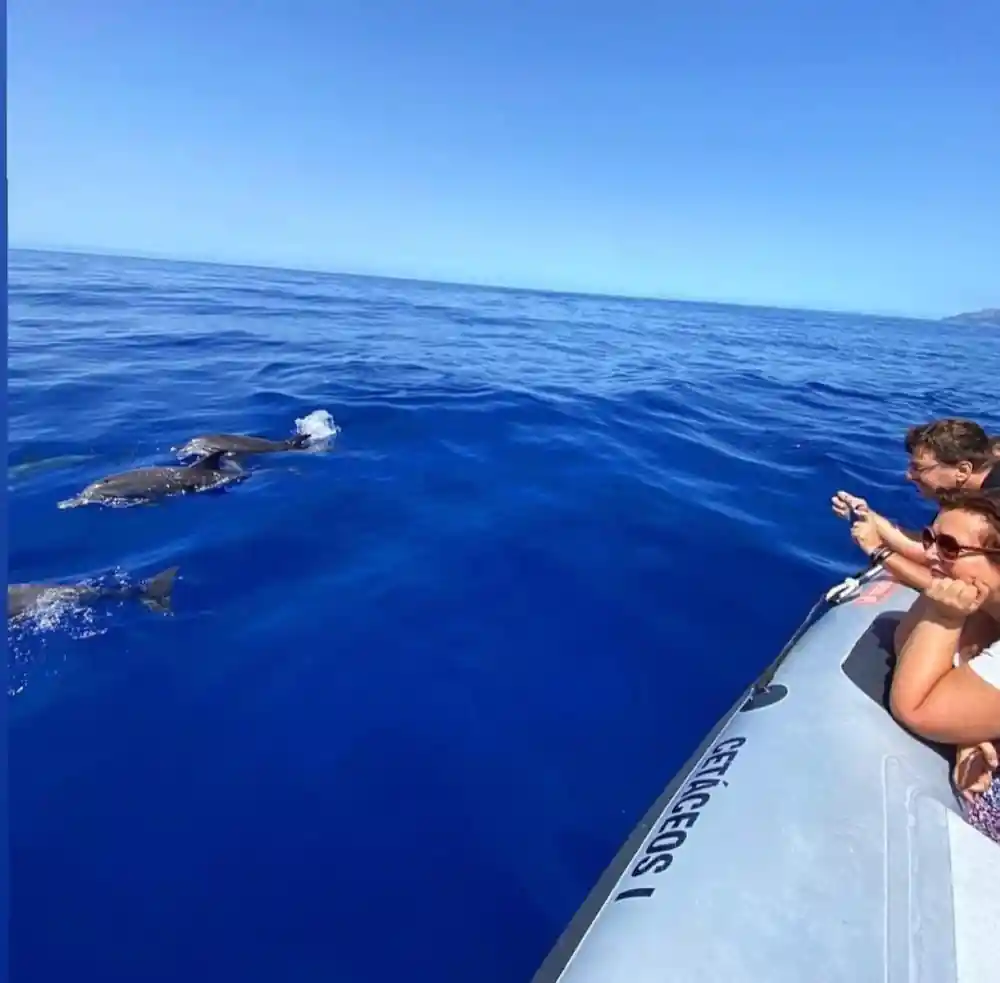
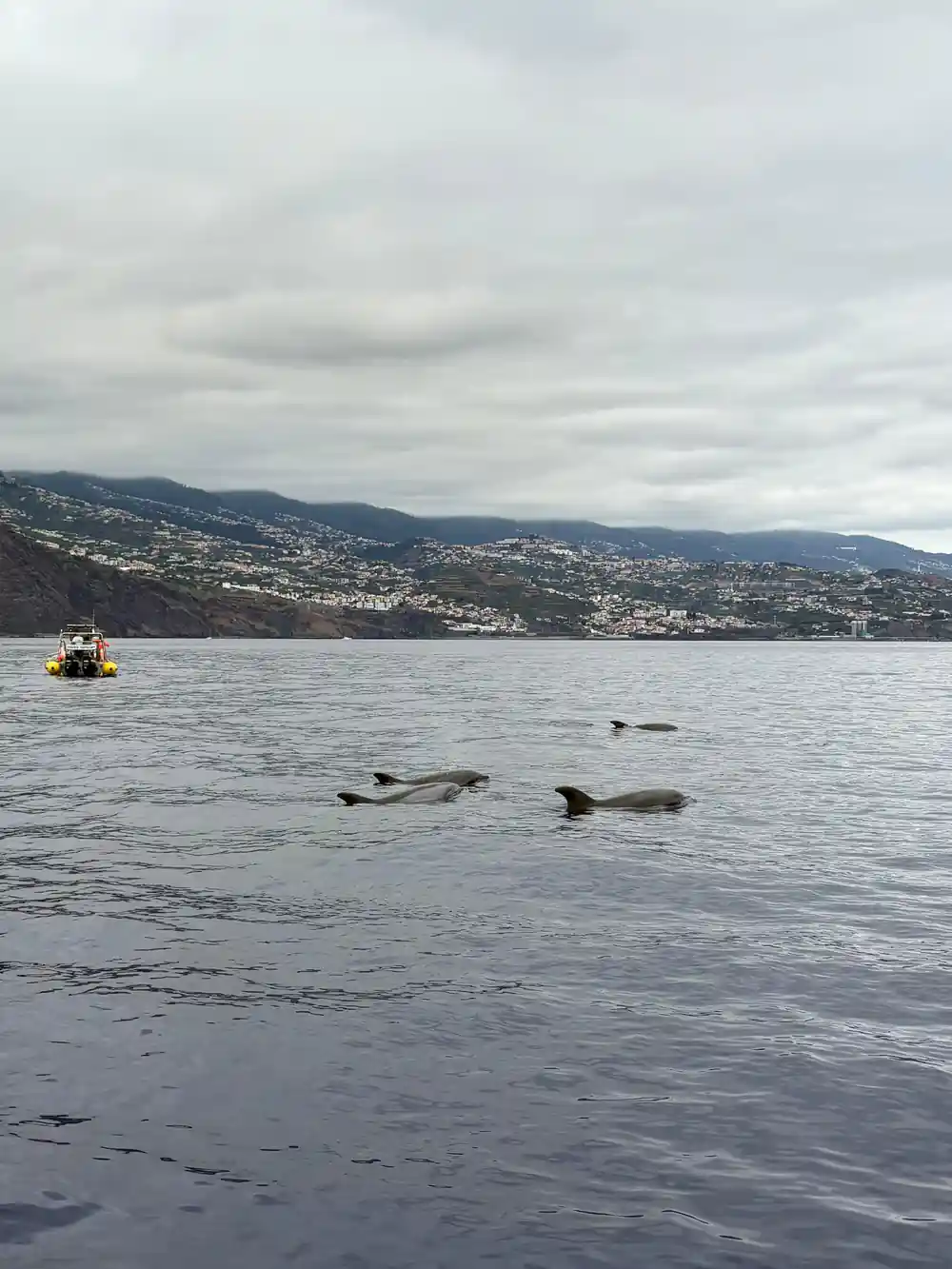
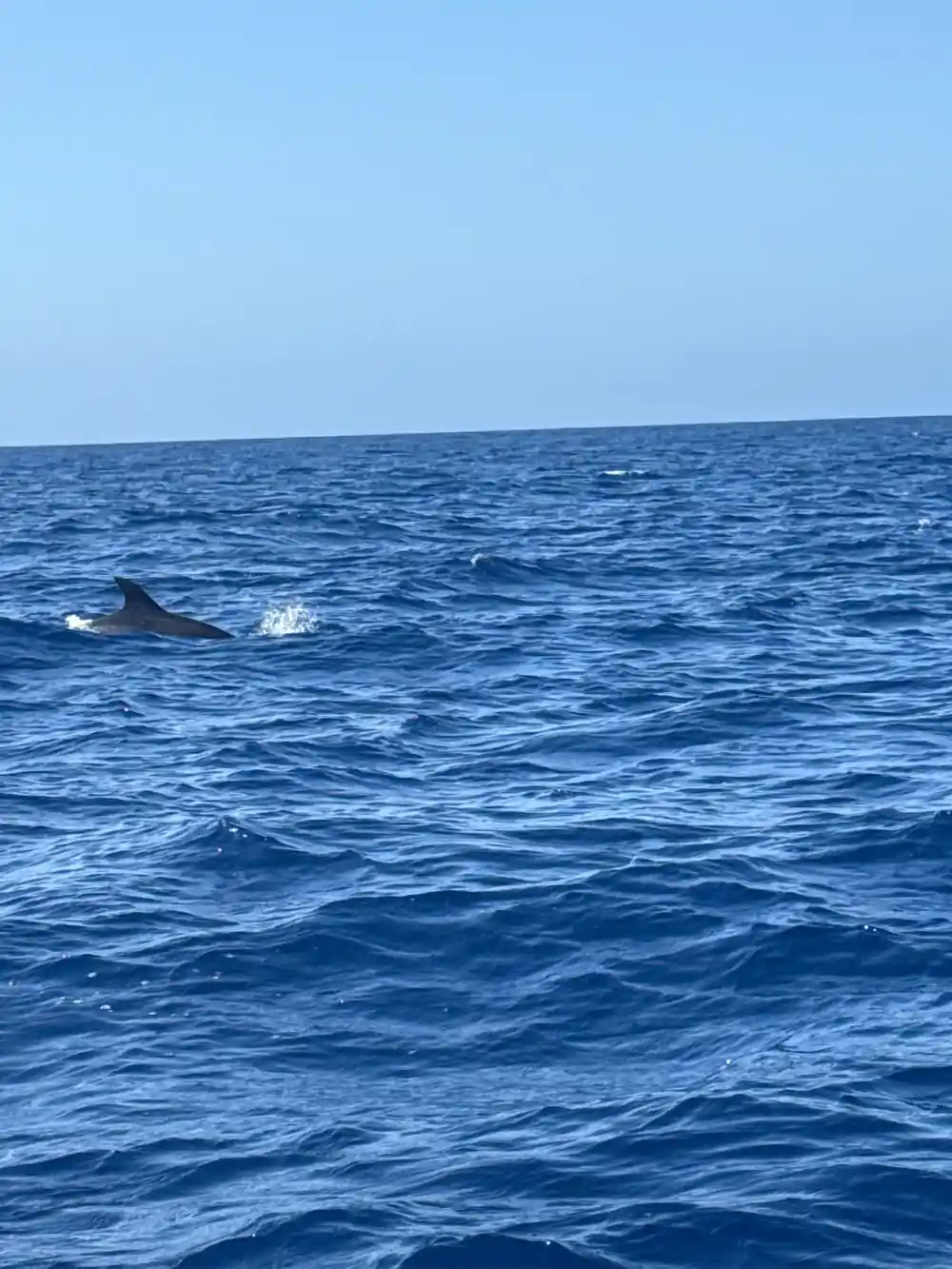
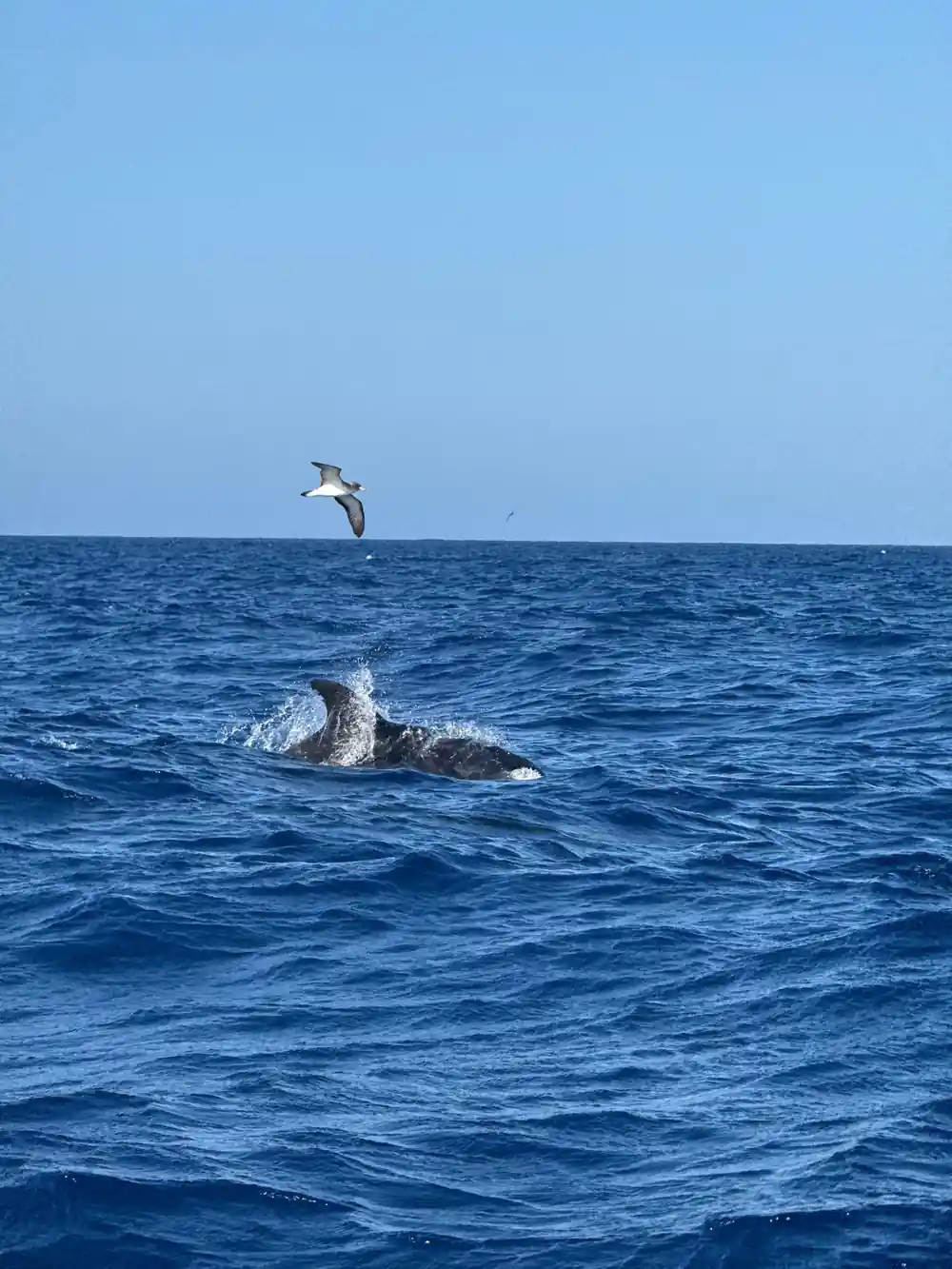
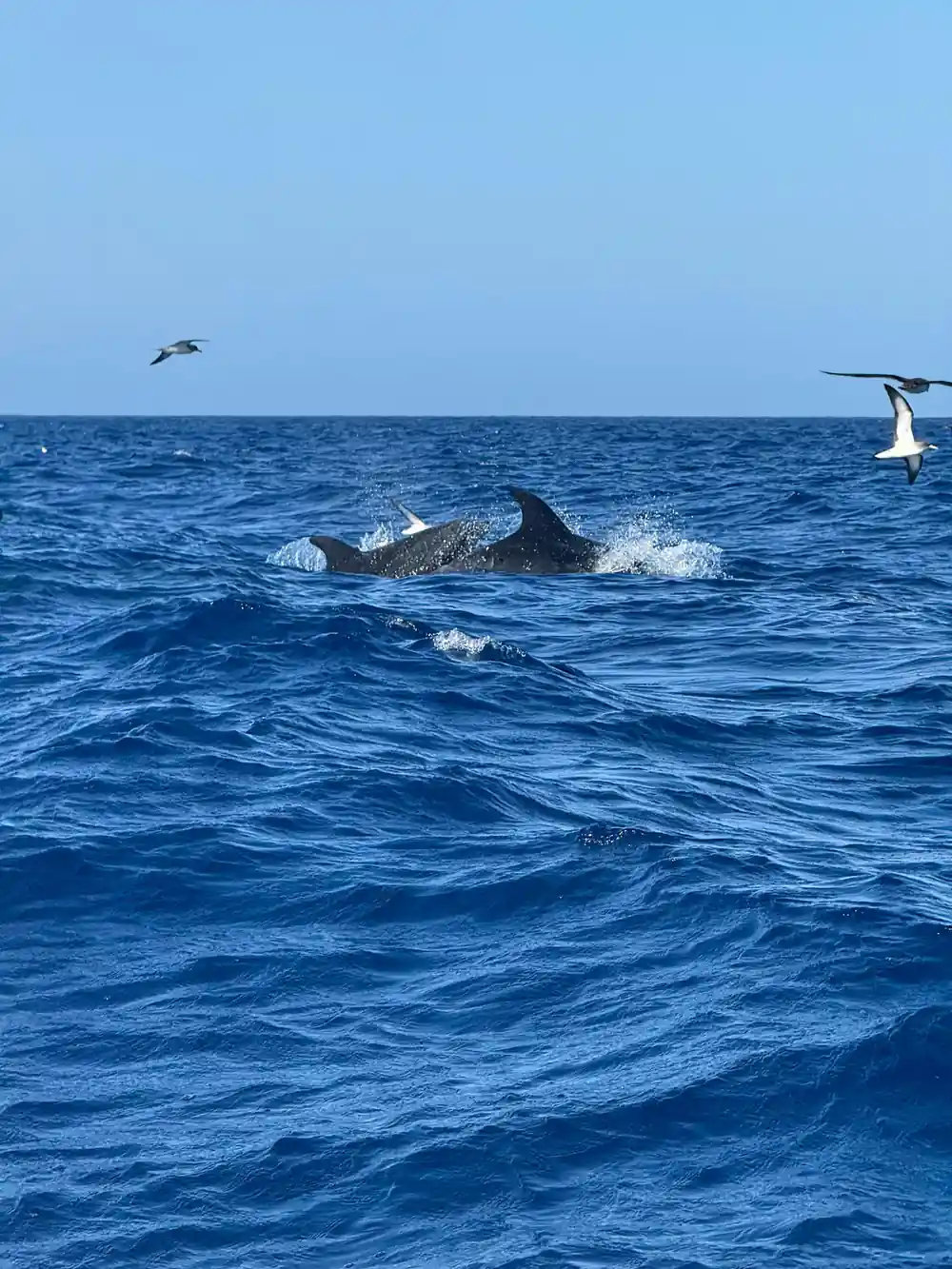
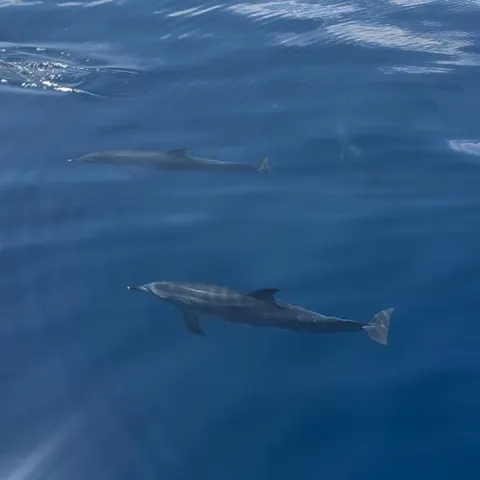
Atlantic spotted dolphins and bottlenose dolphins are the animals most often recorded by guests here. Pilot whales appear regularly, resting in tight groups at the surface. Bryde's whales are seen, sometimes breaching clear of the water.
Beyond the headline species, guests write about loggerhead turtles, flying fish going past the bow, seabirds working the same shoals, and on one occasion a shark. The water off Madeira is genuinely rich rather than a single-species attraction.
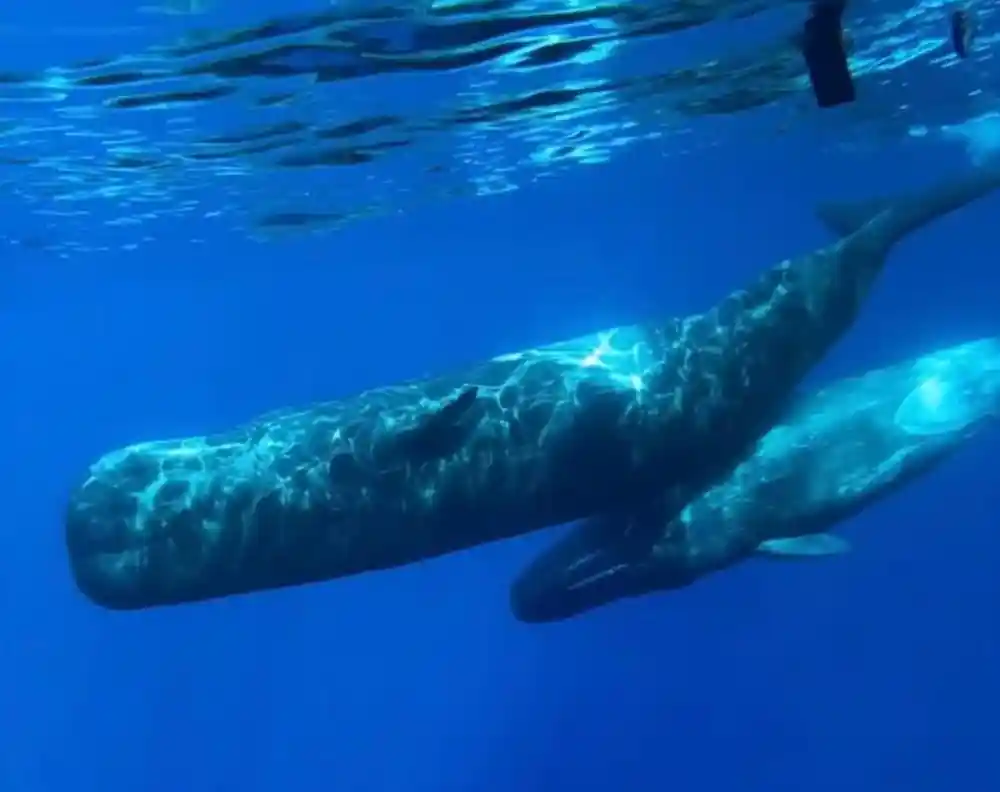
The reason is depth. The island is a volcanic peak and the seabed drops away almost immediately, so deep water animals come remarkably close to shore. That geography is why a two and a half hour trip is long enough to find them.
Small groups and what they change
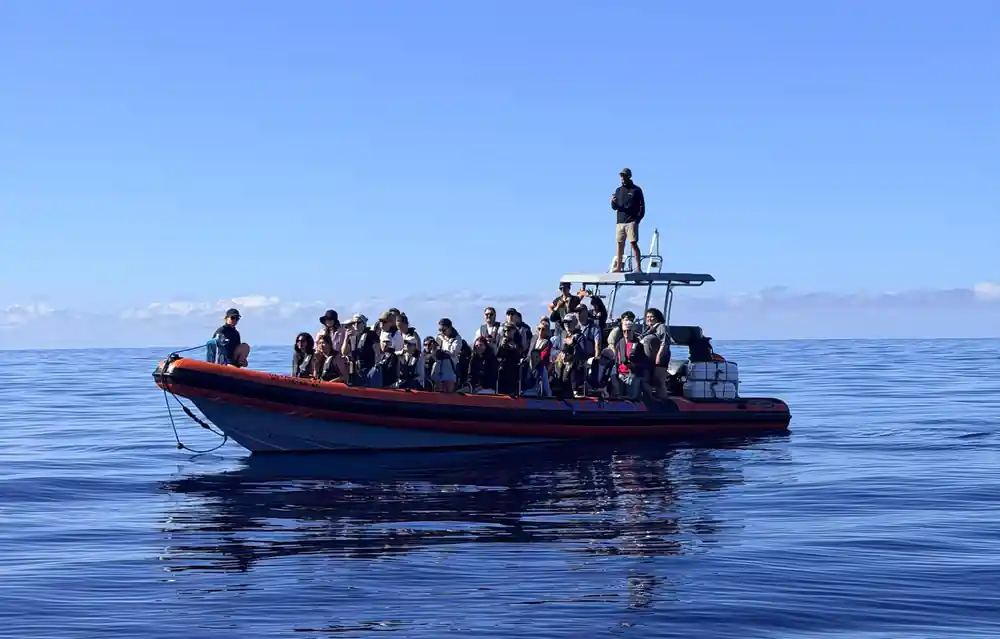
The fleet is two boats of eighteen seats and one of thirty six. Even the largest is small by the standards of a whale watching vessel, and the smaller pair are genuinely intimate.
On a small boat everyone has a rail, everyone has a sightline, and the guide is close enough to talk to rather than being a voice on a speaker. When a pod comes to the boat, nobody is craning over three rows of heads.
It also means the trips sell out. Two and a half hours, three boats and a guaranteed sighting is a proposition that fills quickly in season, so booking ahead matters more here than it would for a hundred-seat catamaran.