The essentials
- Madeira's waters contain 27 cetacean species, according to research.[1]
- Bottlenose dolphins and short-finned pilot whales are seen all year round.[1]
- At just five kilometres off Madeira's shore, the water reaches a depth of more than 3,000 metres, and its steep underwater terrain brings deep-water whales close to land.[2]
- Boats keep at least 50 meters from whales and dolphins, and slow to 8 knots within 100 meters.[3]
- The From Funchal Whale and Dolphin Watching trip takes 2.5 hours and is listed from US$62 with a live guide.[4]
- Top choice Whale & Dolphin Watching RIB from US$62 Duration2.5 hours[4]GuideEnglish, French, Portuguese[4]RefundCancel up to 24 hours in advance[4] Check availability
- Dolphin & Whale Catamaran Tour from US$46 Duration3 hours[5]GuideEnglish, Portuguese[5]RefundCancel up to 24 hours in advance[5] See this tour
- Nuns Valley Half-Day Tour from US$32 Duration3.5 hours[6]GuideSpanish, English, French, German, Portuguese[6]RefundCancel up to 24 hours in advance[6] See this tour
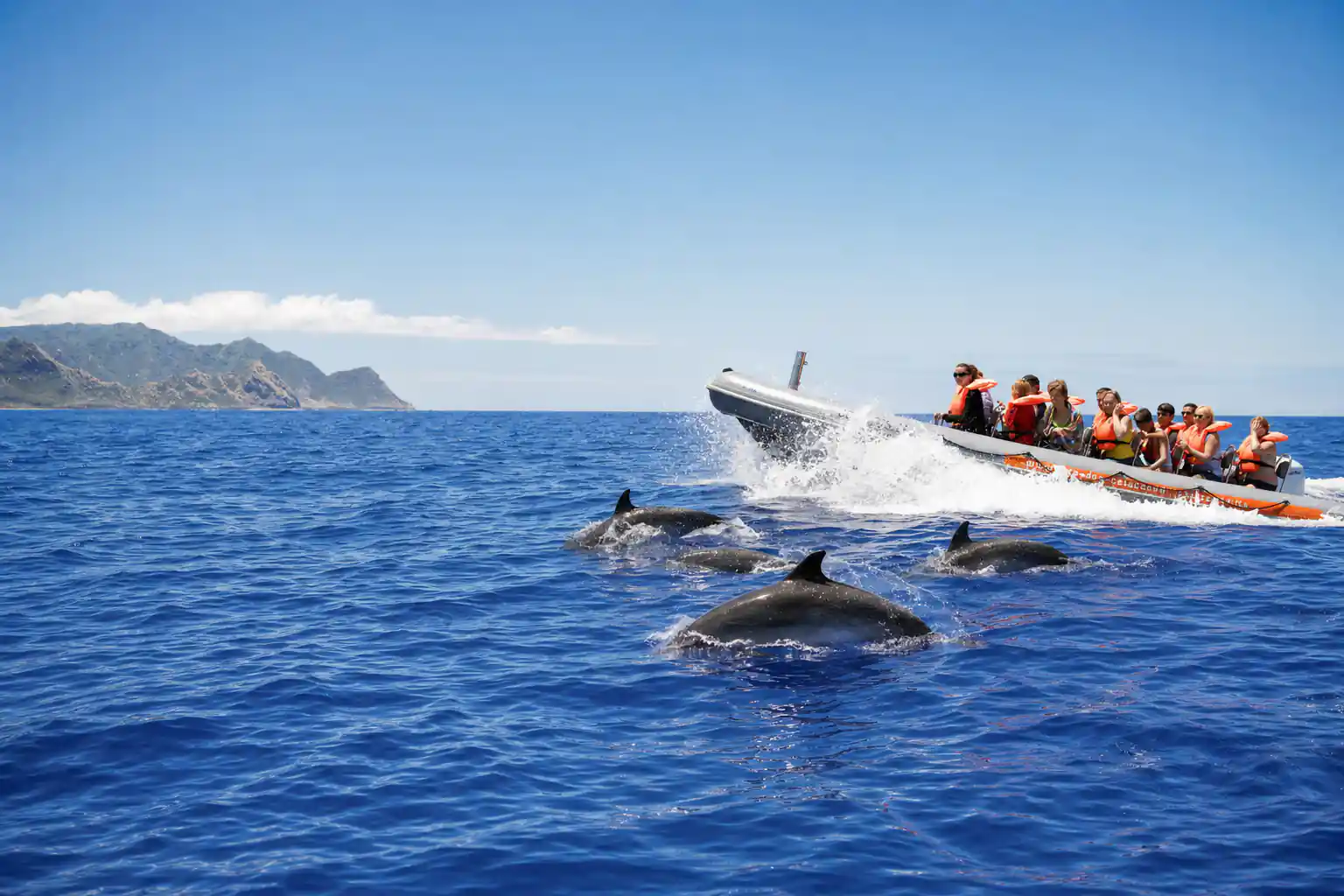
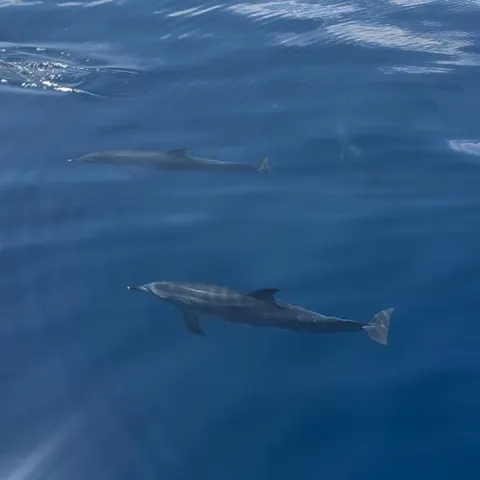
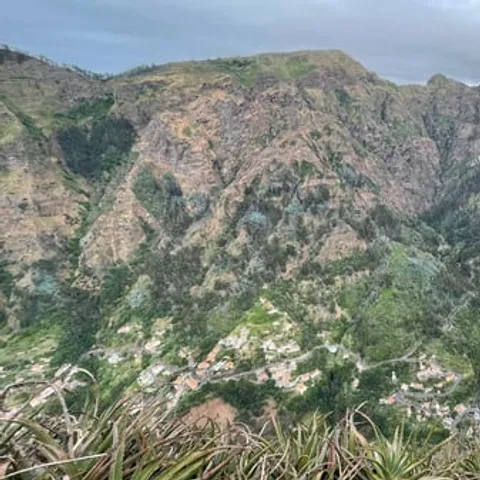
So far, researchers have confirmed 27 species of cetacean in the waters of Madeira, which is equivalent to almost a third of the planet’s known species!
A well-run introduction to Madeira's sea life from Funchal
Pre-departure
Why so much lives here
Madeira looks like a green mountain rising from a deep blue plain, and that is exactly what draws so much marine life. Only five kilometres from shore, the water plunges to over 3,000 metres, and its steep slopes, canyons and plateaus allow deep-water whales to come close to land.[2] Madeira's waters contain 27 cetacean species, according to research.[1]
The south coast, where Funchal sits, is usually calmer because it lies in the rain shadow of the mountains, where the trade winds arrive in a weakened form.[8] That makes it a practical base for boat trips. In winter the sea is about 18°C, while in summer it reaches around 24°C.[7] Even in the cooler months, a light jacket and a sunny morning can be enough.
Madeira's relationship with whales is not new. The whaling industry once operated here, and it later voluntarily stopped. Today the same waters that once drew whalers now draw whale watchers with cameras and binoculars. The change has turned the ocean around Funchal into a place where conservation and tourism go together.
The dolphins you are most likely to meet
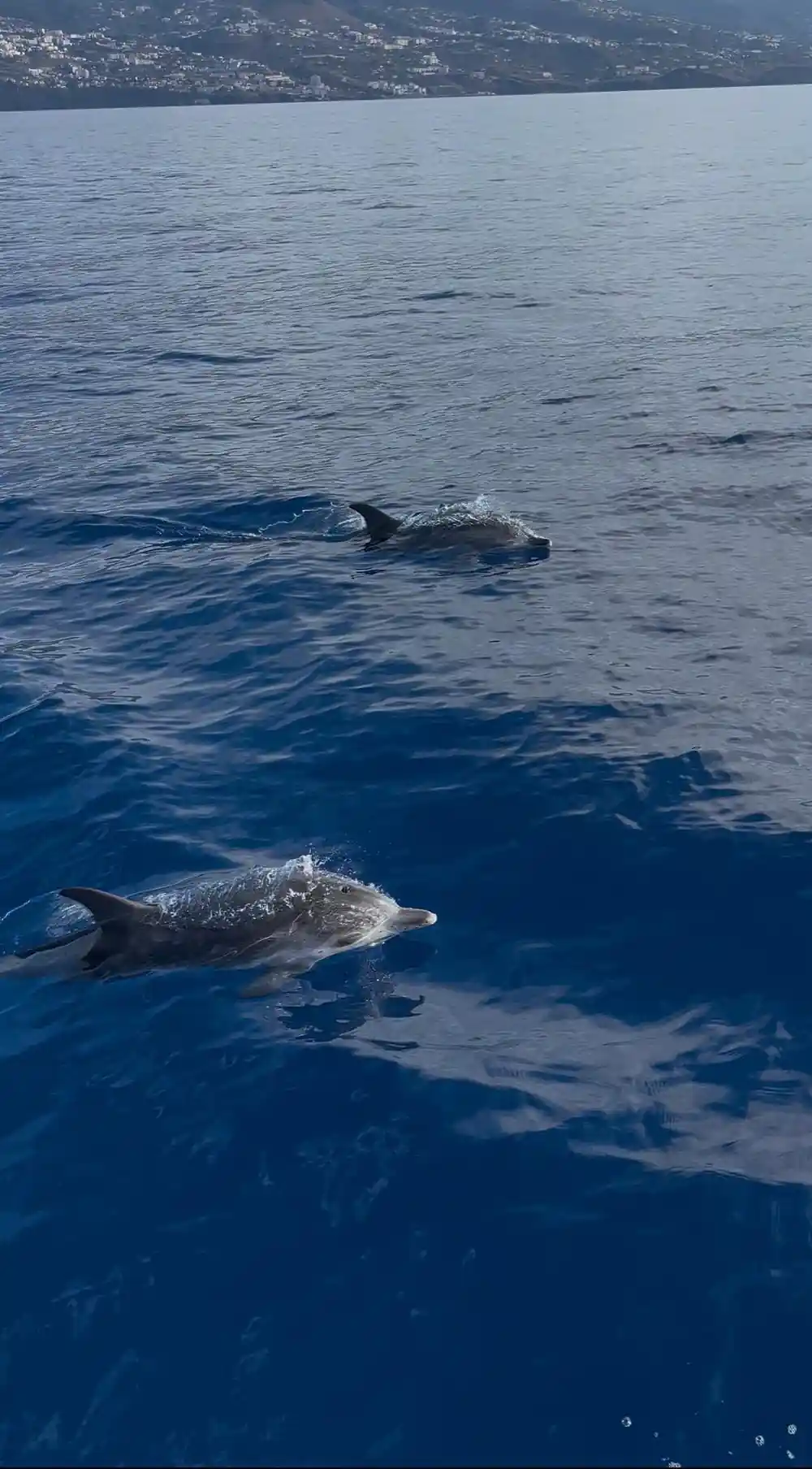
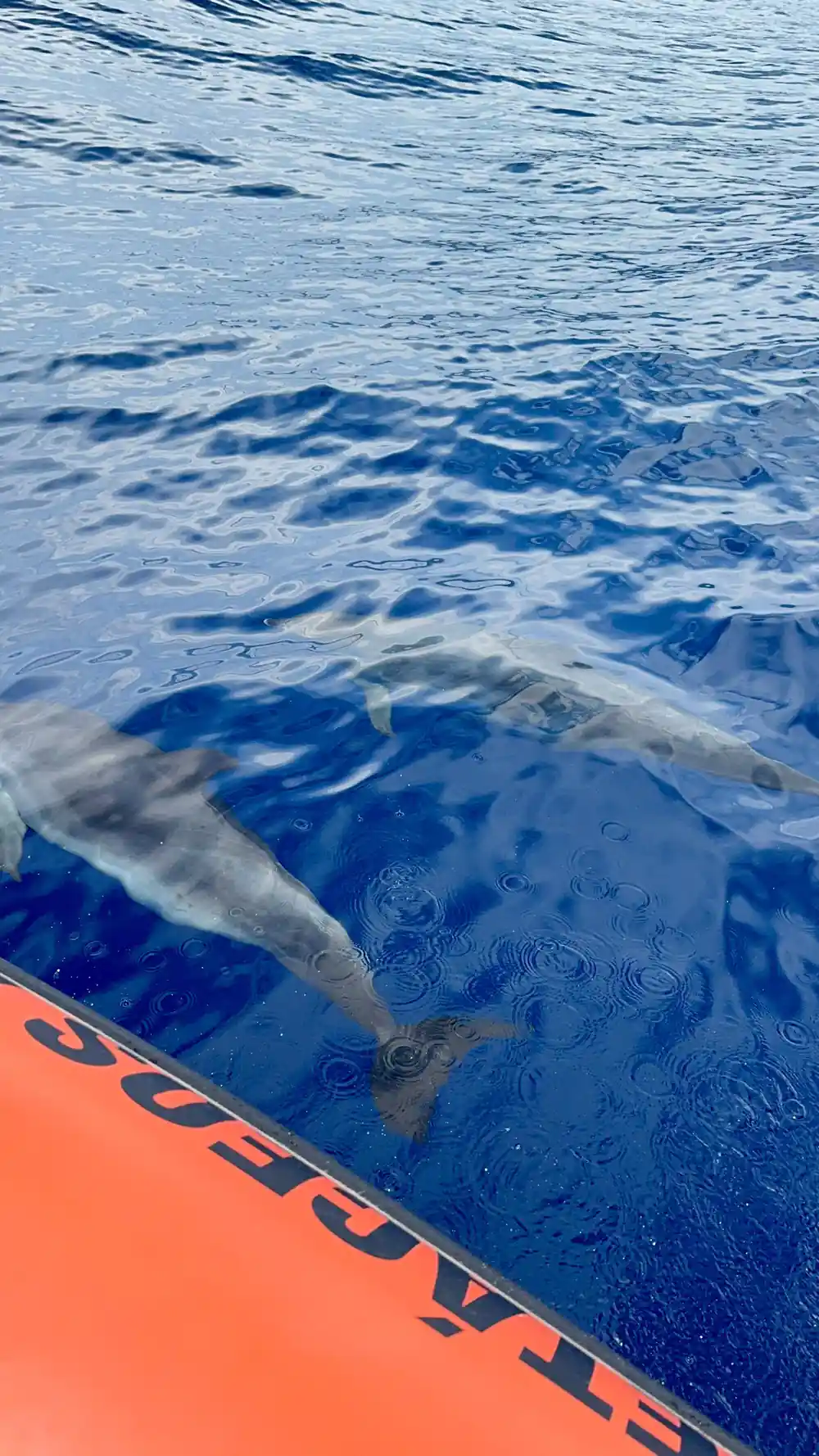
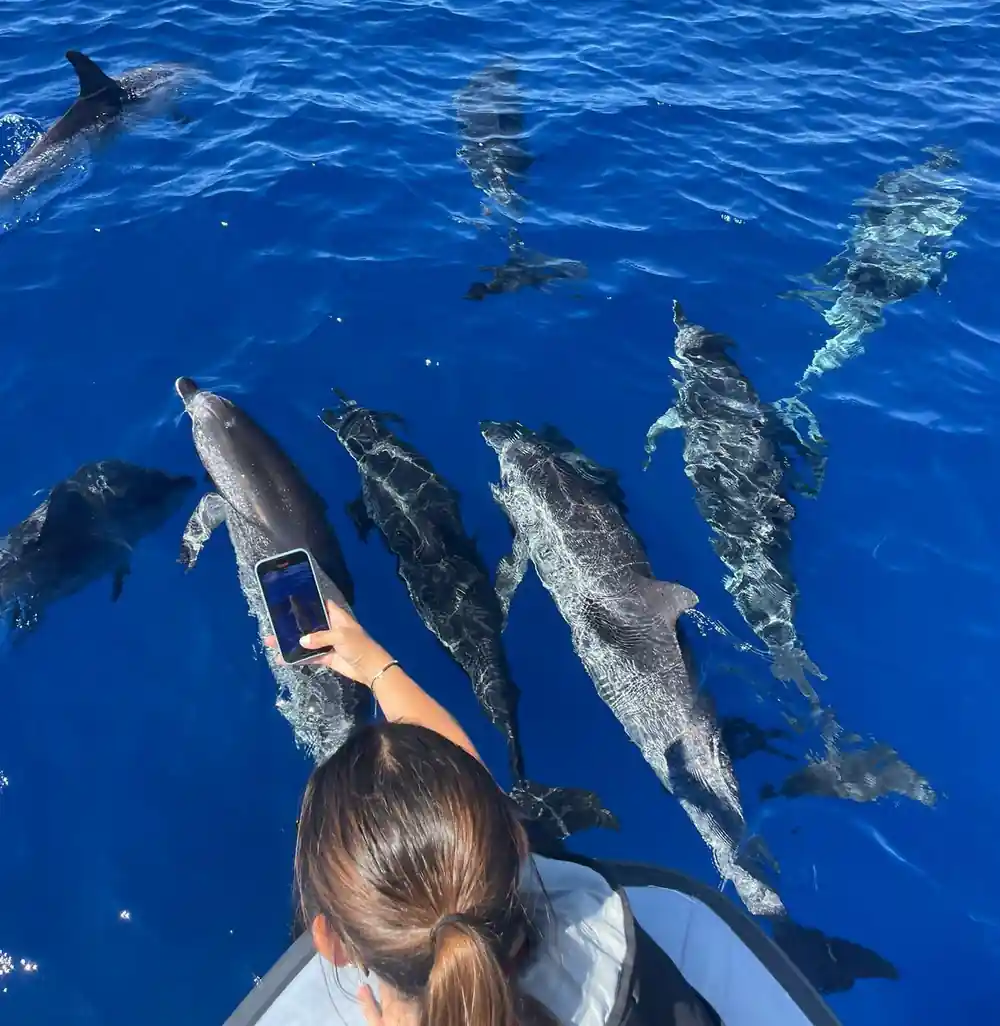
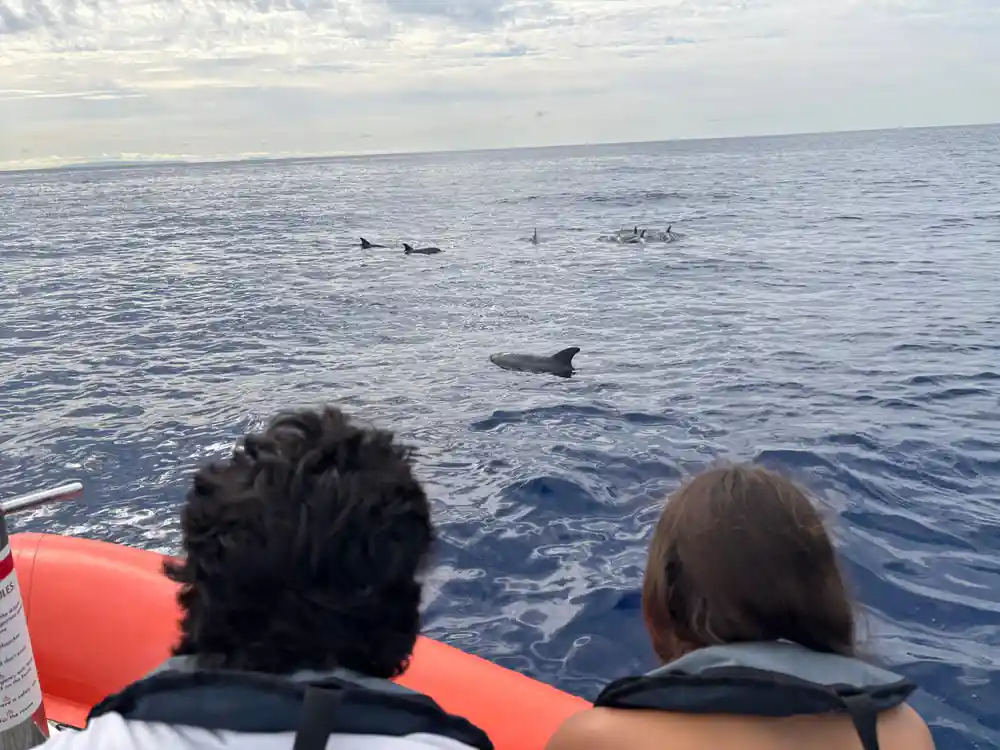
Off Madeira, bottlenose dolphins and short-finned pilot whales are present year-round.[1] Bottlenose dolphins are often the stars of a trip, riding the bow wave and leaping clear of the water in groups. You may hear their blows before you see them, and the crew usually spots the first dorsal fin well ahead of you.
Seasonal visitors change the cast. Atlantic spotted dolphins are a common transient species during the summer months and are the most commonly encountered species on Madeira whale watching tours between March and November.[9] In winter, short-beaked common dolphins join the residents and are frequently encountered.[10] Each season has its own character, which is one reason repeat visitors keep coming back.
Dolphin behaviour is part of the show. Some pods are curious and will approach the boat, while others are focused on hunting and move quickly. The crew will explain what you are seeing, and a good skipper gives the animals room while still giving you a clear view.
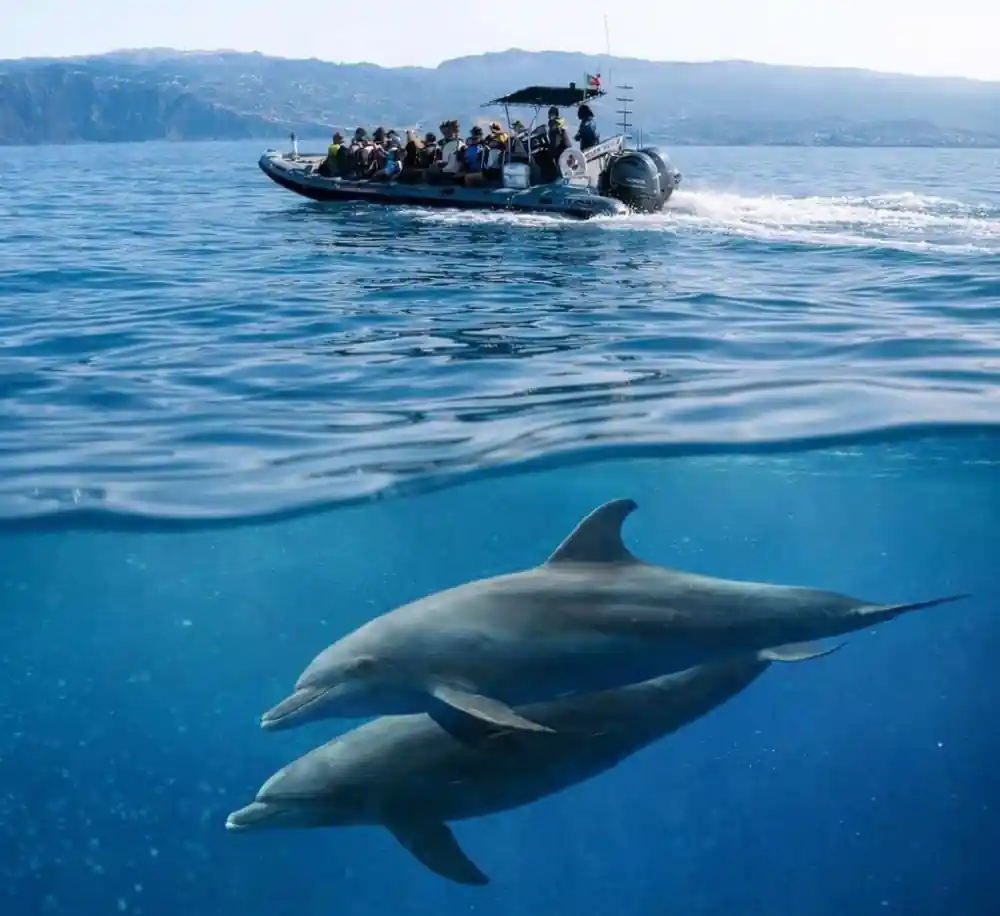
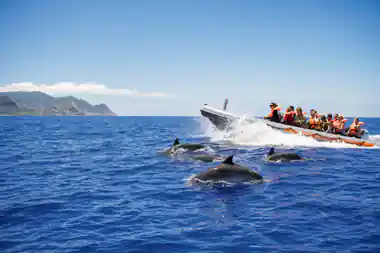
Guests in orange life jackets scan the water from a fast semi-rigid boat off Madeira's coast.
Pilot whales
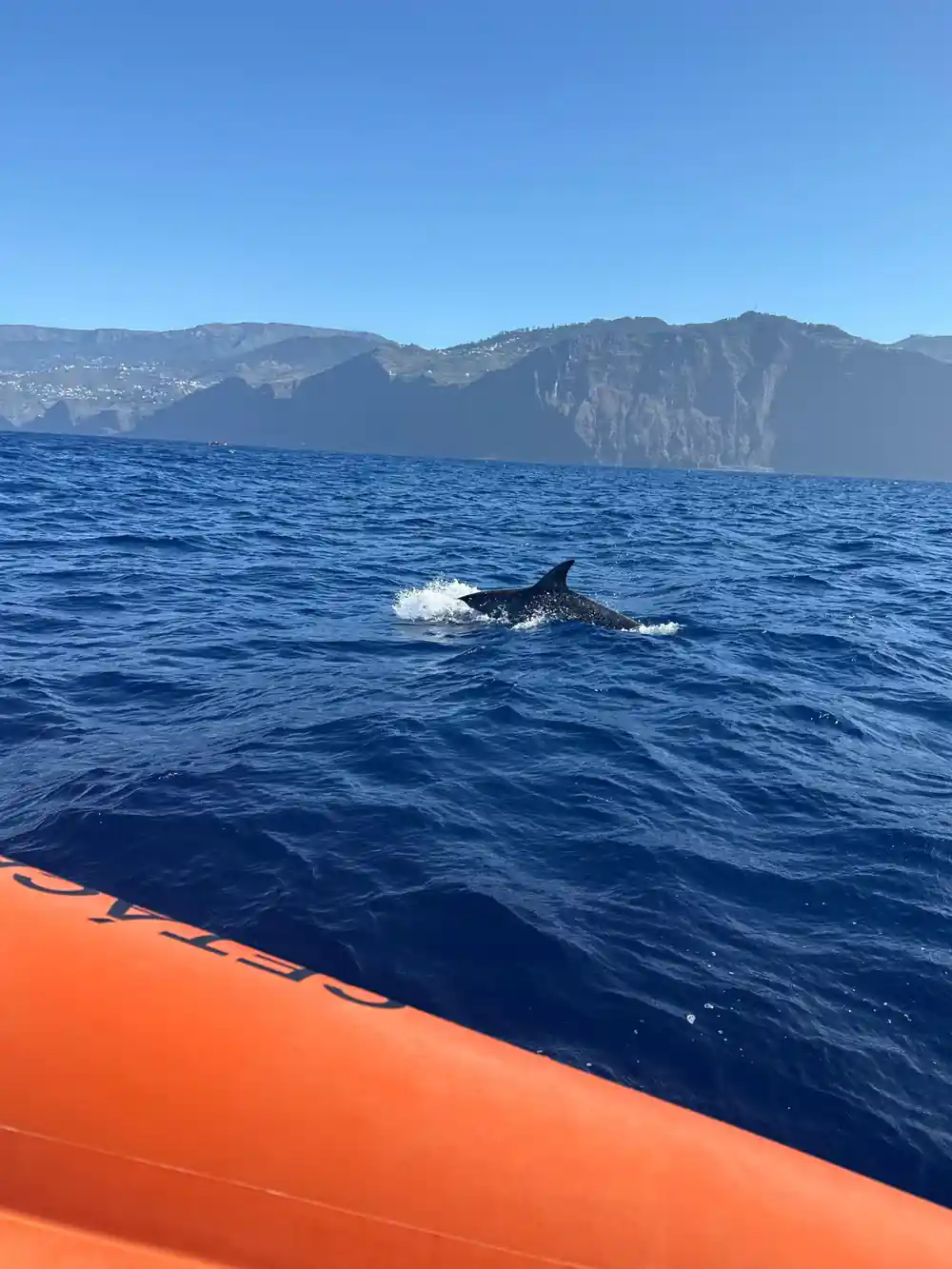
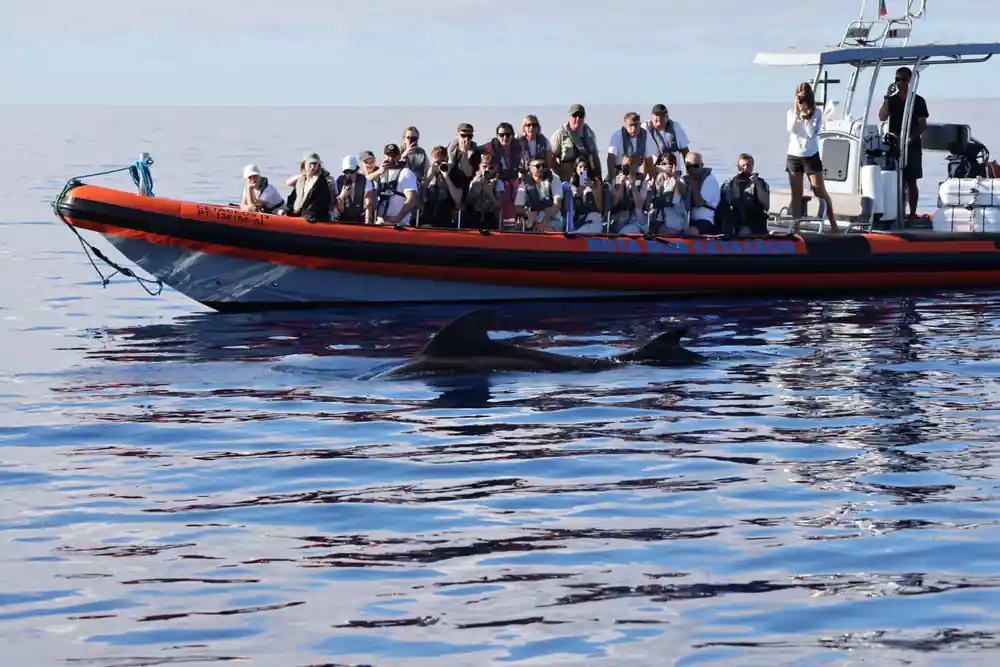
Short-finned pilot whales are the other all-year resident you are likely to meet.[1] They are actually a large dolphin species, dark and blunt-headed, often moving in tight family groups. Unlike the playful bow-riding of bottlenose dolphins, pilot whales may cruise slowly at the surface or show a rounded fin before sounding.
When a group of pilot whales is around, the boat usually slows and keeps its distance. Because they are social and often travel in family groups, you may see several animals surface close together, sometimes in a line. The crew will point out the differences between them and the more acrobatic dolphins, and you may catch a glimpse of a calf surfacing beside an adult.
Pilot whales are not the only deep divers in Madeira, but they are the ones you are most likely to see from Funchal on a regular trip. Their presence, along with the year-round bottlenose dolphins, gives the tour a reliable foundation even on days when rarer species stay hidden.
The whales
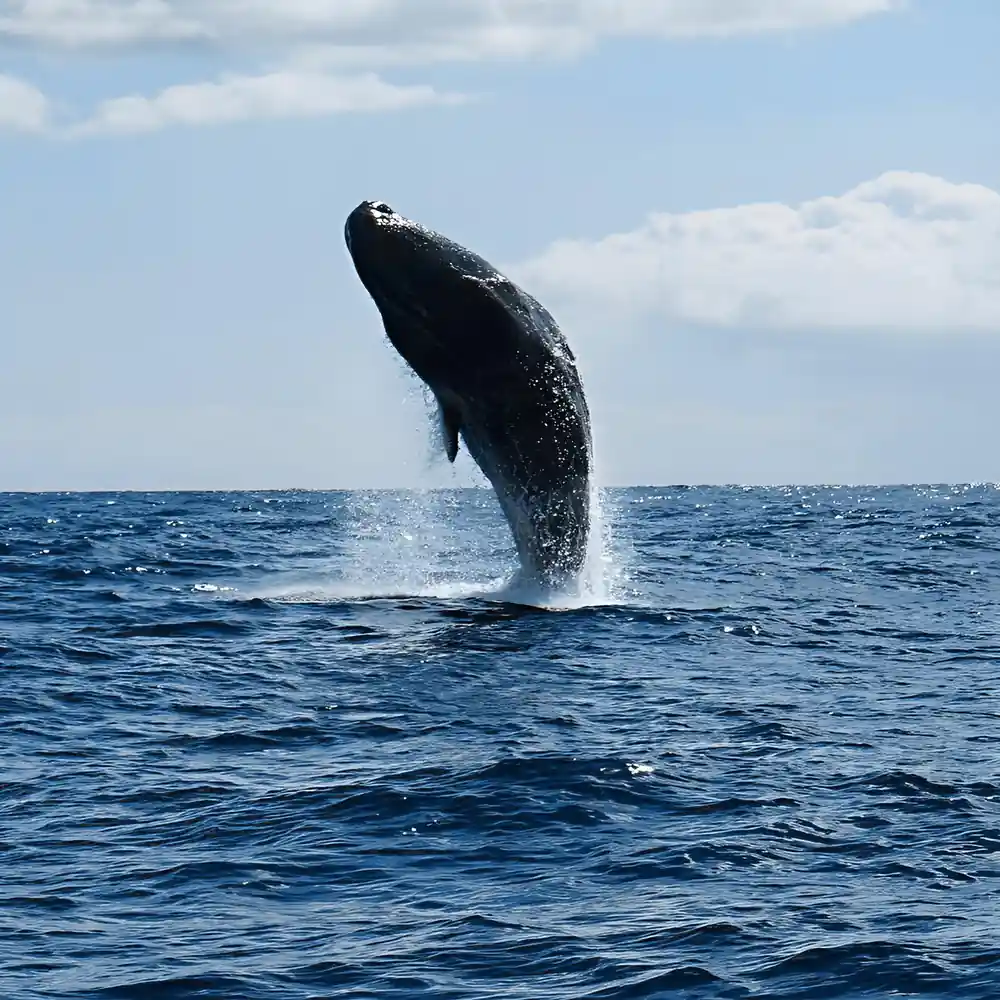
True whales are more a matter of timing and luck. In Madeira, Atlantic spotted dolphins, along with occasional blue whales, are seasonal; orcas and humpback whales appear only rarely.[1] The deep water close to shore makes these rarer encounters possible, but no operator can call them in. When a large whale does appear, it tends to be a moment the whole boat remembers.
The deep drop-off matters because some of the largest animals feed in water more than 3,000 metres deep just a short distance from land.[2] If the conditions are right, your guide may point out a blow or a tall fin on the horizon. On quieter days, the tour is still a beautiful way to see the island's south coast from the water, including the Cabo Girão sea cliff at 580 metres high.[11]
Between whale sightings, the boat may pass over underwater terrain that looks smooth from the surface but is full of canyons and plateaus. Your guide may explain how that hidden landscape brings food and therefore wildlife closer to shore. It is a reminder that ocean watching is never just about the animals; it is about the whole living system beneath the hull.
from US$62
The booked tour runs for 2.5 hours with a live guide speaking English, French and Portuguese, and includes free rebooking.[4]
Turtles and everything else
Whales and dolphins get the headlines, but the sea around Madeira supports plenty of other life. Sea turtles are protected under the same rules that keep boats at a respectful distance: vessels must stay at least 25 meters away from turtles.[3] You might also spot seabirds working the surface, and on warmer days flying fish scattering from the bow.
The scenery is part of the show. Southeast of Madeira lie the Desertas Islands, a group of three small islands.[12] From the water you may also see the terraced hillsides and cliffs that make Madeira's coastline so dramatic. Keep a camera ready even when the sea is quiet, because the light on the water and the green slopes are worth the trip on their own.
Turtles often appear as a dark shape below the surface or a head that pops up briefly before diving. The crew will usually announce a turtle sighting and slow the boat so everyone has a chance to look. It is a more subtle moment than a dolphin leap, but for many it is just as special.
How close they come
Madeira has clear rules to protect wildlife. Boats are required to be at least 50 meters away from whales and dolphins, at least 25 meters from sea turtles, and within 300 meters travel at a maximum of 12 knots, within 100 meters at 8 knots.[3] These distances are not a drawback; they are what keep the animals wild and relaxed. A calm animal is more likely to stay near the boat and give you a longer look.
That means your photos will be of animals in their own space, not zoo-style close-ups. It also means a good crew becomes essential. Spotters on land share mileage and landmarks with skippers, so the boat can move efficiently to the right stretch of water.[13] Watch how the crew behaves; it tells you a lot about the tour and whether they respect the animals.
Some operators offer swimming with dolphins, but rules are strict there too: swimmers must remain attached to the boat by holding a secure rope, and free swimming away from the boat is not allowed.[14] For most visitors, staying on the boat is the better way to keep the encounter peaceful and to see more of the ocean around you.
What nobody can promise
No responsible operator will promise a specific sighting. The sea is full of variables, and the animals move as they please. The tour booked from this site offers free rebooking.[4] That gives you a second chance if the first outing is quiet.
What you can count on is a structured trip: 2.5 hours on the water, with a live guide speaking English, French and Portuguese; you can cancel for free until 24 hours before and get a full refund.[4]
Go with patience and binoculars, and the encounter will feel earned. Dolphins bow-riding, a pilot whale surfacing, a turtle drifting past the bow: those are the moments people remember. The 27 recorded species are a reminder of how rich this stretch of Atlantic is.[1]
Tour ratings on GetYourGuide
Breakdown ratings from the From Funchal: Whale and Dolphin Watching tour listing[4].
Compare boat trip prices
Adult from-prices in US dollars from GetYourGuide tour listings[4],[15],[16],[17],[18].
When to go
How to plan
Pick a morning slot
Trips from Funchal run for 2.5 hours, so a morning departure leaves the rest of the day free.[4]
Dress for the ocean
Seas are calmer on Madeira's south coast, and water temperatures range from around 18°C in winter to 24°C in summer.[7][8]
Bring the right kit
Sunscreen, a windproof layer and a camera with a zoom lens make the biggest difference.
Watch the crew
A land-based spotter guides the boat with details like mileage and landmarks, so trust the skipper's directions.[13]
Respect the rules
Boats stay at least 50 meters from whales and dolphins, so enjoy the encounter at a distance.[3]
Use free rebooking
This tour offers free rebooking, which is a helpful safety net if the animals stay hidden.[4]
Ready to head out from Funchal and see Madeira's whales and dolphins?
from US$63Reserve now & pay later