The essentials
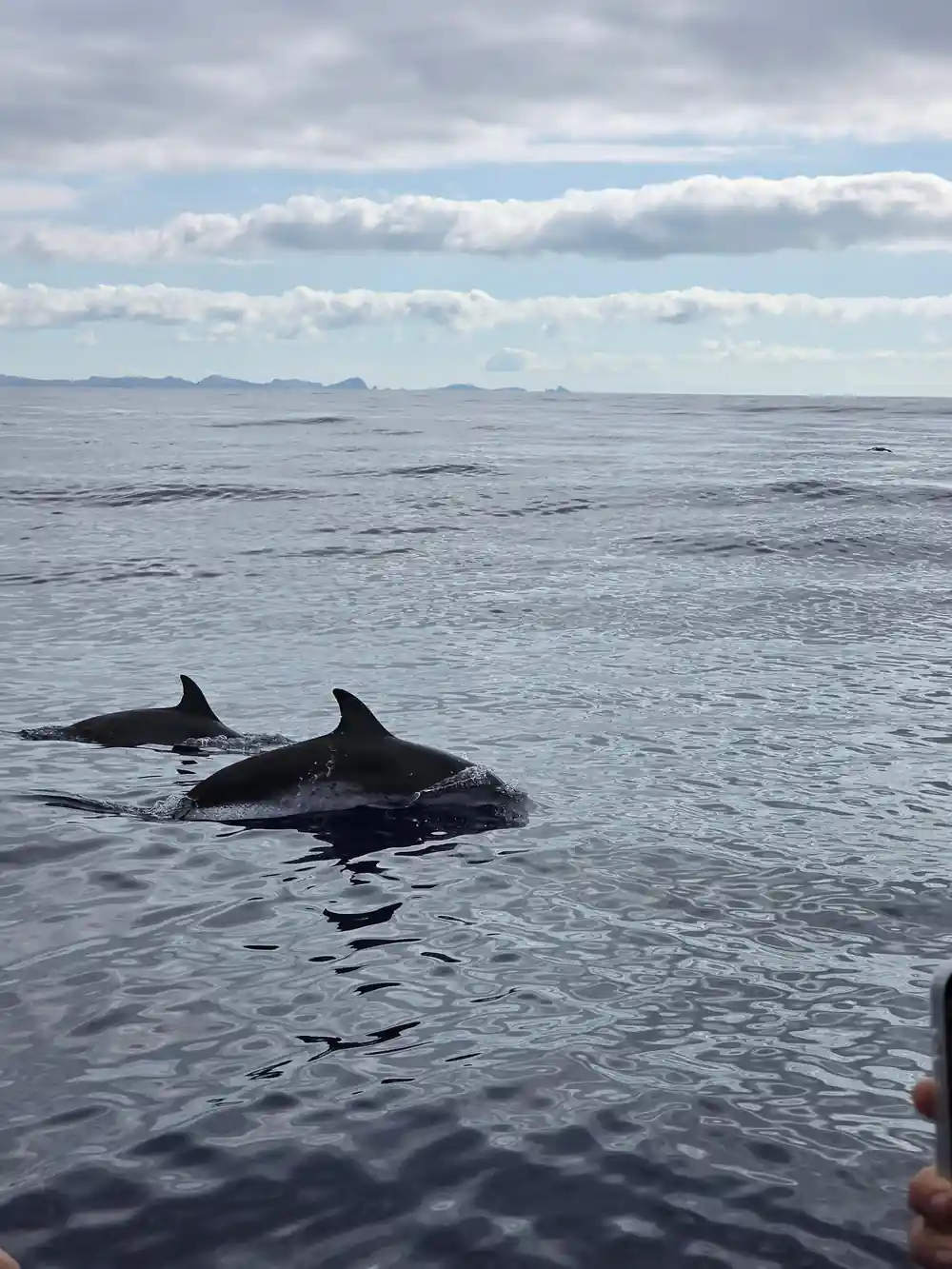
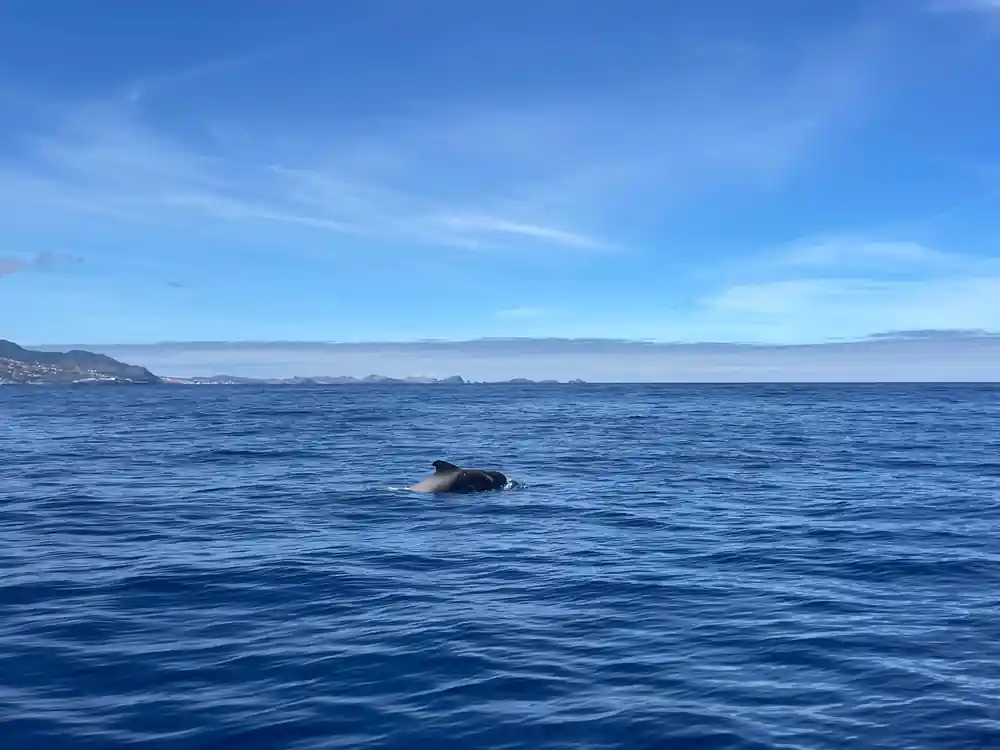
- Bottlenose dolphins and short-finned pilot whales are seen all year off Madeira[1].
- Atlantic spotted dolphins are most commonly encountered on whale watching tours between March and November[2].
- Short-beaked common dolphins are at their strongest from December[3].
- Sea temperature off Funchal ranges from 19°C in winter to 24°C in summer[4].
- Boats must stay at least 50 meters from whales and dolphins[5].
| Species | Sighting notes | Sea temperature | |
|---|---|---|---|
| All year | Bottlenose dolphins and pilot whales[1] | Seen all year round[1] | 19°C winter to 24°C summer[4] |
| Summer months | Atlantic spotted dolphins[2] | Common transient species[2] | Up to 24°C[4] |
| March-November | Atlantic spotted dolphins[2] | Most common on tours[2] | 19°C to 24°C[4] |
| From December | Short-beaked common dolphins[3] | At their strongest[3] | Winter around 19°C[4] |
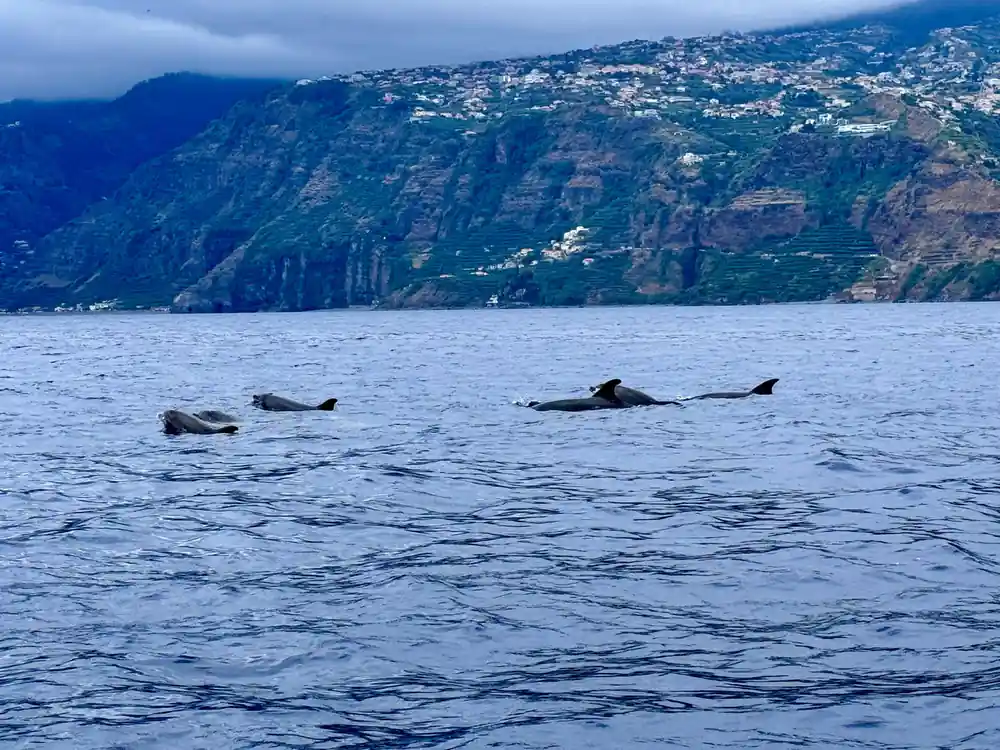
Bottlenose dolphins and short-finned pilot whales can be encountered all year round, along with deep divers like sperm whales and beaked whales. Seasonal visitors include Atlantic spotted dolphins and the occasional blue whale, with orcas and humpback whales rarely seen.
A year-round sea with shifting stars
Plan your visit
Why Madeira is a year-round whale-watching island
Madeira's position in the Atlantic gives it a remarkable marine doorstep. Researchers have confirmed 27 species of cetaceans in the waters of Madeira, which is equivalent to almost a third of the planet's known species[1]. Just five kilometres off the coast, the sea is more than 3,000 metres deep, and the steep underwater terrain allows larger cetaceans that usually live in deeper water to swim close to the island[7].
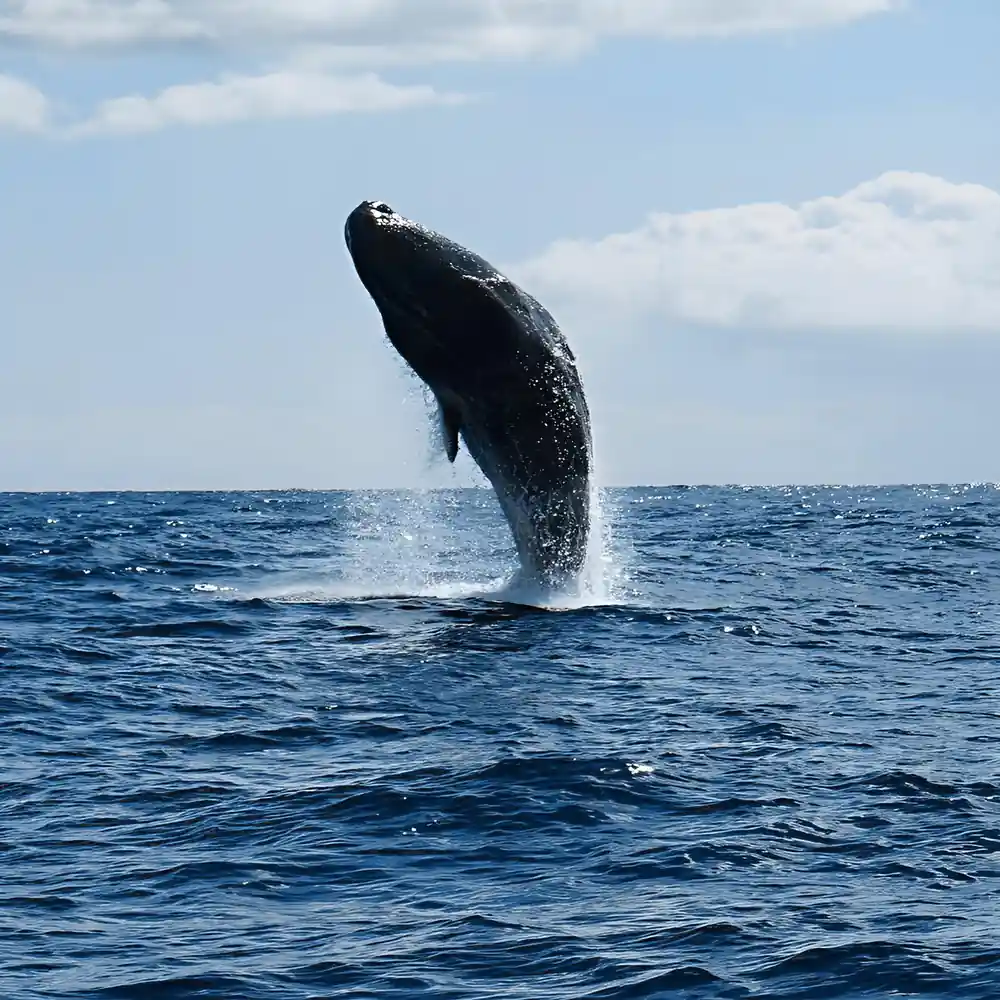
That geography is why the best time question has a reassuring answer: there is no closed season. Bottlenose dolphins and short-finned pilot whales can be encountered all year round, along with deep divers like sperm whales and beaked whales[1]. Seasonal visitors include Atlantic spotted dolphins and the occasional blue whale, while orcas and humpback whales are rarely seen[1]. A resident sighting is possible in every month.
Stand on any of Madeira's south-coast viewpoints and you can see how the set-up works. The island is a volcanic massif that rises steeply out of the Atlantic, its slopes covered with terraced farms, eucalyptus forests and the odd razor-sharp ridge. Cabo Girão, the sea cliff west of Funchal, rises 580 metres above the water[8], and below that drop the same deep-water channels that bring whales and dolphins close to shore. The south coast also sits in the rain shadow of the mountains, so the trade winds arrive in a weakened form and the climate is drier and sunnier[9]. For visitors that means a reliable departure point and a steady flow of boats heading out from Funchal's marina.
Best time for dolphin watching in Madeira
If you want the broadest chance of seeing dolphins on a single trip, the late spring and summer months are the easiest target. Atlantic spotted dolphins are a common transient species during the summer months, and they are the most commonly encountered species on Madeira whale watching tours between March and November[2]. That gives a long, flexible window for planning a holiday.
Winter still has plenty to offer. Short-beaked common dolphins are at their strongest from December[3], joining bottlenose dolphins and short-finned pilot whales that are seen all year[1]. Sea temperature off Funchal ranges from 19°C in winter to 24°C in summer[4], so the water stays comfortable across the seasons.
In practice, the best choice depends on what you value. If you want the widest variety of dolphin encounters and the warmest water, aim for the March to November window[2]. If you prefer quieter harbours and don't mind a cooler breeze, the winter months still put resident bottlenose dolphins and pilot whales within easy reach, with short-beaked common dolphins joining the line-up from December[3]. Operators run trips through the year, so you can time your booking around the weather rather than a narrow season.
An orange RIB heads out past Madeira's green volcanic headland.
The dolphins and whales you might meet
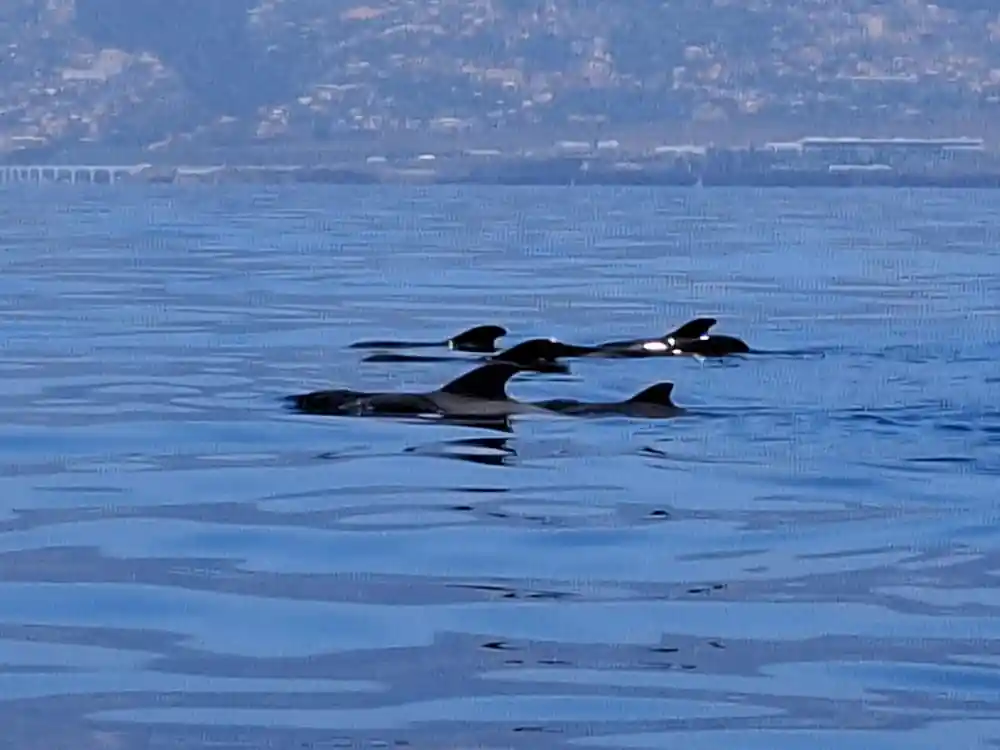
The cast changes with the season. Bottlenose dolphins and short-finned pilot whales are present all year, along with deep divers like sperm whales and beaked whales[1]. Seasonal visitors include Atlantic spotted dolphins and the occasional blue whale, with orcas and humpback whales rarely seen[1].
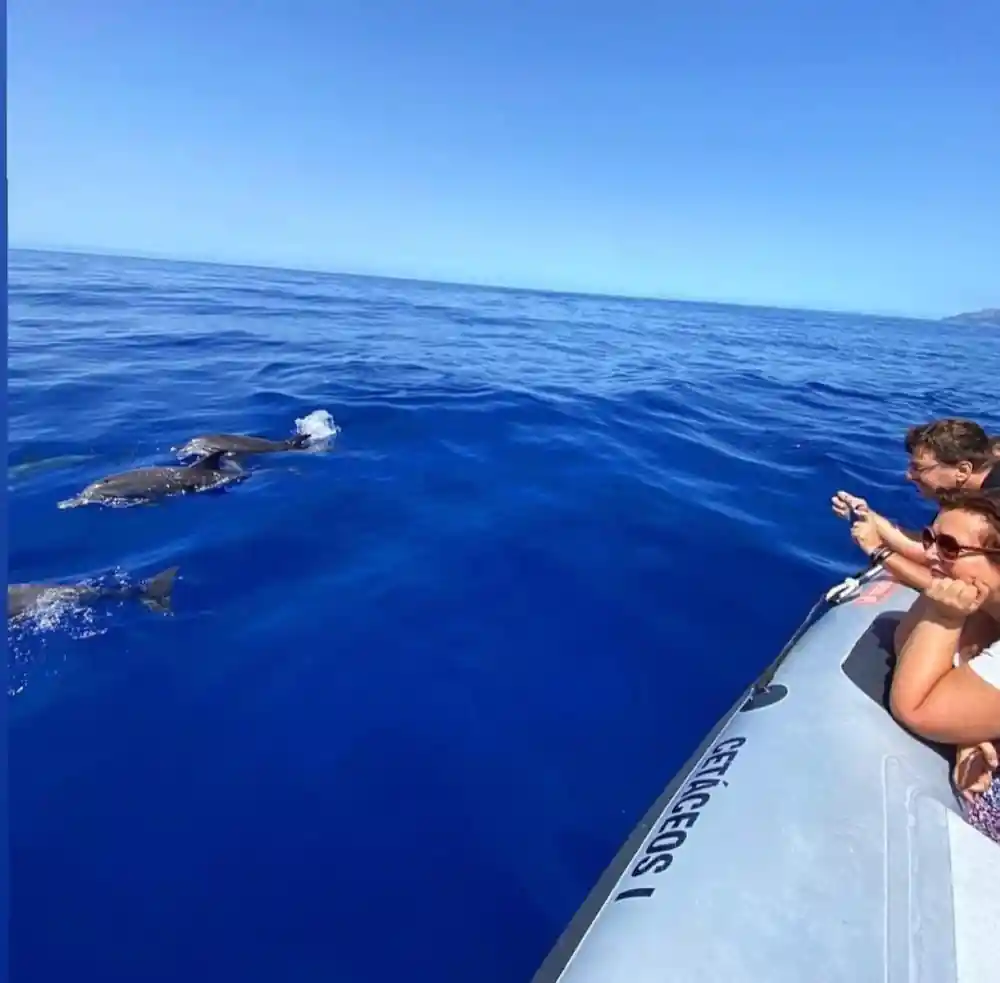
Atlantic spotted dolphins are the headline act in summer and the most commonly encountered species on Madeira whale watching tours between March and November[2]. In winter, short-beaked common dolphins are at their strongest from December[3]. Altogether, researchers have confirmed 27 species of cetaceans in Madeira's waters, so every trip offers a different draw[1].
Each species behaves differently at the surface, which is part of the fun of watching. Bottlenose dolphins often cruise in small family pods and may bow-ride alongside the boat, while Atlantic spotted dolphins can be more acrobatic, leaping clear of the water in loose groups. Pilot whales travel in tight, slow-moving clusters, and a sperm whale, when it surfaces, is usually just a dark back and a sideways blow. A good guide will call out what to look for and help you tell the species apart by dorsal fin, size and blow. The encounter is always brief, but the memory tends to last.
Watching from Funchal: boats and trips
Funchal is the natural base for a first trip. The tour booked from this site is From Funchal: Whale and Dolphin Watching, a 2.5-hour excursion with a live tour guide in English, French and Portuguese[6]. It costs from US$62, and you can reserve now and pay later[6].
You can also choose a different pace. An ecological catamaran tour from Funchal costs from US$40 and lasts 2.5 to 3 hours[10], while a sailing trip costs from US$47 and lasts 3 hours[11]. Both options include reserve now and pay later and free cancellation up to 24 hours in advance[10][11].
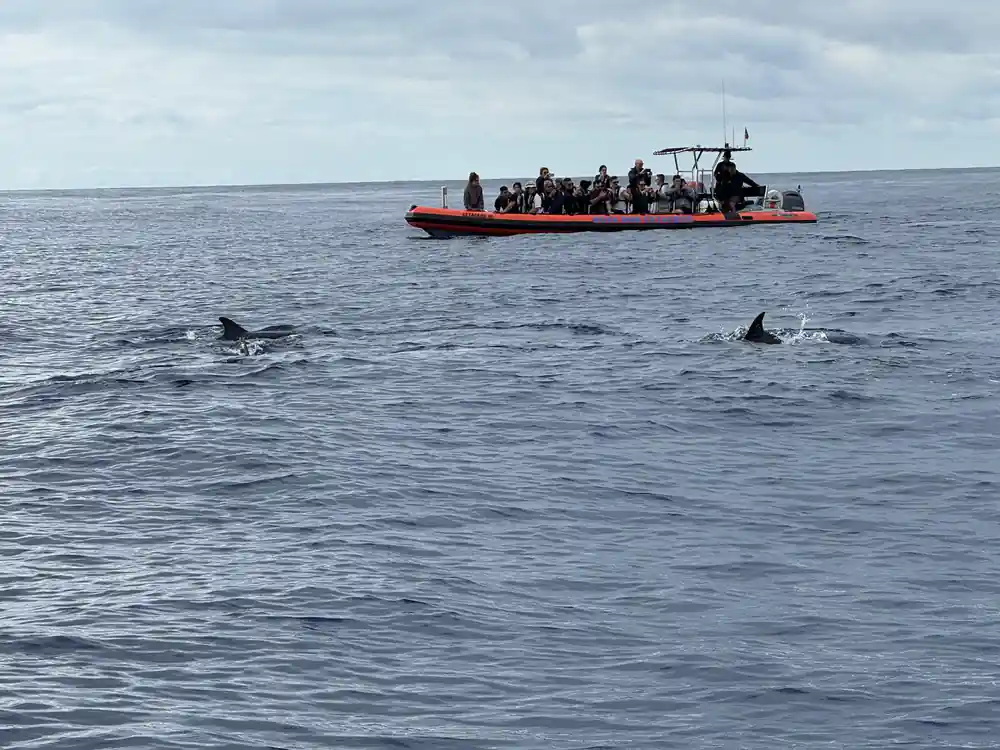
A typical morning trip starts with a safety briefing and a short cruise out of the marina, with the guide scanning the horizon for blows, splashes and feeding birds. Once a pod is located, the boat slows well before it gets close, and the rule of thumb is simple: whales and dolphins are watched on their own terms, not chased. The actual sighting can be a fleeting glimpse or a long, relaxed encounter, depending on how active the animals are. Many guests find that the journey itself, with the island's cliffs sliding past and a warm Atlantic breeze, is already worth the ticket.
from US$62
From Funchal: Whale and Dolphin Watching costs from US$62[6], lasts 2.5 hours[6] and includes a live guide in English, French and Portuguese[6].
How Madeira keeps whale watching responsible
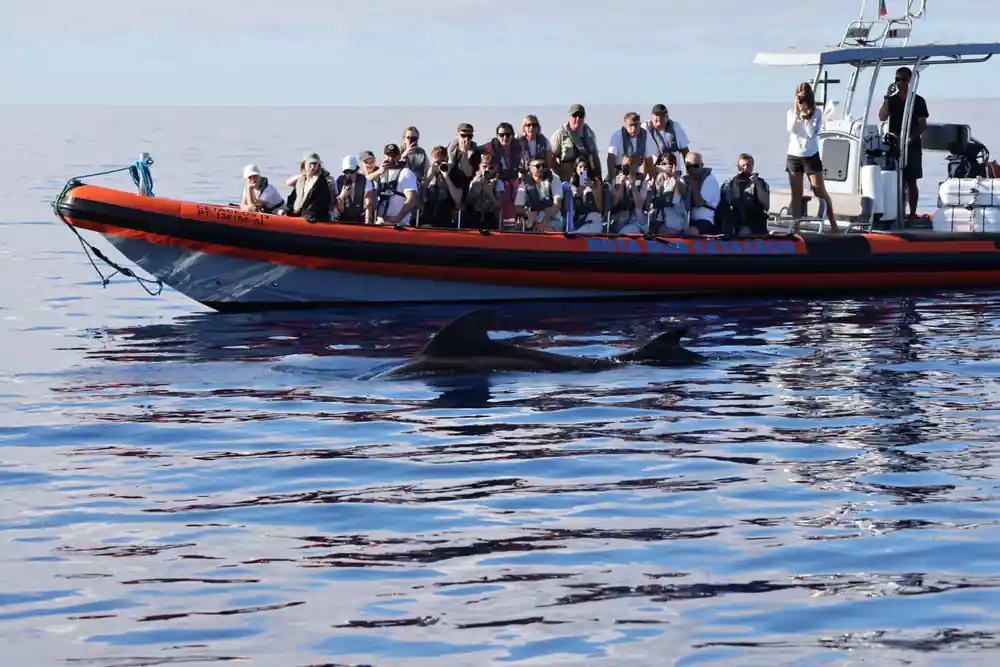
Madeira's whale watching boats follow clear rules to protect the animals. They must stay at least 50 meters away from whales and dolphins, 25 meters from sea turtles, and reduce speed to 12 knots within 300 meters and 8 knots within 100 meters[5].
A land-based spotter can guide skippers with details like mileage and landmarks, helping boats reach the places where guests can observe the marine mammals[12]. Madeira's whaling industry ended voluntarily in 1981, and today the island's reputation rests on watching cetaceans rather than hunting them[13].
These rules are not just paperwork; they shape what you experience on the water. Because boats keep their distance and approach slowly, you tend to see natural behaviour rather than animals scattering in alarm. The spotters on shore also mean less time spent motoring around at random: the skipper usually knows roughly where the dolphins are before you even leave the marina. For a visitor, the result is a calmer, more respectful encounter that also happens to be more reliable.
What to wear and how to plan your day
Sea temperature off Funchal ranges from 19°C in winter to 24°C in summer[4]. Even in summer, wind on a fast boat can feel cool, so bring a windproof layer, sunscreen and a secure strap for your camera or phone.
The south coast lies in the rain shadow of the mountains, where trade winds arrive in a weakened form, creating a drier and sunnier climate[9]. That makes Funchal a reliable departure point. It is also a practical one: the featured trip starts in Funchal, and the tour route includes the city as a stop[6].
A few small habits make the trip more comfortable. Book a morning tour if you are prone to seasickness, because the sea is usually at its calmest in the first hours after sunrise; on the south coast it is generally calmer anyway[9]. Eat something light beforehand, stay hydrated, and keep your phone in a lanyard or zipped pocket so it does not go overboard. If the boat has a canopy, sit near the stern for less spray. And remember that sightings are never guaranteed; the sea is a wild place, and part of the pleasure is simply being out on it.
When the ocean puts on a show
Whale and dolphin watching in Madeira is never a scripted performance. Year-round residents give you a solid baseline, and seasonal visitors shift the lineup as the year turns[1]. Plan around Atlantic spotted dolphins for the most commonly encountered species on tours[2], or come in winter and look for short-beaked common dolphins at their strongest[3].
Whenever you go, choose a tour that follows local rules and keeps the animals' welfare first. From Funchal, the featured trip offers a practical introduction to Madeira's marine life, with free rebooking and free cancellation up to 24 hours in advance for a full refund[6]. The best time for dolphin watching in Madeira is the time that works for you, because the residents rarely take a day off.
If you have time, go out again on another day, perhaps a RIB for speed and a catamaran for comfort. That way you improve your odds and see the same waters from different perspectives. The island's coastline, with its cliffs, islets and hidden coves, is a beautiful place to spend time even on a quiet day, and the crew will usually point out seabirds and landmarks as they scan for fins. By the end of the trip you will understand why so many visitors come back again.
Traveller ratings for the featured tour
Scores from[6] rating breakdown.
Compare boat tour prices
When to book
Getting on the water
Choose a season
Year-round residents give you a base chance; Atlantic spotted dolphins peak from March to November[2].
Pick a boat
The featured tour from Funchal lasts 2.5 hours and has a live guide in English, French and Portuguese[6].
Book ahead
Reserve now and pay later, with free cancellation up to 24 hours in advance[6].
Dress for the sea
Water off Funchal ranges from 19°C in winter to 24°C in summer[4], so layer up.
Respect wildlife
Boats must stay at least 50 meters from whales and dolphins[5].
Ready to meet Madeira's dolphins?
from US$63Reserve now & pay later