The essentials
- Layer up with a sun-safe base, a windproof outer layer and a warm mid layer for cooler months; the RIB trip lasts 2.5 hours.[1]
- Wear grippy, closed-toe shoes that can get wet. Decks are wet with spray and the boat moves as the guide looks for wildlife, so secure footing is everything.
- UV reflects off the water, so sunscreen, a hat and polarised sunglasses are essentials even on cloudy days. Sea temperatures reach 24°C in summer.[2]
- Bring swimwear if you plan to swim, but remember that in Madeira swimmers stay attached to the boat by holding a secure rope.[3]
- Keep valuables, loose items and heavy bags ashore. On an open boat there is nowhere dry to store them, and spray will find them fast.
| Speed boat (RIB) | Catamaran | Traditional wooden boat | |
|---|---|---|---|
| From price | from US$62[1] | from US$46[4] | from US$40[5] |
| Typical trip length | 2.5 hours[1] | 3 hours[4] | 3 hours[5] |
| Spray and wind | Open bow, expect spray at speed | Higher sides and covered areas | High wooden sides, steadier motion |
| Room to move | Compact, hold the rails | Space to walk around | Traditional deck, relaxed pace |
| Who it's for | Thrill-seekers and photographers | Families and stability | A classic, easy-going feel |
Sea temperatures remain pleasant, ranging from around 18°C in winter to 24°C in summer, allowing activities such as swimming and diving almost year-round.
Pack for the boat, not the beach
On the boat
Why an open boat changes the answer
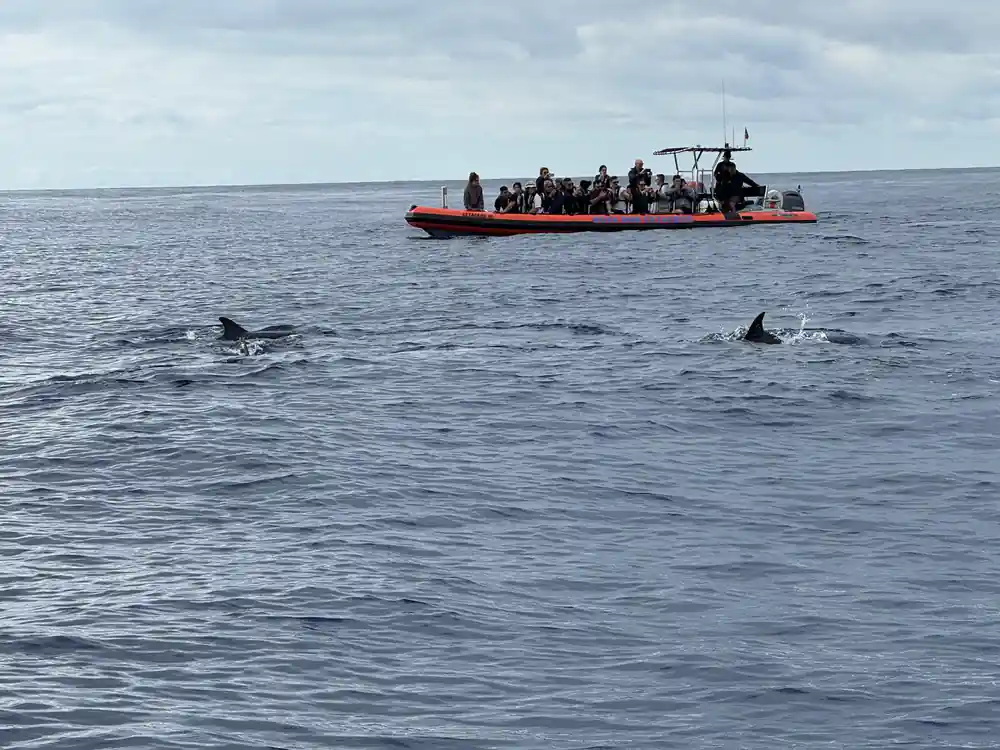
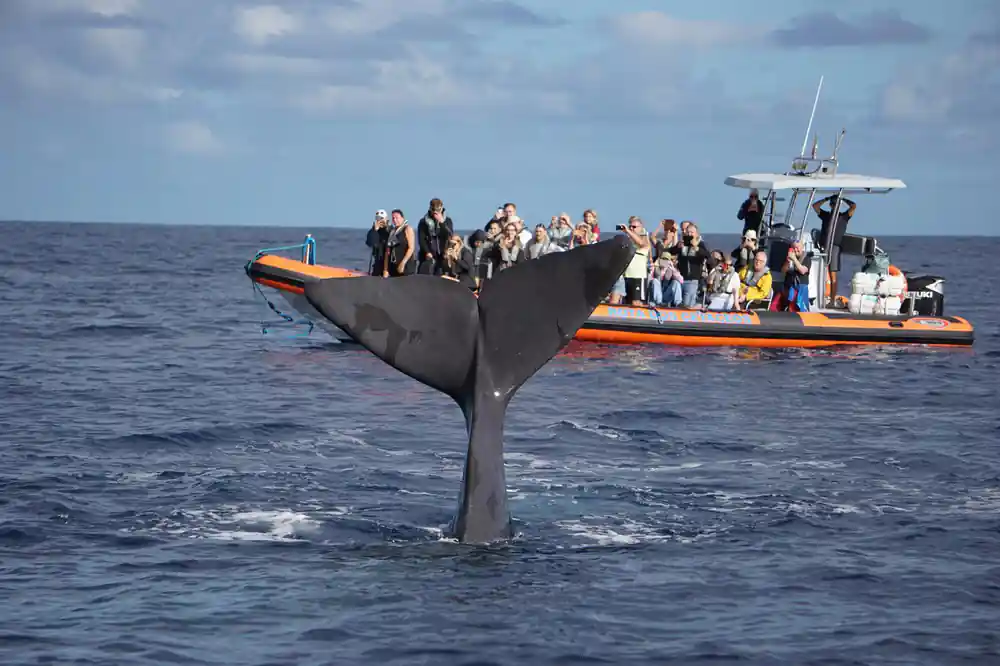
A RIB sits low in the water, its bow open to the sea, and speed turns a light breeze into a wind that tugs at collars and camera straps. For wildlife viewing, this is the boat to pick: Madeira's regulations require keeping 50 meters clear of whales and dolphins, 25 meters clear of sea turtles, dropping to 12 knots inside 300 meters and to 8 knots inside 100 meters.[6] That closeness is the whole point, and the booked trip from Funchal lasts 2.5 hours.[1]
Funchal departures sail from the south coast, which lies in the rain shadow of the mountains, where the trade winds arrive in a weakened form, creating drier and sunnier conditions.[7] Calmer does not mean dry, though. Spray comes over the bow whenever the boat picks up speed, and the deck stays damp from first boarding to final return. So think of your outfit as a small system: a base layer next to the skin, a warm mid layer for cooler months, and a windproof shell on top, with each piece easy to peel off as the morning warms.
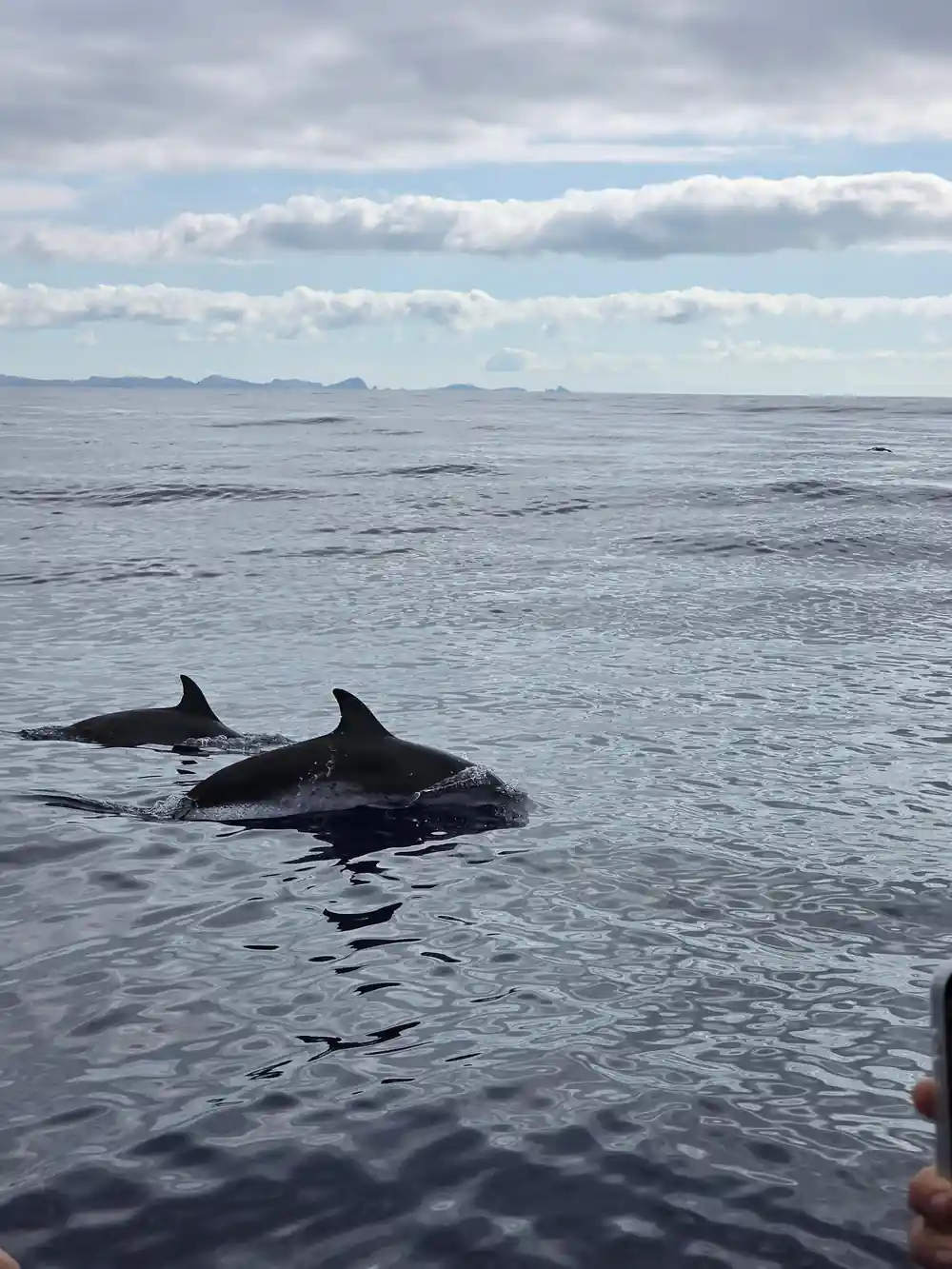
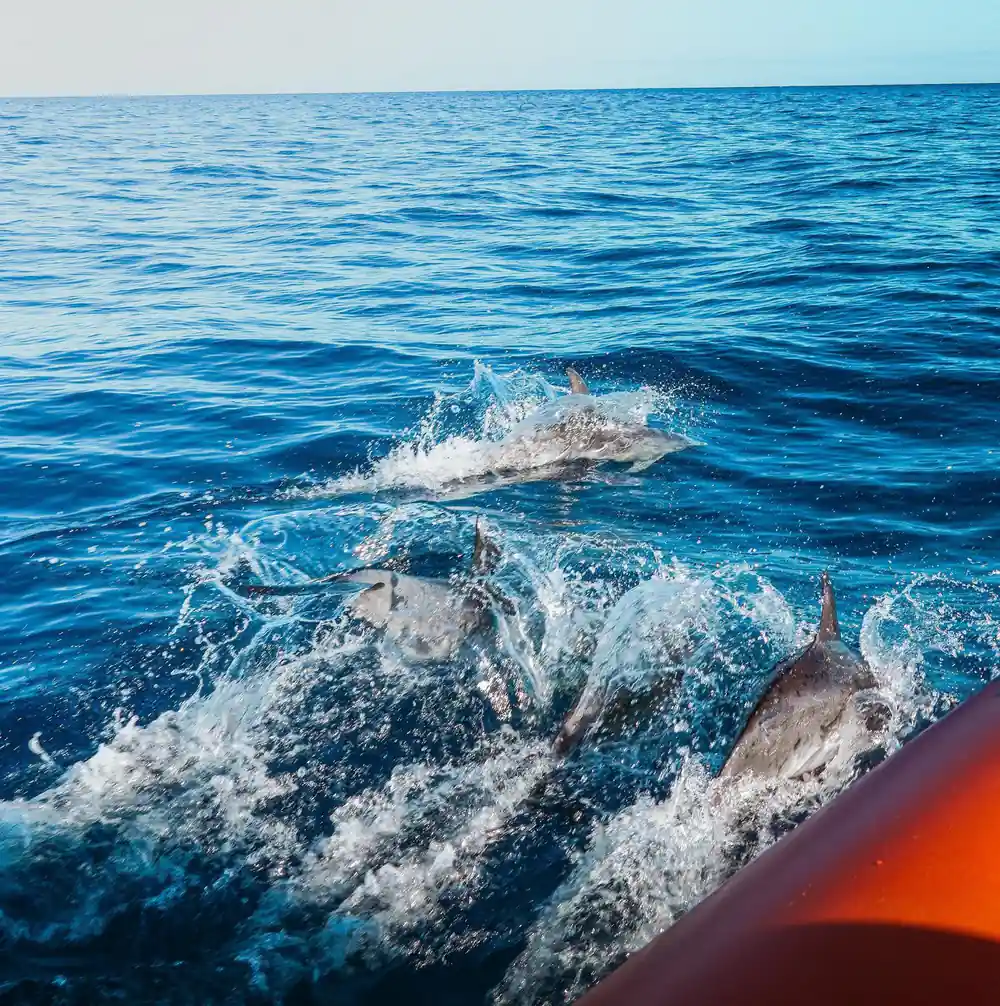
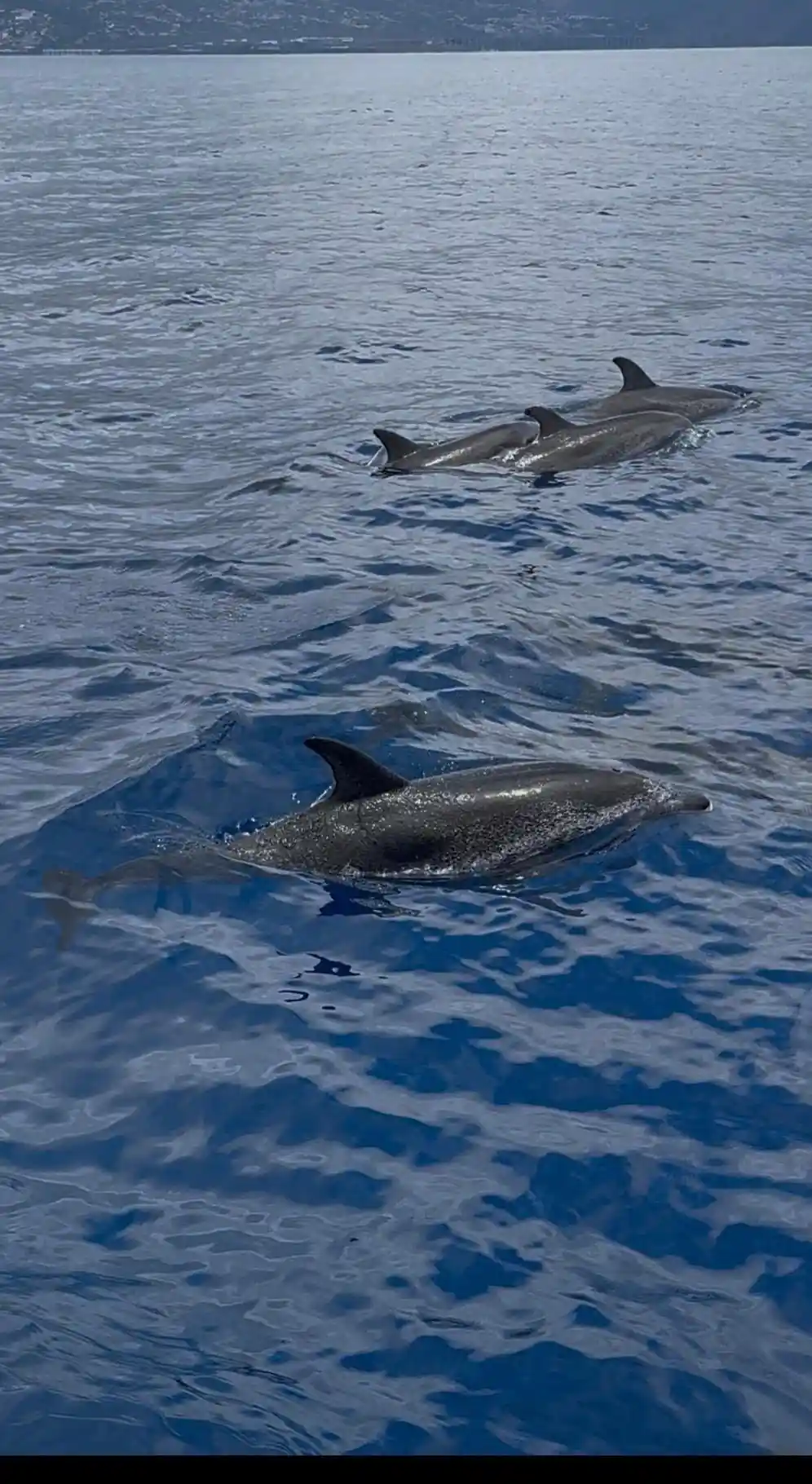
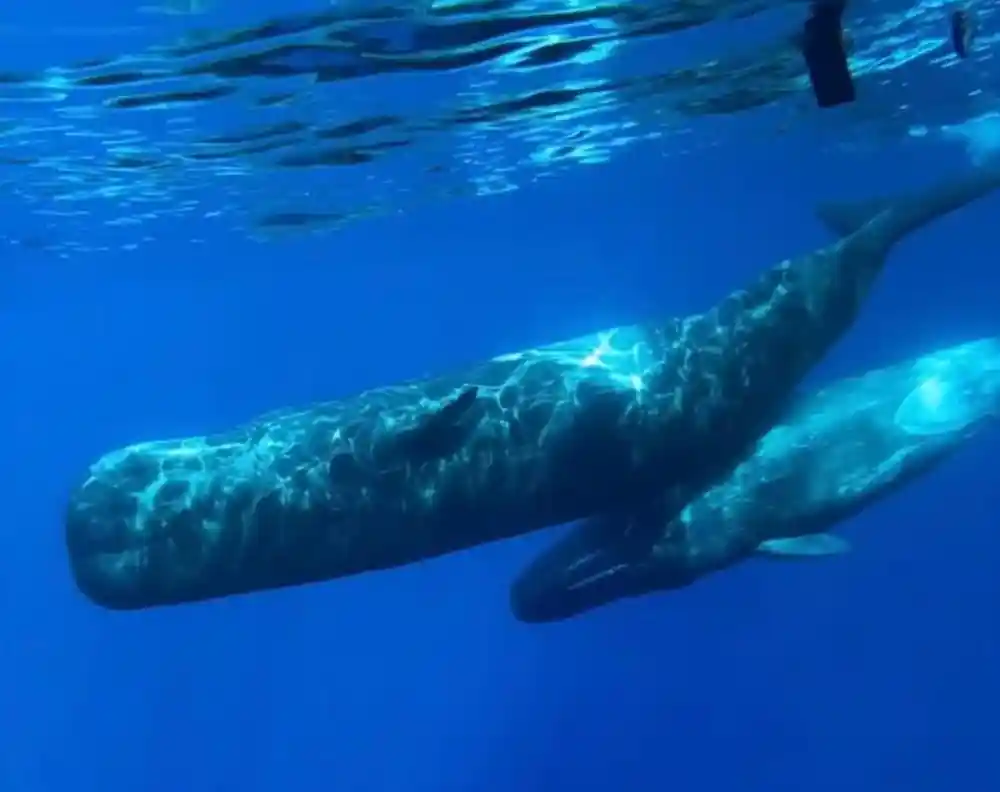
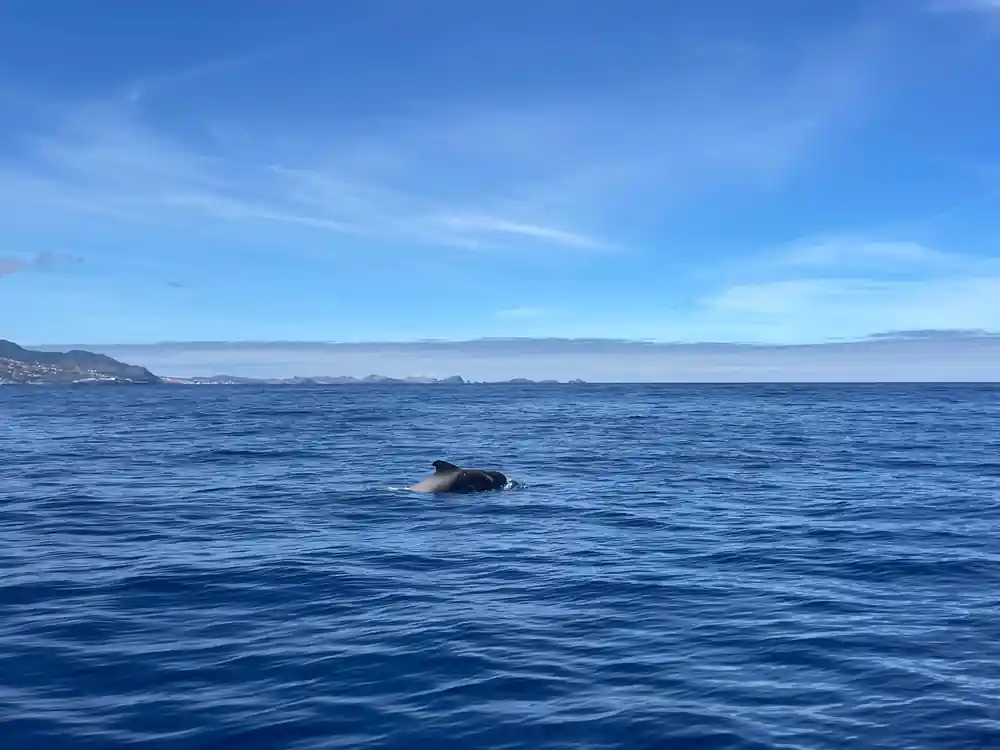
The wildlife justifies the layers. Bottlenose dolphins and short-finned pilot whales are seen all year round, Atlantic spotted dolphins join them seasonally, and orcas and humpback whales are rare visitors.[8] The steep underwater slopes let larger cetaceans approach the island, where ocean depths exceed 3,000 metres just five kilometres offshore.[9] Keep your eyes on the water and your clothing light, quick-drying and easy to manage.
The windbreaker
A packable windbreaker is the single most useful thing to bring. It stops the chill of a moving boat, sheds light spray, and folds into a small pouch when the sun takes over. On a 2.5-hour trip you will probably cycle through all of it: cool at the harbour, warm in a sheltered bay, cool again the moment the boat turns into the wind.[1] Choose one with a hood that cinches, a zip that reaches the chin, and cuffs that close, and pick a bright colour so you can spot it among similar jackets at the end of the trip.
In winter the sea around Madeira is around 18°C,[2] and the wind on deck makes it feel several degrees cooler, so a light fleece or jumper under the shell is wise. Cotton is tempting in warm weather but dries slowly, so it leaves you shivering when the wind picks up. Quick-dry synthetics or a thin merino layer manage both sun and chill, and they pack small enough to stay in your bag all year round.
The windbreaker also earns its keep in the harbour before boarding and during the slow return, when the engine is quiet and the breeze finds every gap. If yours has a chest pocket, keep sunglasses and a lip balm there; you will use both more often than you expect.
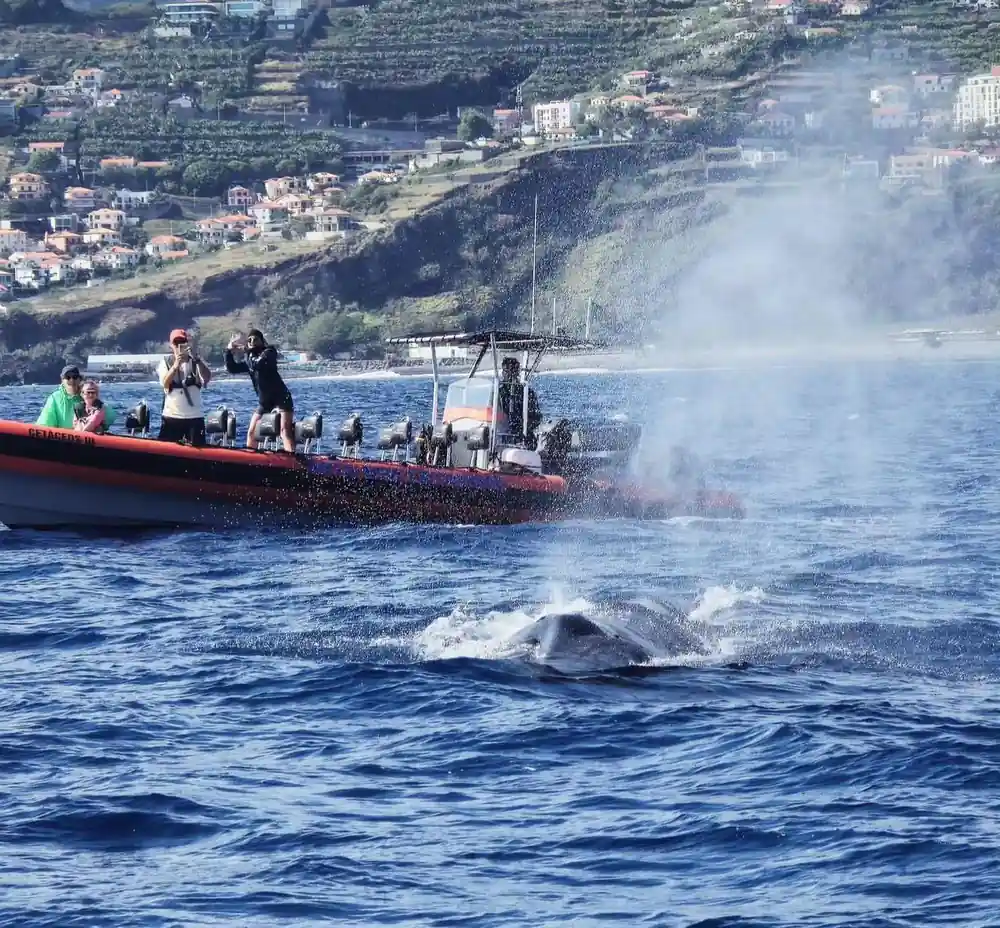
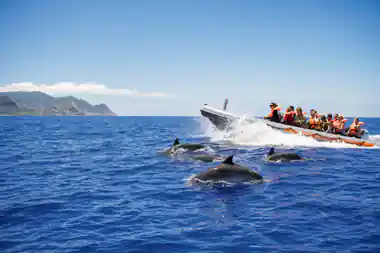
Guests in orange life jackets on a fast semi-rigid boat, spray in the air and a green volcanic headland behind.
Shoes that work on a wet deck
Choose shoes with grippy, non-marking soles, because the floor of the RIB is wet from spray and moves under you as the boat turns for a sighting. Open sandals offer no grip; smooth soles and heels are a genuine slipping hazard. Leave them at the hotel. White soles are fine, but non-marking grip is the key detail, because a deck covered in fine salt spray becomes slick very quickly.
Trainers with a decent tread work well if you accept they may get damp. Some trips pause for swimming, and the warm summer water at 24°C makes bare feet or water shoes fine for a quick dip.[2] Dry off before climbing back aboard, because a wet deck is a slippery deck, and wet socks are miserable on the walk home.
If you bring a small day bag, a dry pair of socks is a wonderful luxury for the ride back to the hotel, especially in the cooler months. Tuck them in a zipped pocket or dry bag so they stay dry even when the deck does not.
Sun, and the mistake everybody makes
On open water the sun hits you from above and bounces off the surface, so you are effectively sunbathing from two directions at once. The classic mistake is to apply sunscreen once at the hotel and forget about it. On a 2.5-hour trip with spray and wind, sunscreen washes off and gets wiped away whenever you adjust your sunglasses.[1] Bring a sunscreen you like, apply it before boarding, and reapply on board.
A hat with a brim protects your scalp, ears and neck, the parts people forget. Summer sea temperatures reach 24°C,[2] and the sun is strong even when the breeze keeps you cool. A cloudy day is the one that catches people out, because cool air masks strong UV; the reflection off the water does not care about clouds, so apply sunscreen anyway.
A light long-sleeved shirt or rash vest cuts down on how often you need to reapply and doubles as wind protection when the boat accelerates. It is the quiet hero of a sunny day on the water, and it protects the back of your neck far better than a last-minute squirt of lotion.
from US$62
A 2.5-hour RIB trip from Funchal with a live guide in English, French and Portuguese, free rebooking and free cancellation up to 24 hours ahead.[1]
Sunglasses and the glare
Polarised sunglasses are not a fashion choice here. They cut the glare off the water so you can spot dorsal fins and blows before anyone else, and they protect your eyes from salt spray. A retainer strap is the practical trick: on a fast boat, a dropped pair is gone before you can reach for it.
Comfort matters, because you will wear them for most of the 2.5 hours.[1] If you usually wear prescription glasses, consider clip-ons or a polarised pair you can keep on the whole trip. Squinting through glare is a quick way to miss the action, and constantly swapping glasses wastes time you could spend watching the water.
Keep a microfibre cloth in a pocket. Between spray and sunscreen fingers, lenses smudge quickly, and clean lenses are the difference between seeing a distant blow and missing it entirely. Caps with a strap or a chin cord also stay put in the wind far better than a loose baseball cap.
Swimwear, and whether you will use it
Whether you need swimwear depends on the trip you choose. The booked RIB tour is a watching trip, and swimming is not the point. Madeira's waters remain pleasant throughout the year, with winter temperatures around 18°C and summer around 24°C,[2] and a swim break is welcome on warmer days.
If you join a trip that offers swimming with dolphins, know the local rule: swimmers must always remain attached to the boat by holding a secure rope, and free swimming away from the boat is not allowed.[3] Plan for a short, supervised dip rather than a long swim, and listen carefully to the crew's briefing before you go over the side.
In summer, wearing swimwear under your clothes is the easiest approach. In winter, a towel, a change of underwear and a dry layer for the ride home serve you better than a full beach kit. Even if you do not plan to swim, pack a towel and a spare layer; you will be grateful after a wet ride.
What to leave ashore
An open RIB has no dry storage. Anything you bring will get damp, splashed or salt-sprayed, so leave passports, wallets, jewellery and your best camera at the hotel. A secure pocket or small dry bag is enough for a phone and a little cash. Zip everything shut before you board, because the moment a wave slaps the hull is the moment loose items fly.
If you must bring a phone, put it in a waterproof case and keep it inside a zipped pocket. This booked tour includes free cancellation up to 24 hours before departure and free rebooking,[1] meaning you don't have to take booking documents onto the boat. A photo of your confirmation on your phone is plenty.
Travel light and you will move around more easily, keep a hand free for the rail, and spend your attention on the water. Children and older travellers should follow the same principles: layers, grip and sun protection. The less you carry, the more you remember.
Whale watching trip lengths from Funchal
Trip lengths from Funchal whale watching listings:[1][4][5][10].
Compare Funchal whale watching boat trips
When to pack what
Pack for the trip
Check the forecast
Check wind and sea conditions before you leave. Funchal's south coast is often drier and sunnier because the trade winds arrive weakened there.[7]
Layer up
Start with a quick-dry base, add a warm layer in cooler months, and finish with a packable windbreaker.
Choose your shoes
Closed-toe shoes with grippy soles that can get wet. Save sandals and smooth soles for the beach.
Apply and reapply sun cream
Cover your face, ears and neck before boarding, and reapply on board between sightings.
Secure your sunglasses
Polarised lenses with a retainer strap beat cheap sunglasses that fog, slip and leave you squinting.
Leave valuables ashore
Phones, wallets and passports stay drier in the hotel safe than in a salt-sprayed pocket.
Book the 2.5-hour Funchal whale watching speed boat trip with free cancellation.
from US$63Reserve now & pay later