The essentials
- A 2.5-hour whale and dolphin watching trip from Funchal on a fast semi-rigid boat with a live guide in English, French and Portuguese.[1][2]
- Prices start at US$62, and you get free cancellation until 24 hours before departure for a full refund, plus an option to pay later after reserving now.[1]
- Madeira's waters have 27 confirmed cetacean species. Bottlenose dolphins and short-finned pilot whales are seen all year; Atlantic spotted dolphins and occasional blue whales are seasonal.[3]
- Rota dos Cetáceos runs its trips in three fast semi-rigid type boats, and this tour has a live guide speaking English, French and Portuguese.[1][2]
- Vessels maintain a minimum of 50 metres between themselves and cetaceans, and crews follow Madeira's distance and speed rules, so encounters occur on the animals' terms.[4]
- Top choice Funchal Whale & Dolphin Watch from US$62 Duration2.5 hours[1]GuideLive: English, French, Portuguese[1]Rating4.70 from 2,070 reviews[1] Check availability
- Dolphin & Whale Watch by VMT from US$46 Duration3 hours[5]GuideLive: English, Portuguese[5]Rating4.20 from 1,590 reviews[5] See this tour
- Dolphin & Whale Watch Catamaran from US$40 Duration3 hours[6]GuideLive: English, Portuguese[6]Rating4.61 from 6,772 reviews[6] See this tour
He guides the Lobosonda skippers exactly with details like, milage and landmarks to the places at sea, where the boat with the guests can then observe the marine mammals.
A fast, expert-led trip that respects the animals
Good to know
What an expert guide changes
Most whale-watching trips are run by skilled skippers who know the sea. This one pairs the skipper with a live guide who reads the surface and recognises the rhythm of a blow, so you often know which species you are looking at before most passengers have lifted their cameras. Madeira's waters hold 27 confirmed species of cetaceans, giving the commentary a real range.[3]
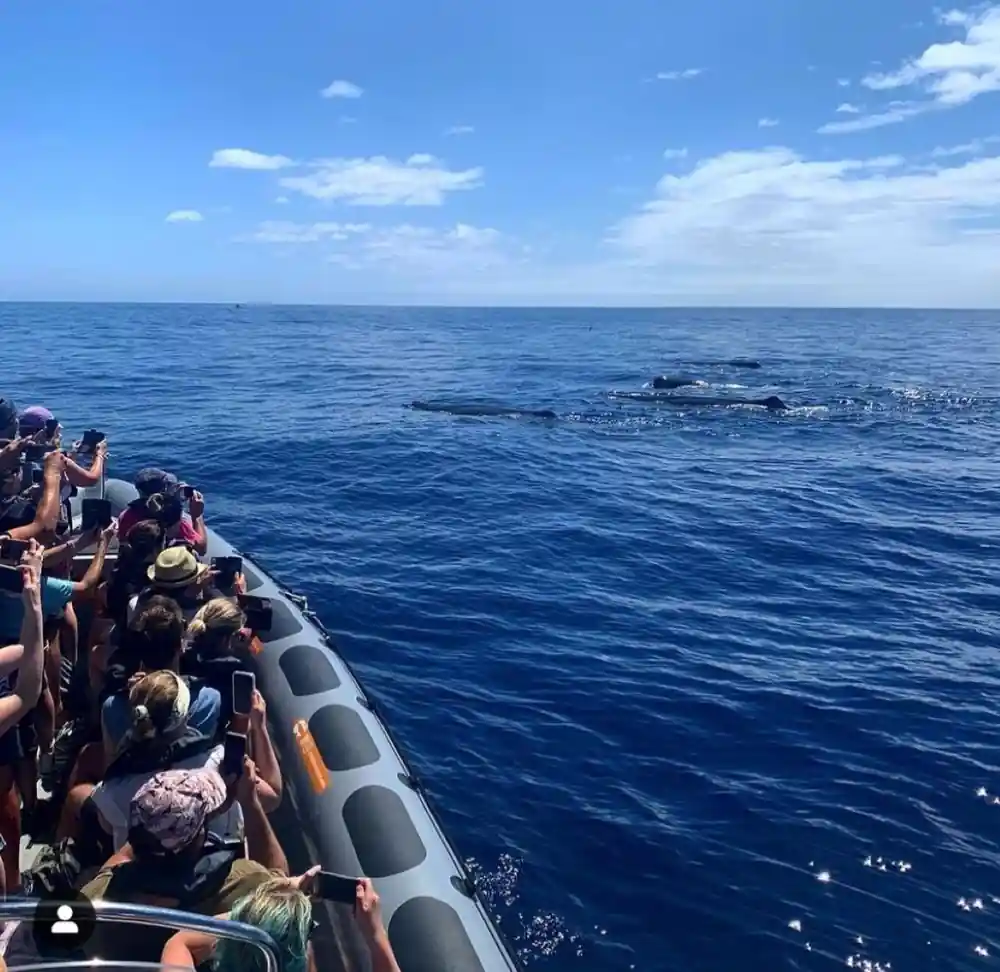
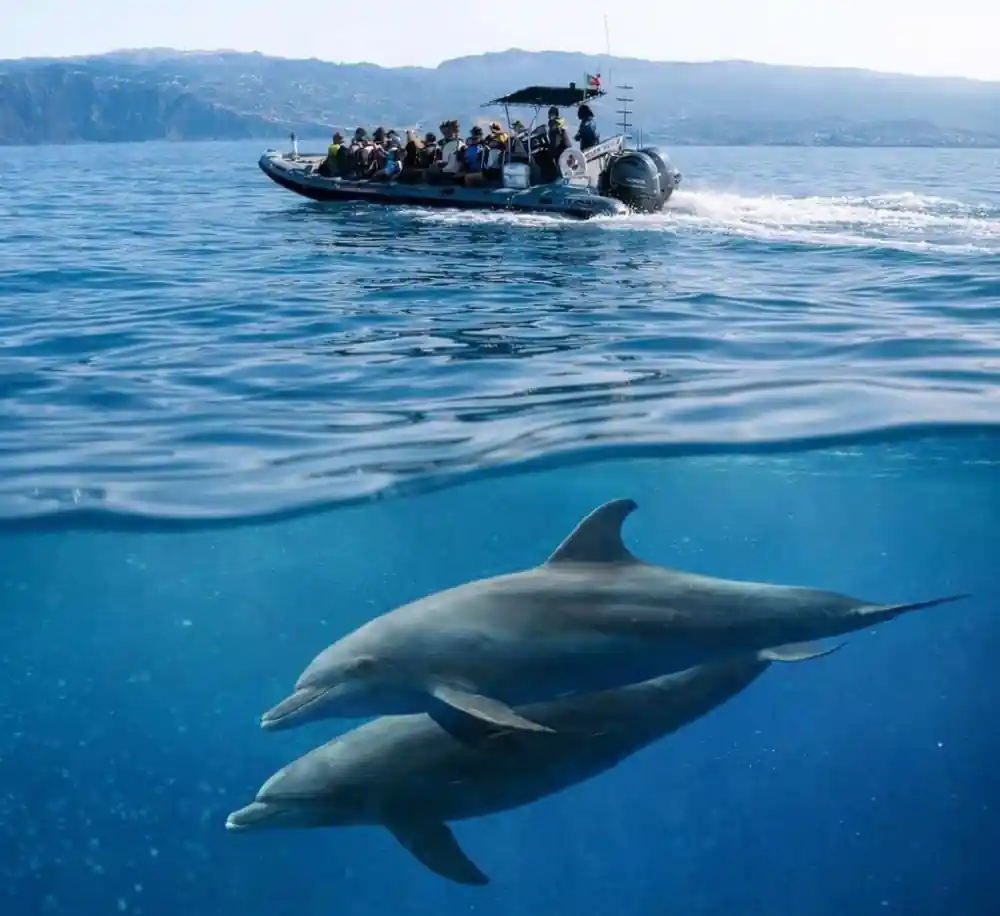
The trip runs with Rota dos Cetáceos, an operator whose excursions are made in three fast semi-rigid type boats.[2] That matters because a 2.5-hour window is best spent watching animals, not crawling towards them.[1] The guide's job is to make every sighting count, from a distant blow to a pod surfing the bow wave, and to explain what the animals are doing rather than just naming them.
For many visitors this is the first time they have been this close to wild cetaceans, and the guide is used to that. There is no pressure to spot something every minute; instead, the pace lets the sea reveal itself. If a pod is feeding, the boat holds position at a respectful distance and you watch the hunt unfold, which is often more memorable than a close encounter that disturbs the animals.
Identification while it is happening
Cetaceans rarely hold still. A dorsal fin breaks the surface for seconds, a tail fluke hangs in the air for a moment, and then the sea closes over them. A spotter on shore assists the boat captains with mileage and landmark updates, allowing the vessel to be positioned correctly when the animals come up.[8] The seabed falls away sharply around Madeira, and only five kilometres offshore the water is deeper than 3,000 metres, so deep-water whales may surface quite near land.[9]
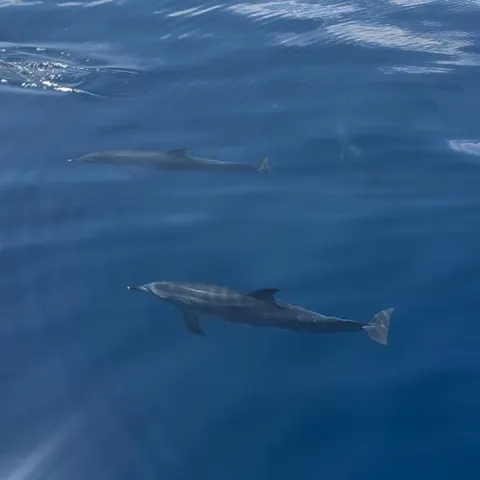
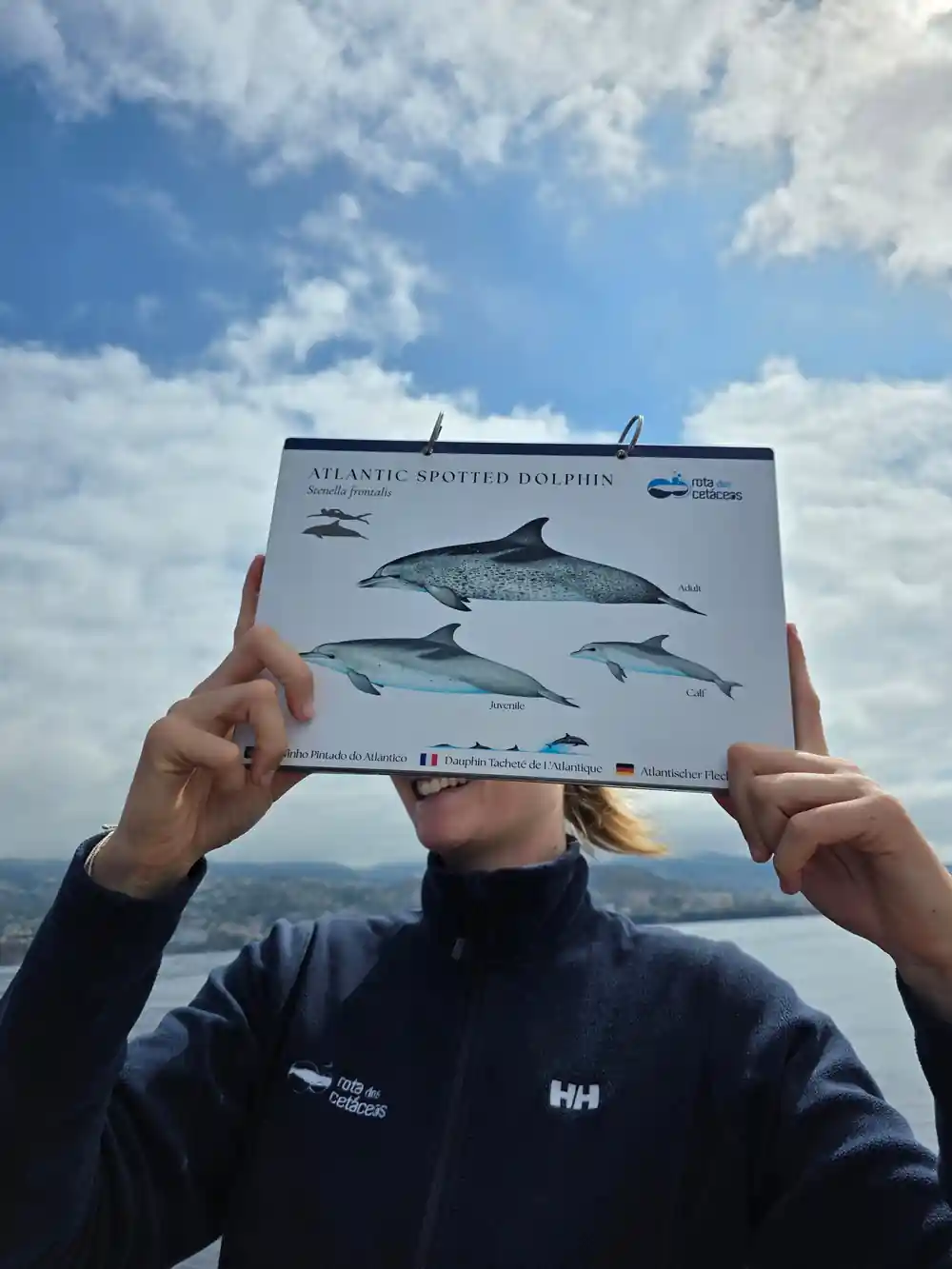
Species knowledge shapes the trip. Bottlenose dolphins and short-finned pilot whales are seen all year round, while Atlantic spotted dolphins and occasional blue whales are seasonal visitors, and orcas and humpback whales are rarely seen.[3] Atlantic spotted dolphins are most commonly encountered between March and November.[10] When the guide calls out a species, you also hear why it is there, what it is feeding on and how to tell it from a lookalike.
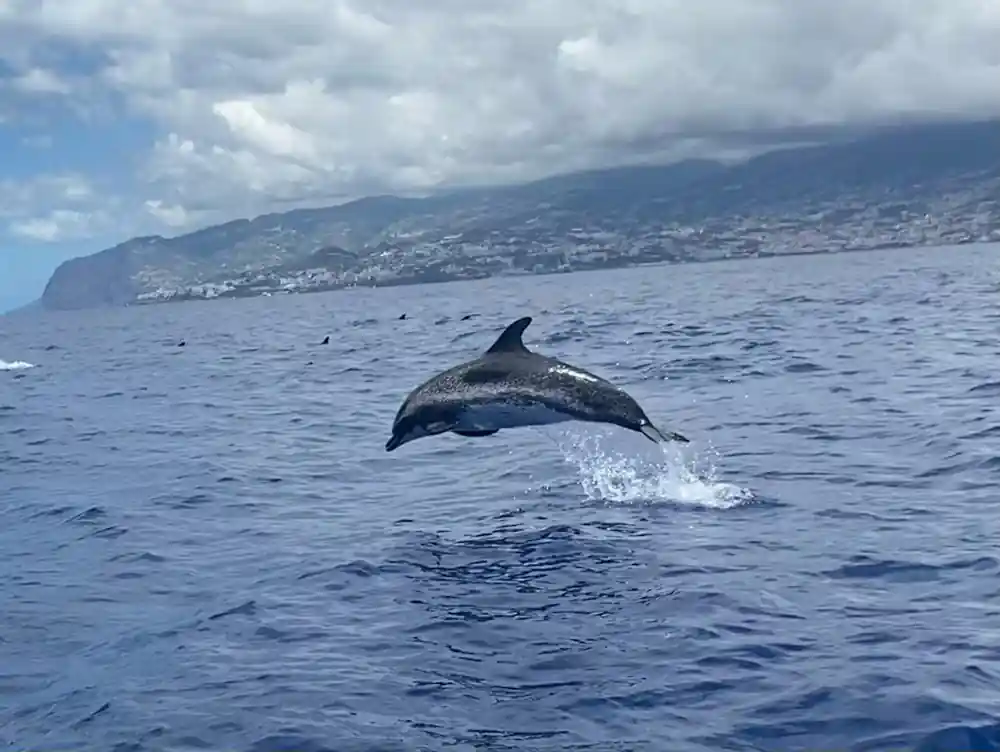
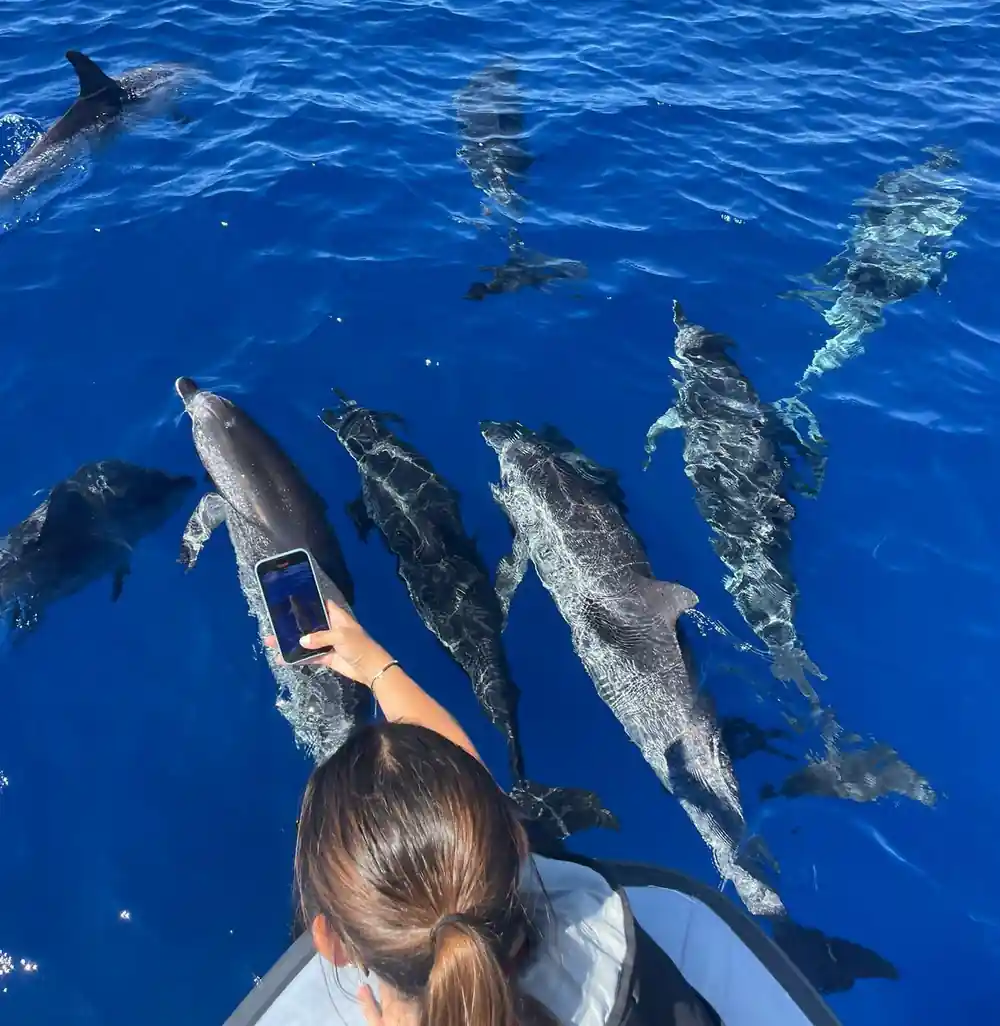
Understanding the animals also means understanding the season. In winter, short-beaked common dolphins are frequently encountered, adding to the resident species.[11] In summer, Atlantic spotted dolphins become the most frequent encounter, often travelling in lively groups that bow-ride the RIB.[10] The guide can tell you which species to expect before you leave the marina, so the trip feels less like a lottery and more like a planned expedition.
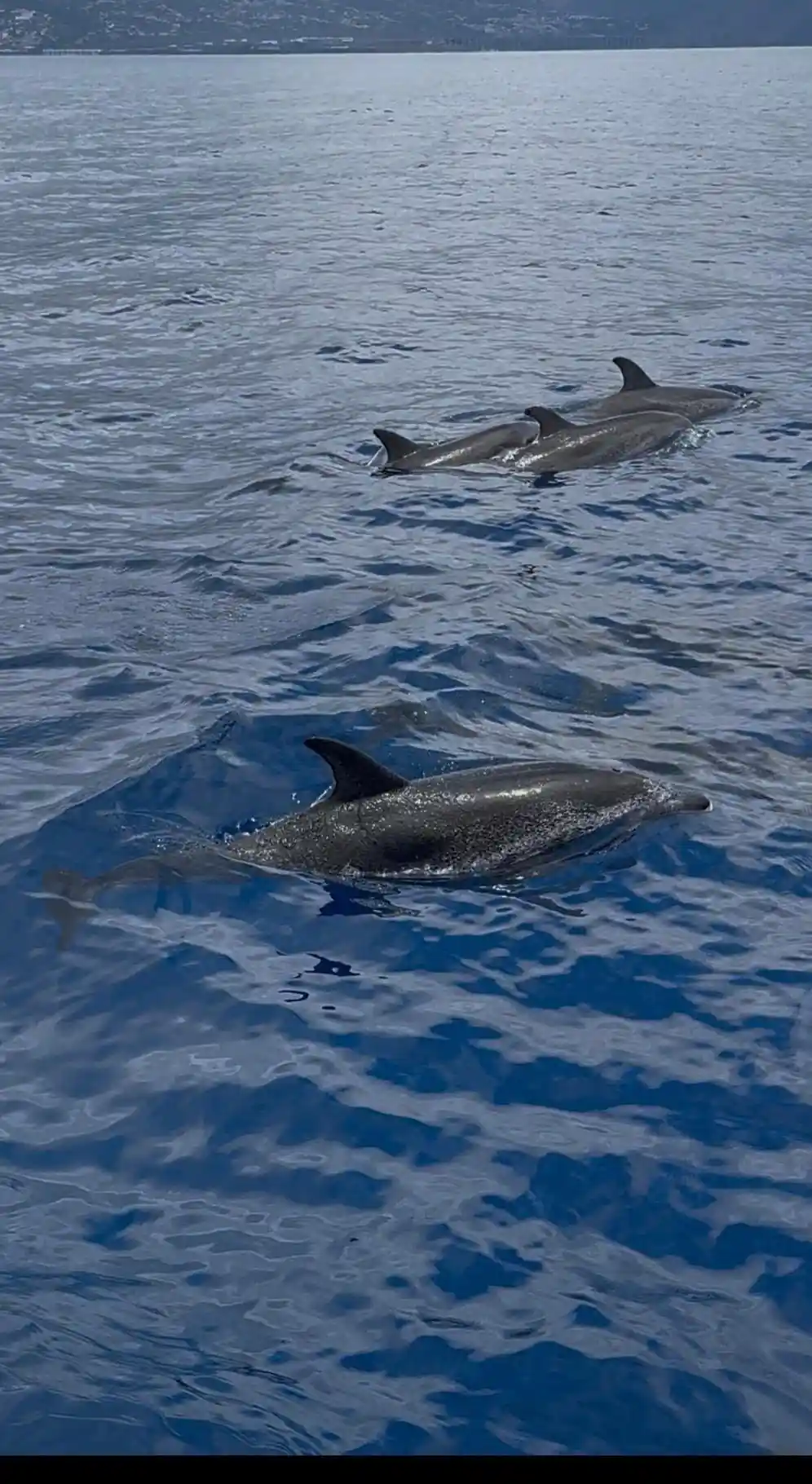
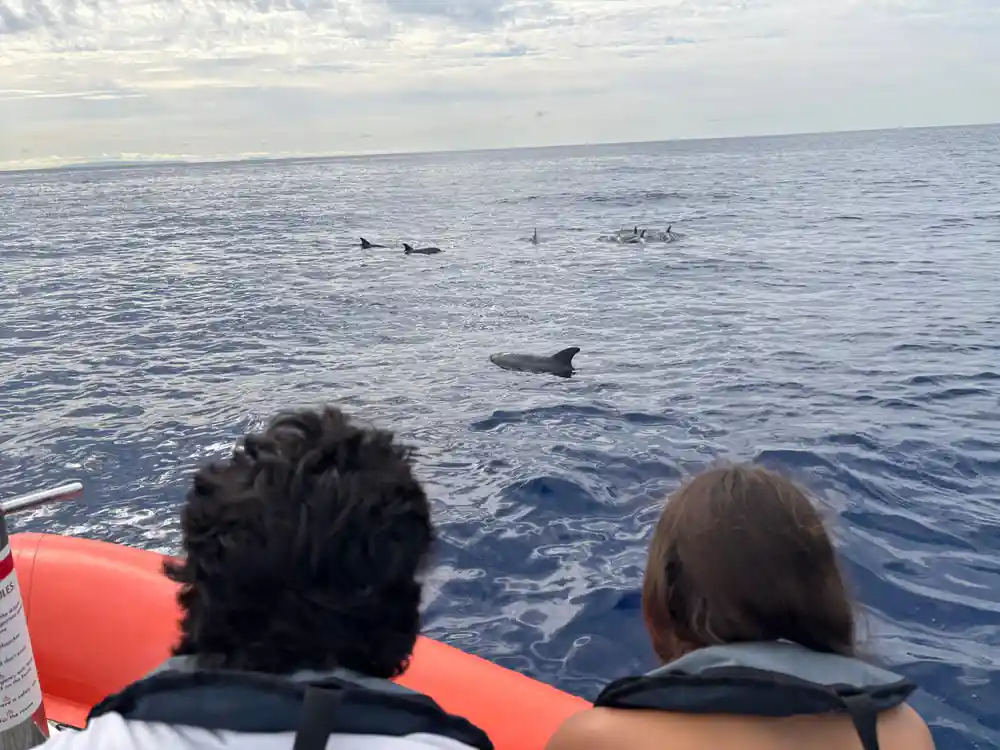
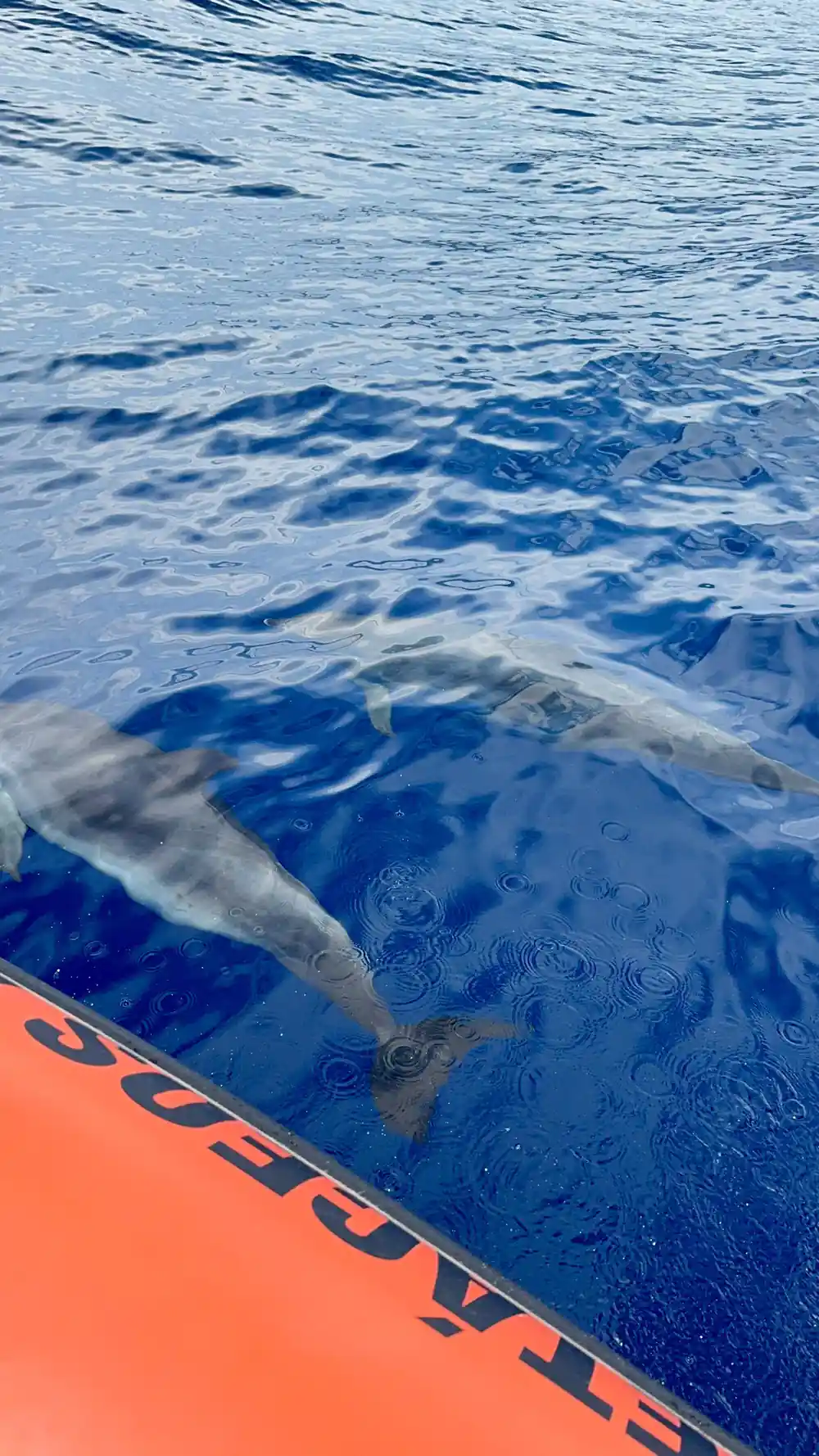
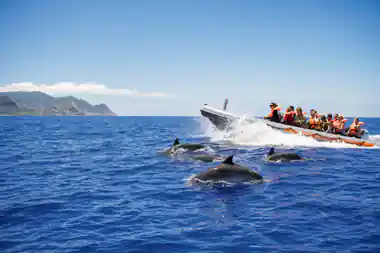
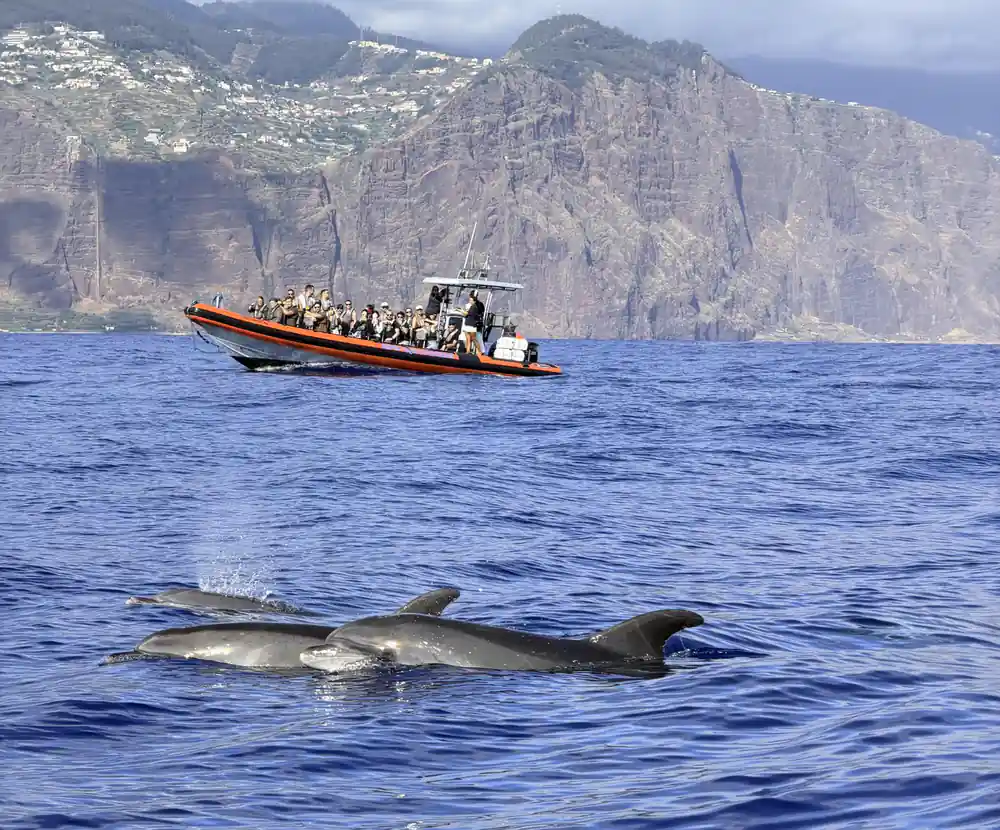
Passengers on a RIB watch a pod of dolphins off Madeira's green coast.
The briefing before departure
Before the lines are cast off, you get the essentials: where the life jackets are, how to move on a fast RIB and what to expect once the engines open up. The team makes sure everyone is comfortable with the plan. The trip starts from Funchal, lasts 2.5 hours and is led by a live guide who works in English, French and Portuguese.[1]
The practical side is simple. You can book now and pay later; should your plans shift, cancellation is possible up to 24 hours ahead with a full refund.[1] That flexibility makes it easy to book early in your stay and move the trip if the weather looks better on another day.
If you are new to whale watching, tell the crew when you book. They will help you choose a trip that suits you, and the semi-rigid format means the guide can spend time with each person.[2] This page also allows reserving now with payment later, making it possible to hold a date without spending money right away.[1]
Commentary that keeps everyone in the picture
With a live guide speaking English, French and Portuguese, the commentary never feels like a recording.[1] The guide switches languages naturally, answering questions from different corners of the boat and keeping everyone in the picture. It is the kind of guiding that works well for international travellers who want to understand what they are seeing without losing the moment.
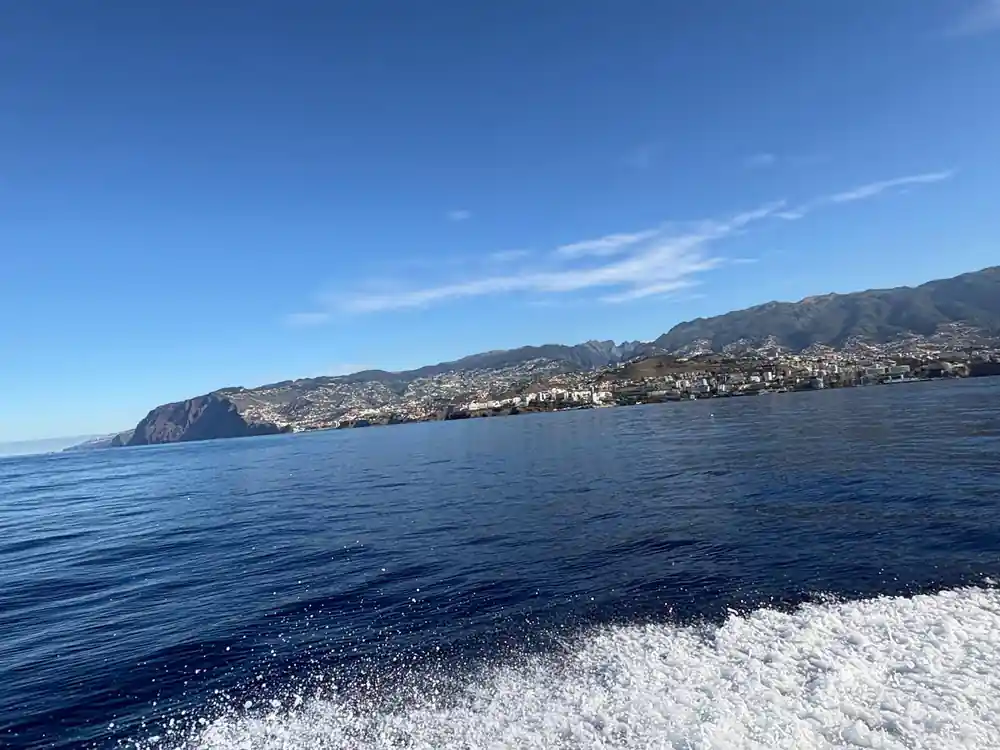
Madeira's south coast is a sensible place for this style of trip. It sits in the rain shadow of the mountains, where the trade winds arrive in a weakened form, so the sea is usually calmer.[12] That means less rolling for passengers and better conditions for spotting wildlife, which is exactly what you want on a 2.5-hour tour.[1]
Because the trip is only 2.5 hours, it fits neatly into a Funchal day.[1] You can do it in the morning and still have the afternoon for a levada walk, a visit to the old town or a swim. The crew understands that most visitors are on holiday, and they keep the pace relaxed without wasting time.
from US$62
A 2.5-hour whale and dolphin watching trip from Funchal with a live guide in English, French and Portuguese and free cancellation.[1]
Rules that keep sightings ethical
Whale watching works best when everyone respects the animals. Madeira has protections for cetaceans: boats must keep at least 50 metres from whales and dolphins, 25 metres from sea turtles, and cut speed to 12 knots when closer than 300 metres and to 8 knots when inside 100 metres.[4] The crew follows those limits, and the guide explains why they matter.
Swimming with dolphins is a different activity, and Madeira has its own rule for that: swimmers must always remain attached to the boat by holding a secure rope, and free swimming away from the boat is not allowed.[13] On this tour, the focus is watching, which keeps the experience simple and the animals undisturbed. The crew's respect for those rules is part of what makes the trip feel responsible.
The same respect carries into the design of the trip. Instead of racing from one sighting to another, the boat works with the spotter to position itself well in advance, then slows down as it approaches.[8] This is why a 2.5-hour tour can feel spacious even though the time passes quickly.[1]
A local team with local knowledge
One of the pleasures of a small operator is that you meet the people who actually run the business. The crew are not interchangeable staff; they are the guides and skippers who know the local waters, the seasonal patterns and the individual animals that return year after year. When the guide points out a dolphin's scar or a whale's unusual dive, you sense the familiarity behind the observation.
This personal touch carries through the whole trip. The briefing feels like advice from a friend, the commentary adapts to your questions and the pace reflects the day's conditions rather than a rigid script. The guide, the spotted dolphins and the south coast's green headlands all become part of one coherent memory.
Rota dos Cetáceos is the operator behind this tour, and its trips are made in three fast semi-rigid type boats.[2] That local base means the same faces you see at the harbour may be the ones guiding you at sea, and they have a stake in keeping both visitors and wildlife happy.
What you leave knowing
You will leave with more than photographs. You will know how to read a surface for blows and fins, why Madeira's deep offshore water brings whales close to shore, and why the crew keeps a respectful distance.[4][9] You will have heard the names of the species that call these waters home, from the year-round bottlenose dolphins and short-finned pilot whales to the seasonal Atlantic spotted dolphins.[3]
You will also carry a clearer sense of how responsible whale watching works: fast when it is safe, slow when it matters, and always on the animals' terms. Off Funchal, the winter sea temperature is about 18°C; in summer it is 24°C, so no season is bad for learning this; only the company in the water changes.[7]
Once you are back on land, the wildlife watching does not stop. Look out for shearwaters skimming the waves, and ask the guide about the day's sightings afterward. The small scale of the operation means you can continue the conversation, which is part of the charm of booking with a local operator rather than a large company.
Compare traveller ratings
Compare tour prices
From prices in US dollars for GetYourGuide listings[1],[5],[6].
When to go
How to book
Check times
Choose your date and check availability to see starting times.[1]
Reserve now, pay later
Book your place without paying today; reserve now and pay later is available.[1]
Cancel free if plans change
You can get all your money back by cancelling no later than 24 hours ahead.[1]
Meet in Funchal
The tour stops in Funchal, so make your way to the meeting point.[1]
Board and enjoy
Join your live guide for a 2.5-hour trip in English, French and Portuguese.[1]
Ready to watch whales and dolphins off Madeira?
from US$63Reserve now & pay later