The essentials
- Trips run in fast semi-rigid boats, the kind of craft used by Madeira operator Rota dos Cetáceos. It is a nimble platform for scanning the horizon.[1]
- Researchers have confirmed 27 species of cetacean in Madeira's waters, and bottlenose dolphins with short-finned pilot whales appear all year round.[2]
- Boats stay a minimum of 50 meters away from whales and dolphins and go no faster than 12 knots within 300 meters, keeping such encounters managed rather than chaotic.[3]
- The tour takes 2.5 hours and costs from US$62, with a live guide in English, French and Portuguese, plus free cancellation up to 24 hours in advance.[4]
- A small RIB will not suit everyone. Think about sea conditions, seating and what you want from the trip before you commit.
| Small RIB (booked tour) | Catamaran cruise | Sailing trip | |
|---|---|---|---|
| Duration | 2.5 hours[4] | 3 hours[5] | 3 hours[6] |
| From price | from US$62[4] | from US$40[5] | from US$47[6] |
| Rating | 4.70 from 2,070 reviews[4] | 4.61 from 6,772 reviews[5] | 4.64 from 1,431 reviews[6] |
| Guide languages | English, French, Portuguese[4] | English, Portuguese[5] | English, Portuguese[6] |
| Flexibility | Free rebooking[4] | Free cancellation[5] | Full refund offered[6] |
Trips are made in three fast semi-rigid type boats.
A small RIB is the right choice for most first-timers
Read before booking
- Check availability and starting times
- Reserve now and pay later
- Free cancellation with flexibility
- Live tour guide in English, French and Portuguese
What the fleet actually is
A whale watching trip from Funchal can mean many hulls. This one is the semi-rigid RIB: a fast, open inflatable with a solid floor, the same style of craft used by Madeira operator Rota dos Cetáceos, whose trips run on three fast semi-rigid boats.[1] It is not a catamaran with a bar and a cabin. You sit low, feel the swell and get spray in the face. That is part of the appeal for travellers who want to be on the sea rather than above it. The bench seating is snug, the engine is close, and a wet jacket is part of the deal.
The tour takes 2.5 hours and features a live guide speaking English, French, and Portuguese.[4] A RIB’s agility lets a skipper turn quickly when something surfaces, though regulations still govern how close anyone can go. Madeira’s south coast is often calmer because the mountains blunt the trade winds, which helps small boats.[8] Even so, the Atlantic is the Atlantic. Check the forecast before you commit. If the swell is up, choose a morning departure, grip the handrail and keep your camera in a dry bag until the boat slows.
Why the number matters for the view
A RIB carries far fewer passengers than a catamaran, so sightlines stay clear and you are rarely craning over someone else’s shoulder. That matters because the action is often brief. A dolphin may roll once and dive, and the person who spots it first gets the best look. On a small boat, everyone can hear the guide and react together. Stay alert, and when someone points, follow that line immediately; whales and dolphins rarely wait for a second glance. The low seating also puts you closer to the water, so the animals look bigger and the surface feels alive.
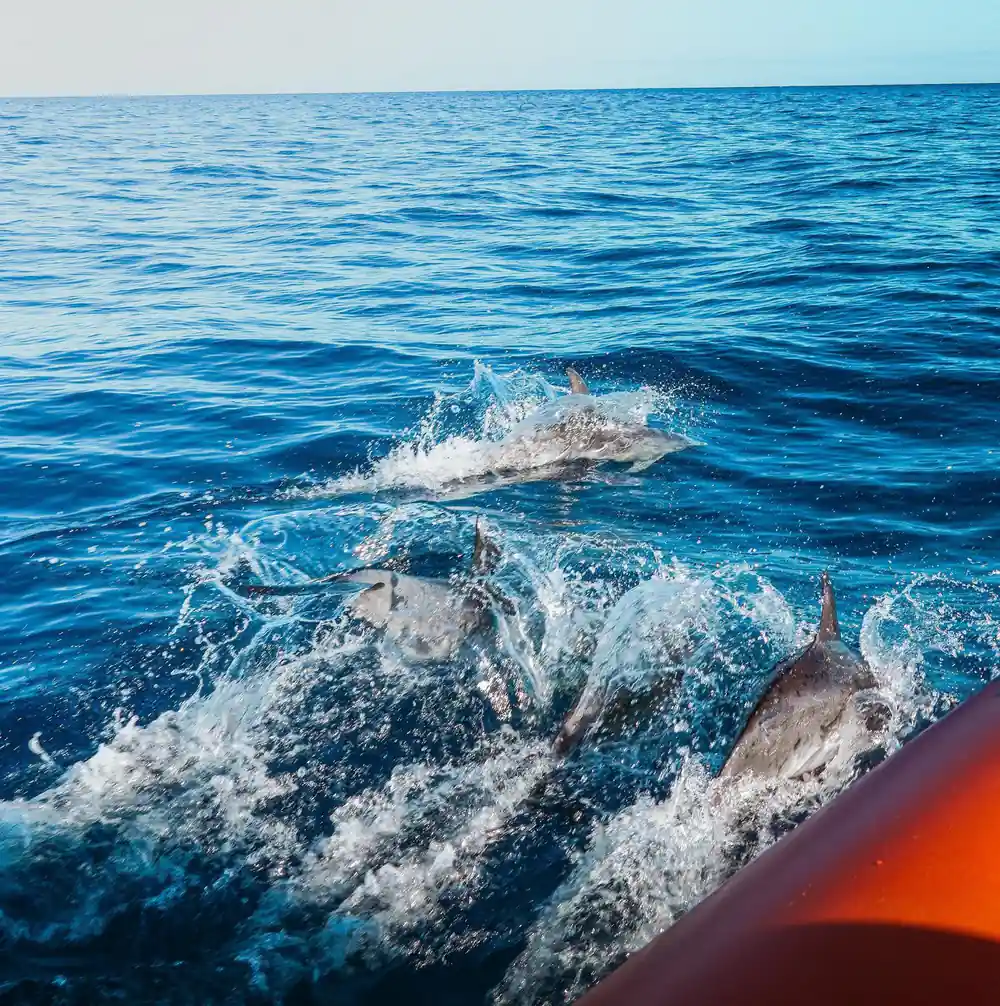
The skipper must keep at least 50 meters from whales and dolphins, 25 meters from sea turtles, and slow to 12 knots within 300 meters and 8 knots within 100 meters.[3] Those limits sound distant, but from a low RIB they feel close. Scientists have verified 27 cetacean species around Madeira, giving visitors much to watch for.[2] The small deck is an advantage: every rail position is a good one. Hold still when the engine idles, spread out across the sides, and let the guide direct your gaze. Binoculars can help, though you may not need them when dolphins choose to ride the bow.
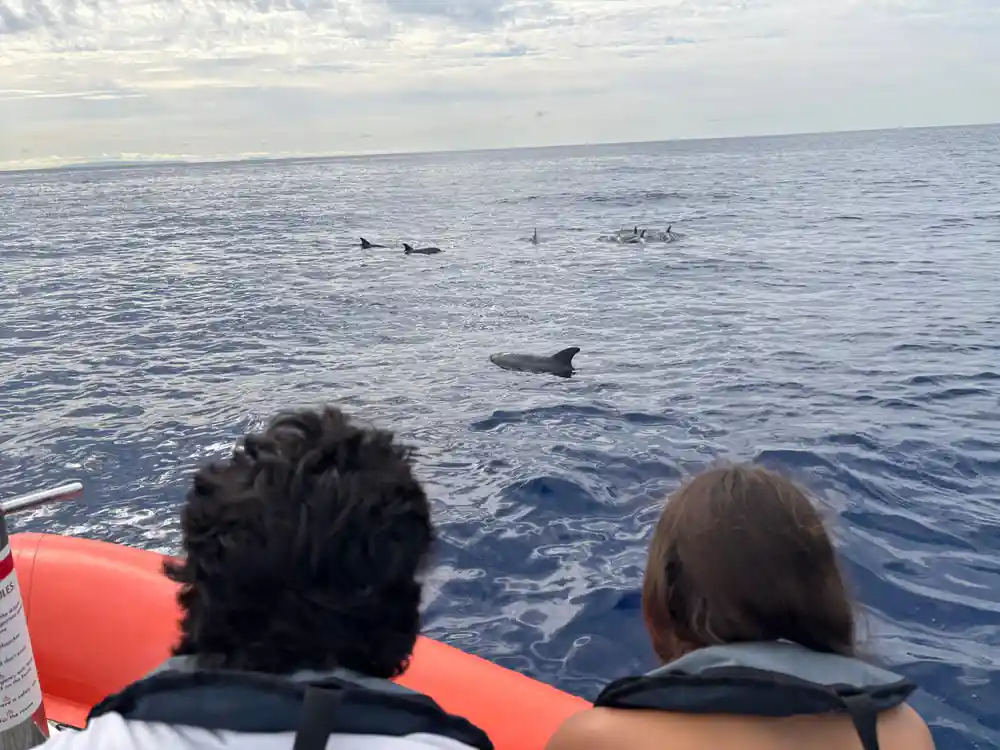
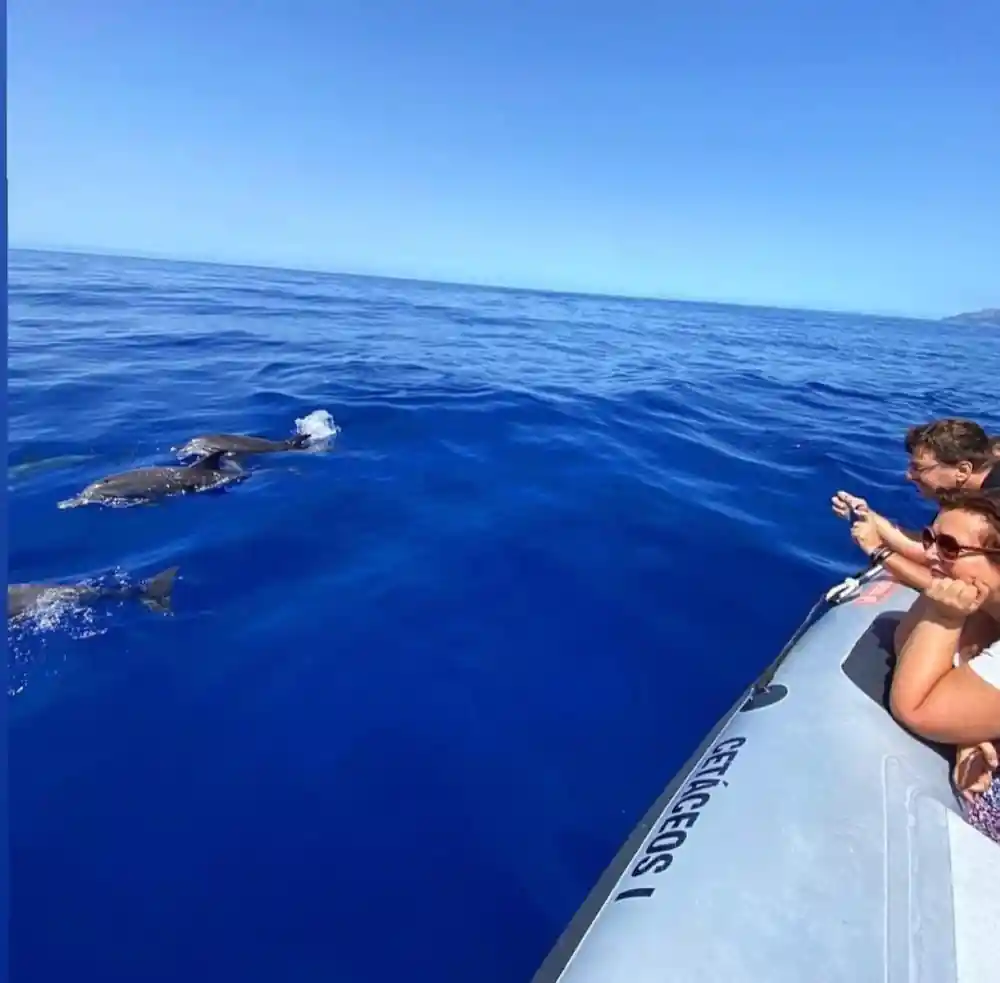
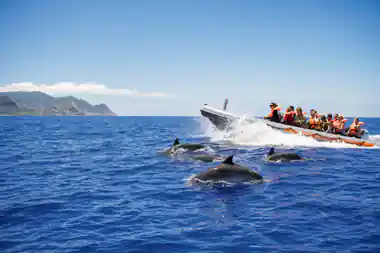
Guests in life jackets watch for dolphins from the bow of a fast RIB
The guide becomes a person
On this tour the guide speaks English, French and Portuguese, and with a compact group on board the guide can answer questions without shouting.[4] You can ask about the species you are seeing, the silhouette on the horizon and the best way to hold your camera. A few Madeira companies employ a spotter on shore who passes distances and waypoints to the captains, letting the onboard guide concentrate on commentary.[9] The person in front of you is not just narrating; they are actively reading the sea. Ask what to look for, how long a pod might stay, or what the local names for the birds are.
The setting explains why the guide has so much to talk about. Only five kilometres offshore, depths can exceed 3,000 metres, and the steep underwater relief allows deep-water whales to approach the island closely.[10] A knowledgeable guide turns a dolphin sighting from a photo opportunity into a story about canyons, currents and migration. You may hear how the volcanic cliffs drop into deep water, or how a distant blow tells the skipper something about the animal below. Those details make a small-group trip feel personal.
What it means for the animals
Madeira’s whale watching rules are strict. Boats must keep a minimum distance of 50 meters from whales and dolphins and 25 meters from sea turtles, with speeds gradually reduced to no more than 12 knots within 300 meters and 8 knots within 100 meters.[3] A small, quiet boat that obeys those rules gives animals space to behave naturally, which is also what makes the sightings worthwhile. When animals are not being pursued, they are more likely to carry on feeding, travelling or resting, and that is exactly what you have come to see.
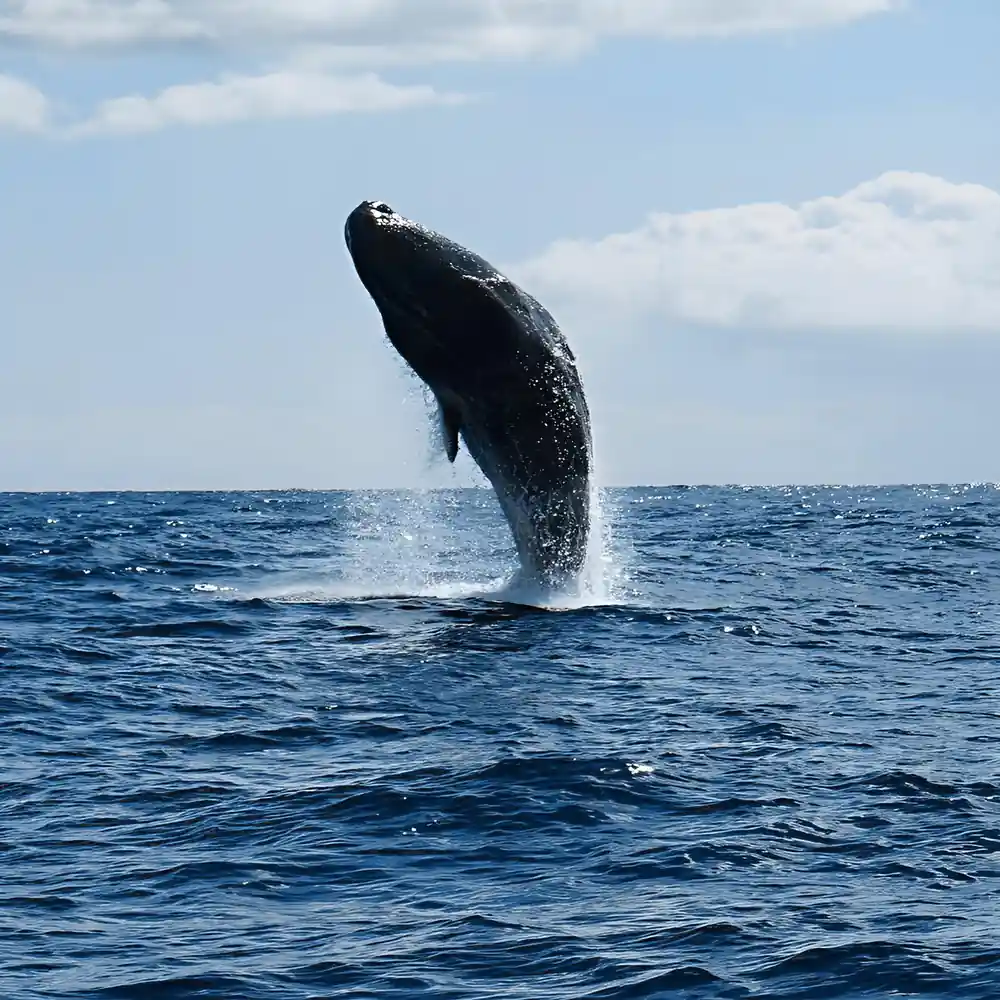
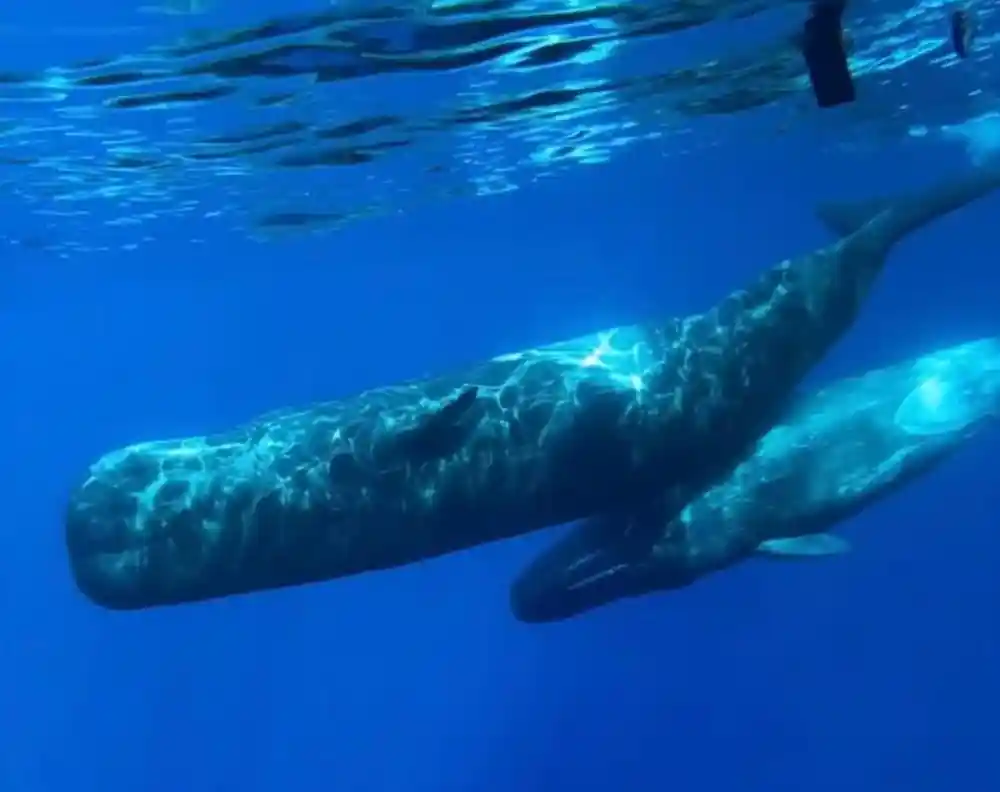
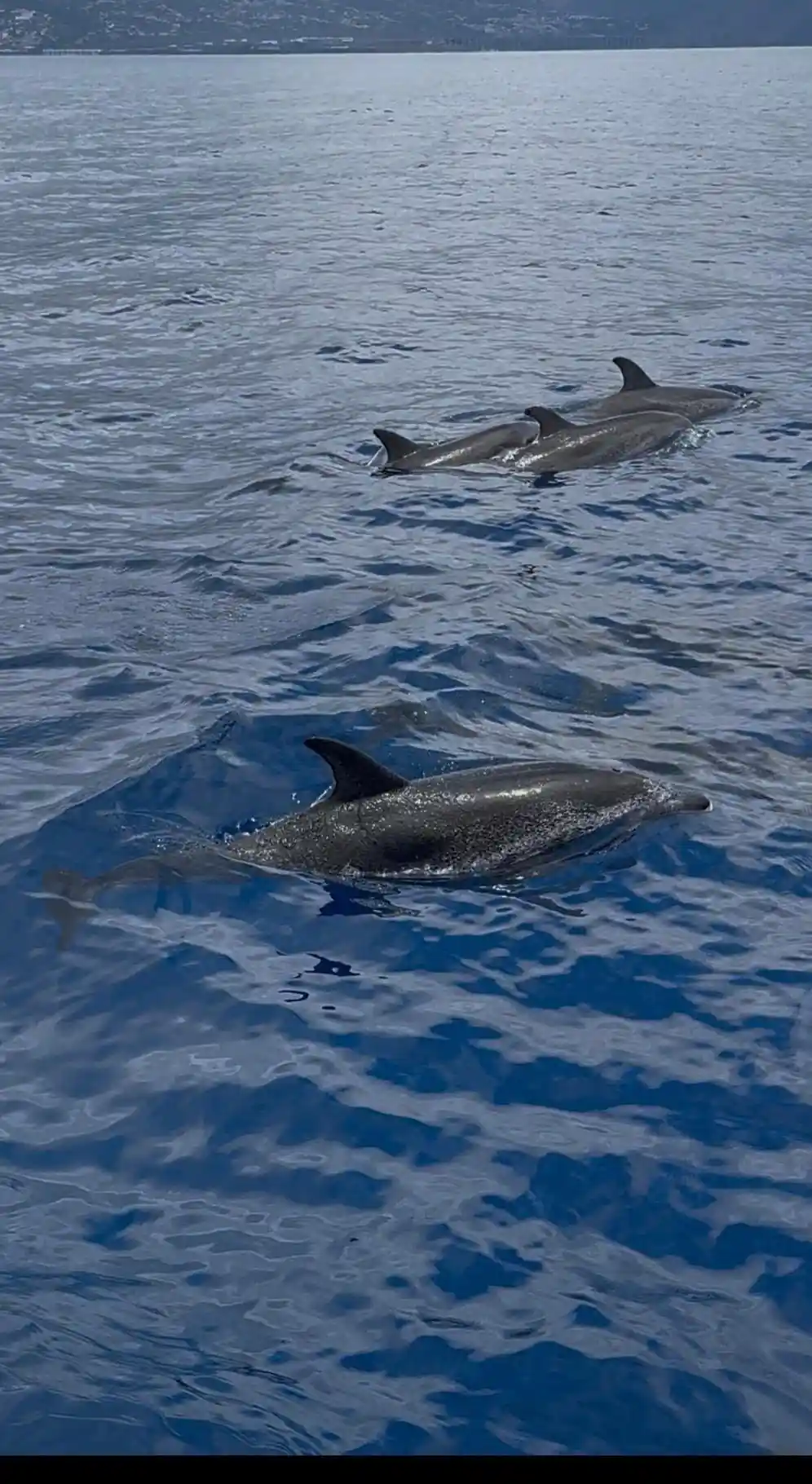
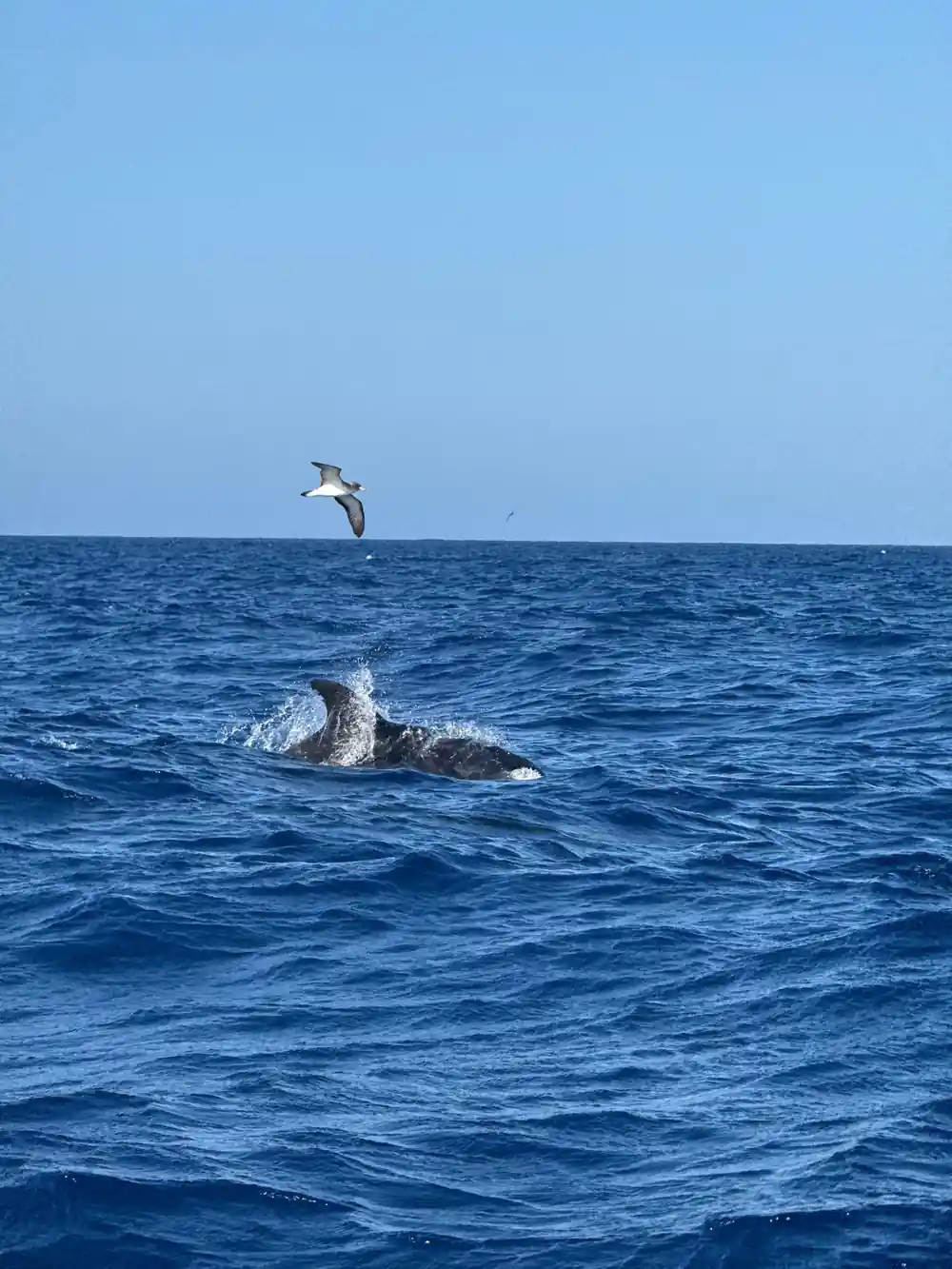
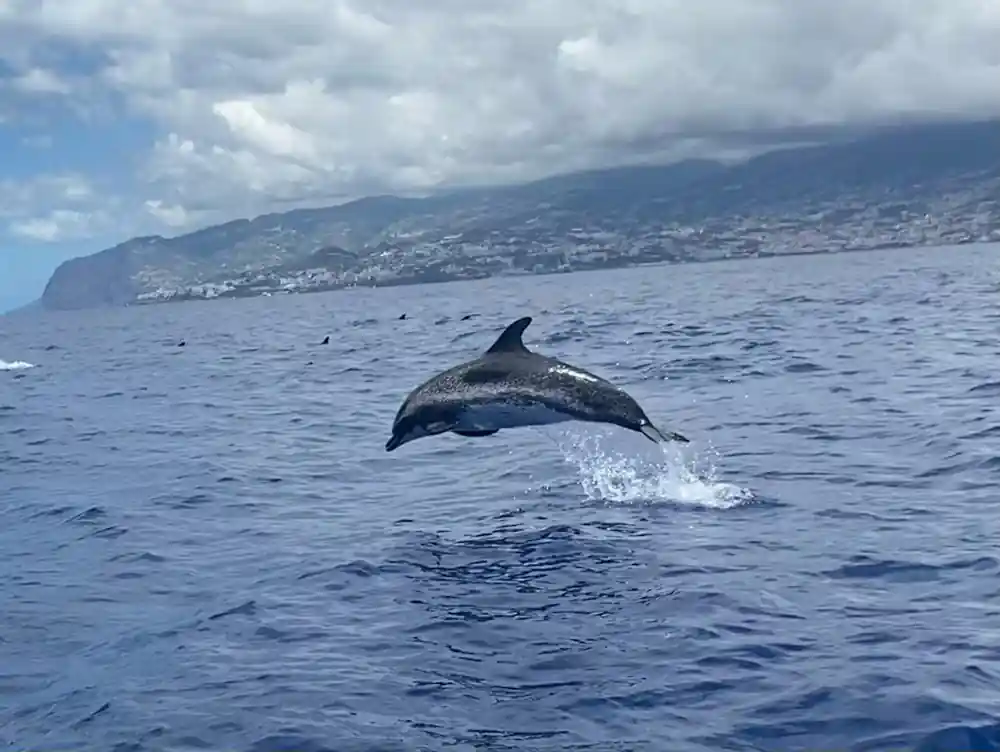
The wildlife calendar is rich. Short-finned pilot whales as well as bottlenose dolphins are visible year-round; Atlantic spotted dolphins peak from March to November, and short-beaked common dolphins appear frequently in winter.[2][11][12] Scientists have verified 27 cetacean species around Madeira, and those protections help explain why the animals stay so easy to spot.[2] Knowing that the animals are protected adds meaning to the moment; you are watching wild creatures in their own territory, not just a show.
from US$62
A 2.5-hour RIB trip with a live guide, free rebooking and free cancellation.[4]
Who a small boat suits less well
A RIB is a poor match if you want a stable deck, a bar or shelter. The ride is livelier than a catamaran, and if you are prone to seasickness you may prefer a larger hull. Small children, people with limited mobility, or travellers who need a cabin will find catamarans easier. Ask the operator about boarding before you book. It is also worth thinking about the return ride; after an hour of scanning the sea, a bumpy crossing can feel longer than it is. If anyone in your group hesitates, a catamaran with more space may be the kinder choice.
Dress for the conditions. Sea temperatures off Funchal range from around 18°C in winter to 24°C in summer, and wind chill on a moving boat makes the air feel cooler.[7] Bring a windproof layer, sunscreen and a dry bag. If the forecast is rough, a morning slot on a calmer south-coast day is often the wiser choice. Wear shoes with grip, because the deck will be wet, and keep loose items zipped inside your bag. A wide-brimmed hat is useful, but tie it on; the wind will not ask permission.
Booking, and why it fills
The tour costs from US$62 and lasts 2.5 hours, and exact start times are confirmed when you book.[4] It offers free rebooking and free cancellation up to 24 hours in advance, and you can reserve now and pay later.[4] The listed stop is Funchal, so meeting points are city-side.[4] If you are staying elsewhere on the island, plan your transfer with plenty of time; the marina area is easy to find but busy when several boats depart together. Give yourself a little margin so you arrive relaxed.
Small RIBs fill because they hold fewer people than catamarans, so a popular departure can sell out quickly. Booking ahead also means you can pick the time that matches the sea conditions. With a rating of 4.70 from 2,070 reviews, the tour has a strong track record, and the flexibility makes it low risk to secure a spot early.[4] If you can, book before your trip and keep the afternoon free for a land-based adventure; that way a cancelled or rerouted departure does not have to spoil a whole day.
The trade you are actually making
You are trading cabin comfort for a raw, immediate experience. A catamaran cruise from Funchal costs from US$40 for 3 hours, and a sailing trip costs from US$47 for 3 hours; this RIB is from US$62 for 2.5 hours.[4][5][6] The difference buys a smaller, faster boat and a guide who can give you more attention. It also buys a shorter exposure to the weather, which matters if you are worried about the sea. Some travellers will happily pay for the stability of a larger vessel; others will want the RIB’s immediacy.
That is a real trade, and it is worth making consciously. If the sea is rough, a catamaran may be the wiser call. If you want sightings and a lively ride, the RIB is hard to beat. The rating, 4.70 from 2,070 reviews, suggests most travellers accept the trade and come back happy.[4] Keep your expectations realistic: whales are wild animals, and every trip is different. The joy is in the search as much as the sighting, and a small boat makes the search feel shared.
From prices for whale and dolphin tours from Funchal
Compare from-prices for your party
When to go whale watching from Funchal
Book your Funchal RIB trip
Check the forecast
A small open boat feels rougher in wind. Madeira’s south coast is often calmer because the mountains blunt the trade winds, but confirm conditions before you go.[8]
Choose your date
The tour takes 2.5 hours and runs with live guides in English, French and Portuguese; pick a morning or afternoon slot when you book.[4]
Book with flexibility
Reserve now and pay later; free rebooking and free cancellation apply up to 24 hours before.[4]
Pack for spray
Bring sunscreen, a windproof layer and a dry bag. Sea temperatures off Funchal range from around 18°C in winter to 24°C in summer.[7]
Meet in Funchal
The tour’s listed stop is Funchal, so plan to be at the marina with time to spare.[4]
Ready to trade deck space for a closer look at Madeira’s whales?
from US$63Reserve now & pay later