The essentials
- From US$62, 2.5 hours, live guide in English, French and Portuguese.[1]
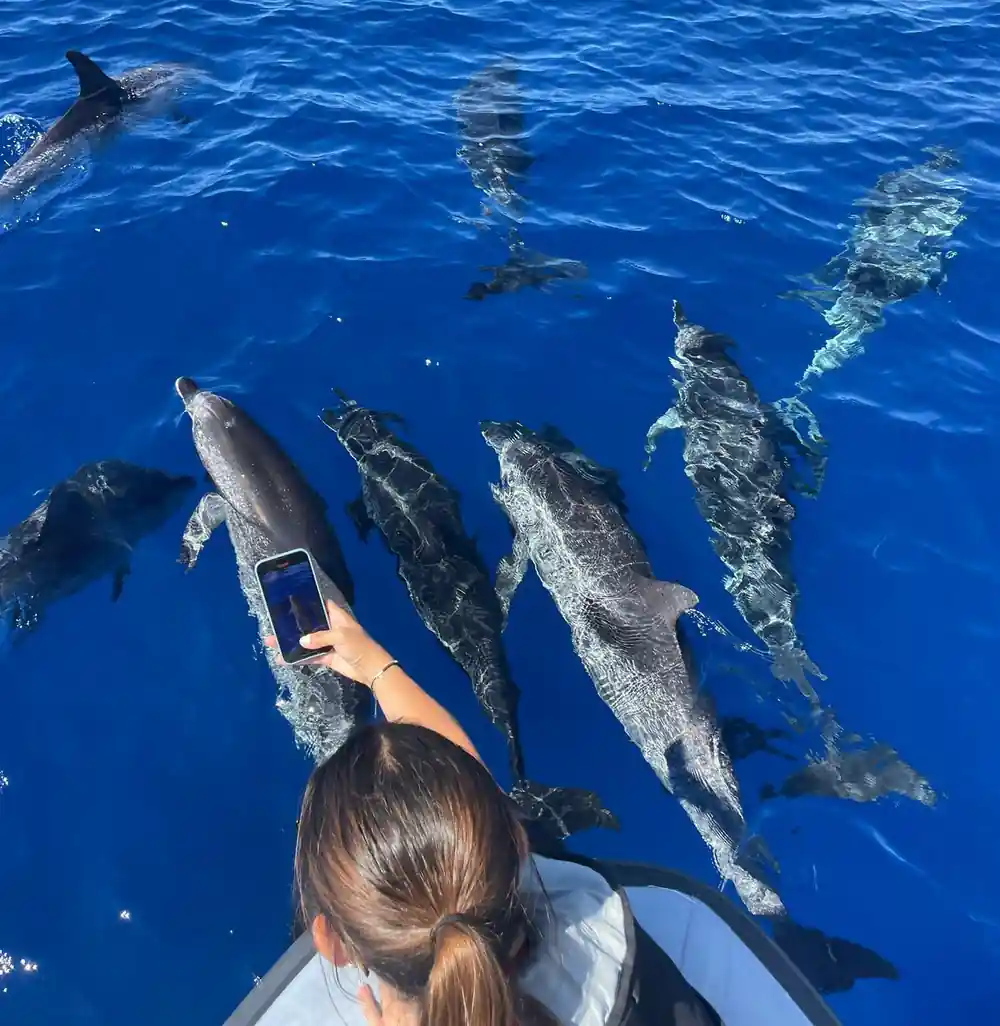
- Bottlenose dolphins and short-finned pilot whales all year, plus Atlantic spotted dolphins and occasional blue whales.[2]
- You can reserve now and pay later; rebooking is free, and cancellation is free up to 24 hours prior.[1]
- Atlantic spotted dolphins are most commonly seen from March to November; short-beaked common dolphins are frequently encountered in winter.[3][4]
- Confirm the Funchal meeting point in your booking and save the store number before you set out.
| Residents | Summer visitors | Winter visitors | |
|---|---|---|---|
| Main species | Bottlenose dolphins, pilot whales[2] | Atlantic spotted dolphins, blue whales[2] | Short-beaked common dolphins[4] |
| Peak months | All year[2] | March to November[3] | Frequently encountered in winter[4] |
| Sea temperature | around 18°C in winter, 24°C in summer[5] | around 18°C in winter, 24°C in summer[5] | around 18°C in winter, 24°C in summer[5] |
| Approach rule | Boats stay at least 50 meters away[6] | Boats stay at least 50 meters away[6] | Boats stay at least 50 meters away[6] |
Bottlenose dolphins and short-finned pilot whales can be encountered all year round, along with deep divers like sperm whales and beaked whales. Seasonal visitors include Atlantic spotted dolphins and the occasional blue whale, with orcas and humpback whales rarely seen.
A practical, well-rated way to meet Madeira's cetaceans
Before you board
Why the store number matters
Every dolphin watching trip from Funchal has a meeting point, and getting it right is the difference between a relaxed start and a frantic one. The tour booked from this site departs from Funchal itself, and your meeting spot is close to the life of the city.[1] Before you set out, save the full address, the store number and a photo of your booking confirmation. Harbourfront areas have more going on than a single sign, so it pays to know exactly which small office or kiosk belongs to your operator.
If you aim for the wrong place, you will spend the calm time you wanted before boarding. Check the marina layout the evening before, and if you are unsure, ask your accommodation to confirm the name of the meeting point. The practical trick is to treat the store number like an address, not a suggestion: it is the detail you will repeat to a taxi driver, and it tells the crew you know where you are going.
On the morning itself, give yourself a buffer. Get there early and find a bench with a view of the water. If the weather is doing something interesting, that is part of the show too: the light off Funchal shifts fast, and the mountains behind the city make the skyline change from one minute to the next. Being early turns waiting time into watching time.
Meeting at the marina
The tour's meeting point is in Funchal; check your booking confirmation for the exact berth and save the store number before you set out.[1] Marina trips work best when everyone knows where to gather, so the practical task is simple: know the spot and give yourself time to reach it.
Use the short journey to the harbour as your warm-up for the day. The south coast of Madeira lies in the rain shadow of the mountains, where the trade winds arrive in a weakened form, and this is why the sea here is usually calmer.[7] Funchal sits on that sheltered coast, and the approach to the marina tends to be gentle even when the north of the island is living up to its dramatic reputation.
Put the meeting point in your phone before you leave home, and screenshot the confirmation page. Mobile data works well in Funchal, but a screenshot never fails. If you have a question on the morning of the trip, the tour operator's contact details are in your booking, and the crew are used to helping guests find their way.
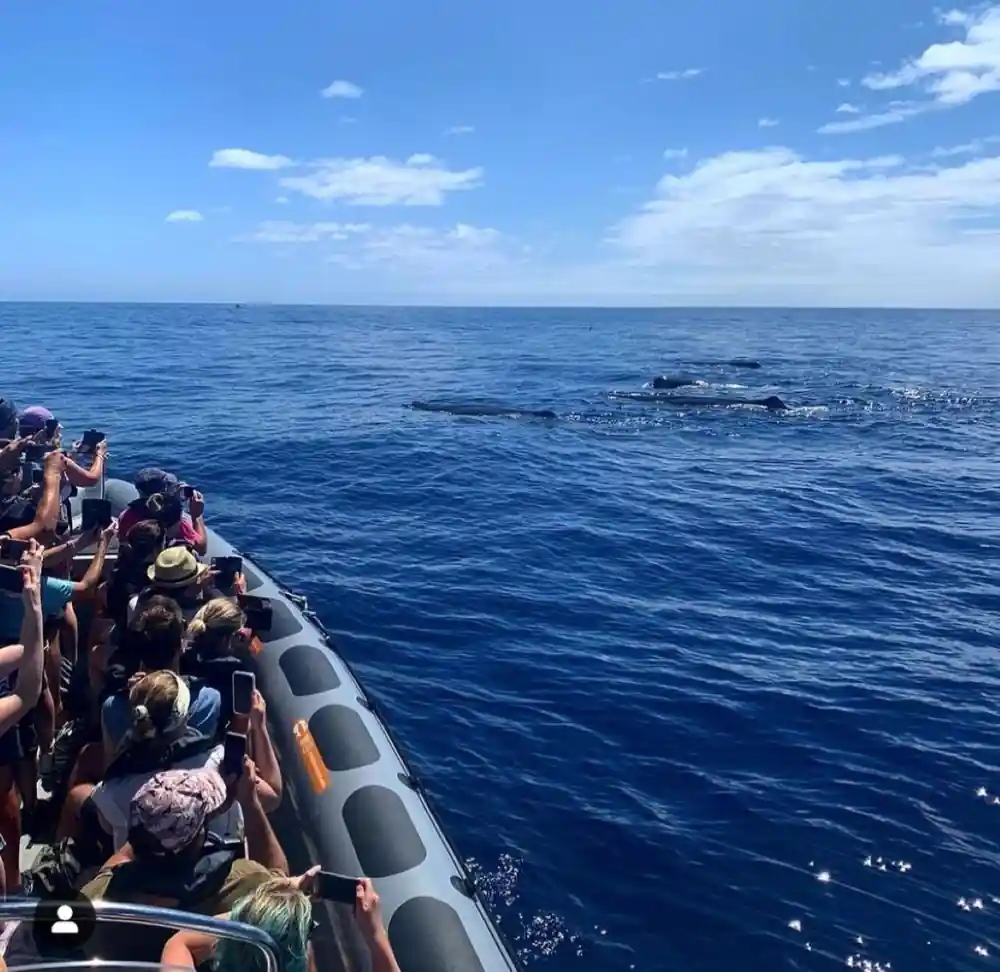
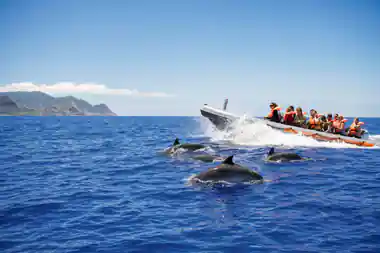
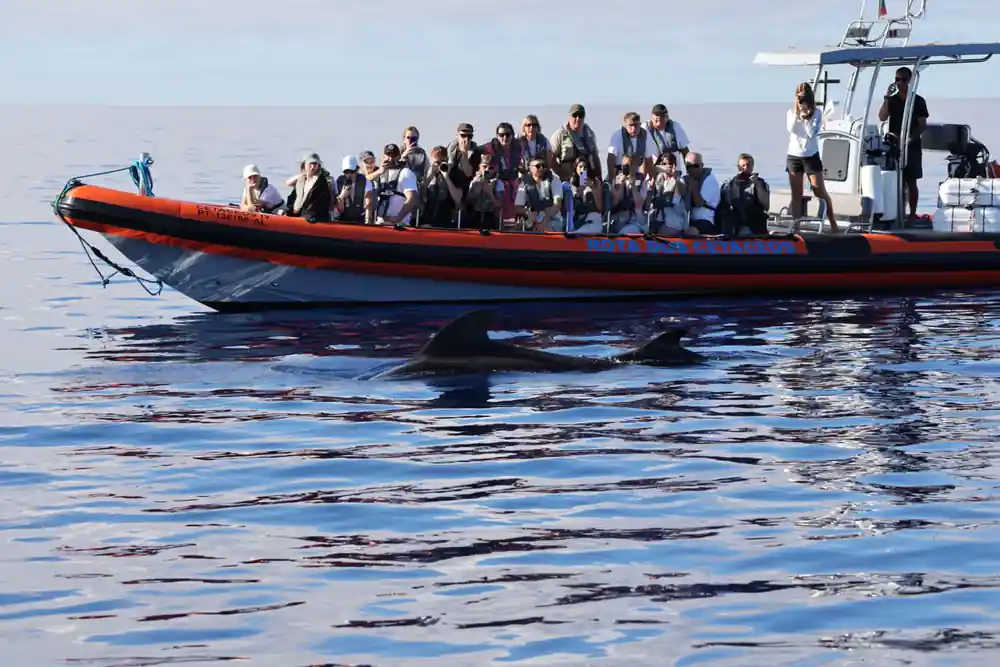
Guests in orange life jackets scan the water from a fast RIB off Madeira.
Walking down to the marina
Funchal's old town spills naturally towards the waterfront, and the marina sits within an easy walk of the main shopping streets and the seafront promenade. You will pass cafés opening their shutters, fishing boats doing their morning work and, on clear days, the steep green amphitheatre of mountains behind the city. There is no need to rush; the walk is part of the pleasure.
Wear shoes you can stand in comfortably and bring a light layer, because the breeze on the water is cooler than the air on land. If you are travelling with children, point out the boats being made ready and let the crew know you have arrived. A calm, unhurried approach puts everyone in the right mood for an outing that is about watching, not queueing.
The waterfront walk also sets the tone for what comes next. Look for the small fishing boats and the activity around the marina as the crew prepares the day's sails and engines. If you have never been on a boat like this before, the calm chat on the way down is a good time to ask yourself what you hope to see, and to decide whether you want to stay near the front or find a spot in the middle.
Taxis, driving and parking
If you are staying further up the hill, a taxi to the marina is the simplest option. Give the driver the store number or the name of the meeting point rather than just the harbour, and agree a drop-off close to the berth. Taxis are easy to find in Funchal, and the fare is usually modest for a short run down to the water.
Drivers should head for public parking near the marina and walk the final stretch to the meeting point. Spaces near the harbour fill quickly, so allow time to park and wander back. If you are meeting friends, fix a landmark rather than trying to guide them through the jetties by phone.
Whichever way you travel, leave a little earlier than you think you need to. Funchal's streets are full of character and full of traffic at certain hours, and a missed sailing is a disappointing way to start a day. If you arrive with time to spare, there is usually a café near the harbour where you can watch the boats ready themselves.
from US$62
The tour booked from this site lasts 2.5 hours with a live guide in English, French and Portuguese.[1]
When to get there
The tour from Funchal lasts 2.5 hours, with starting times you can check at the time of booking; aim to reach the meeting point well ahead of departure.[1] Sea temperatures off Funchal range from around 18°C in winter to 24°C in summer, so a light waterproof layer is useful even in the warm months.[5] You want to be settled and watching the horizon, not rushing down the jetty.
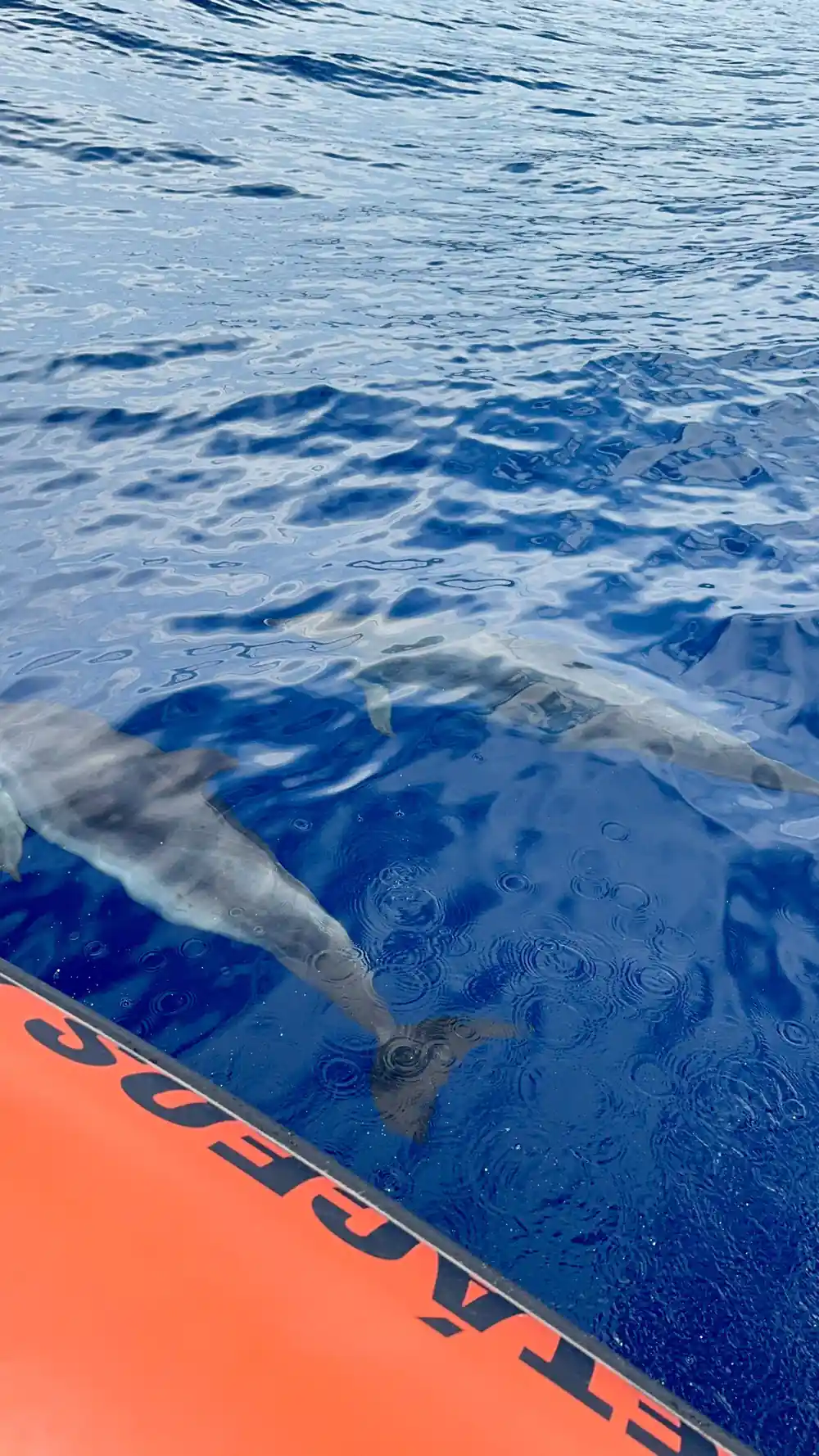
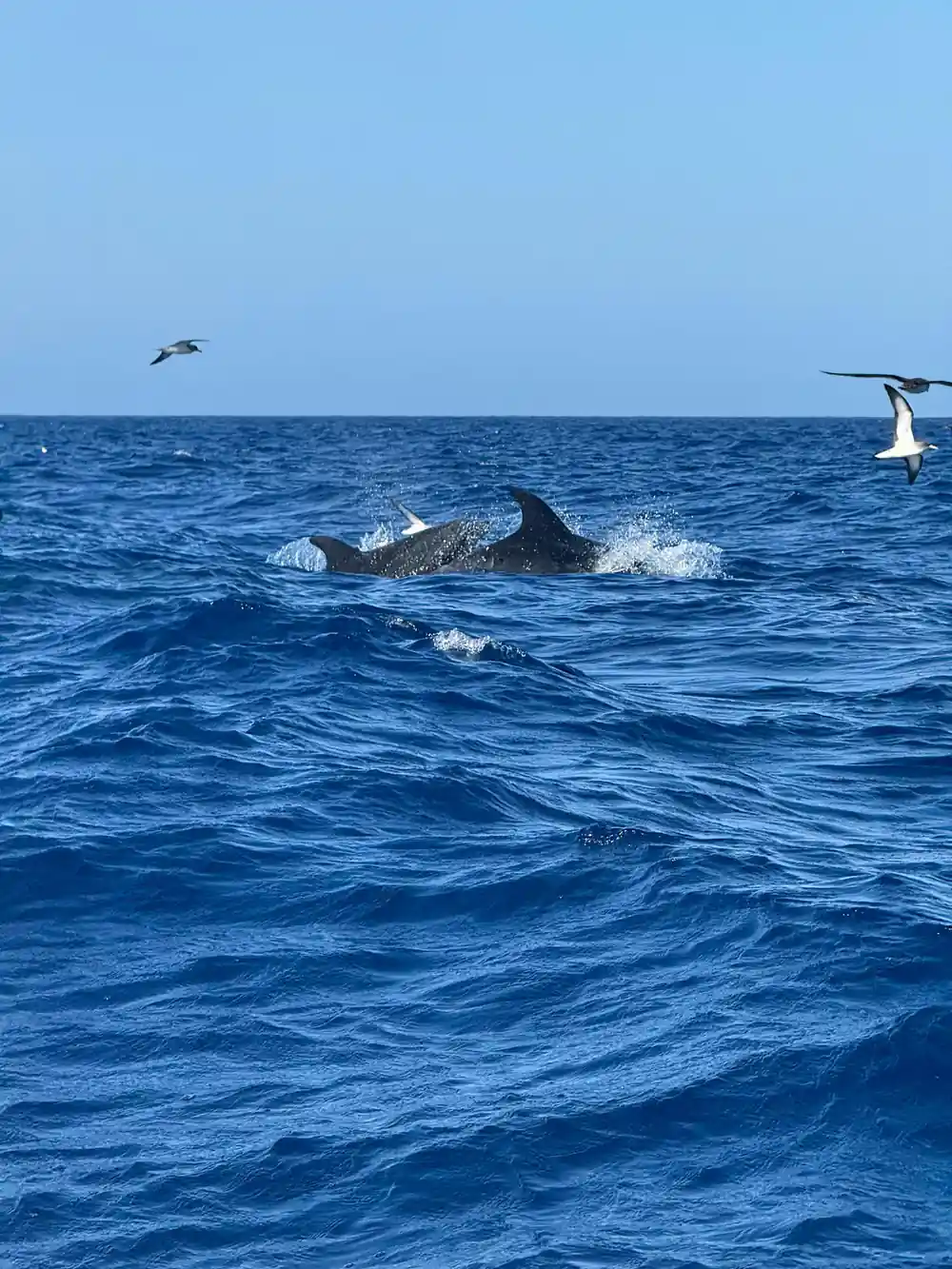
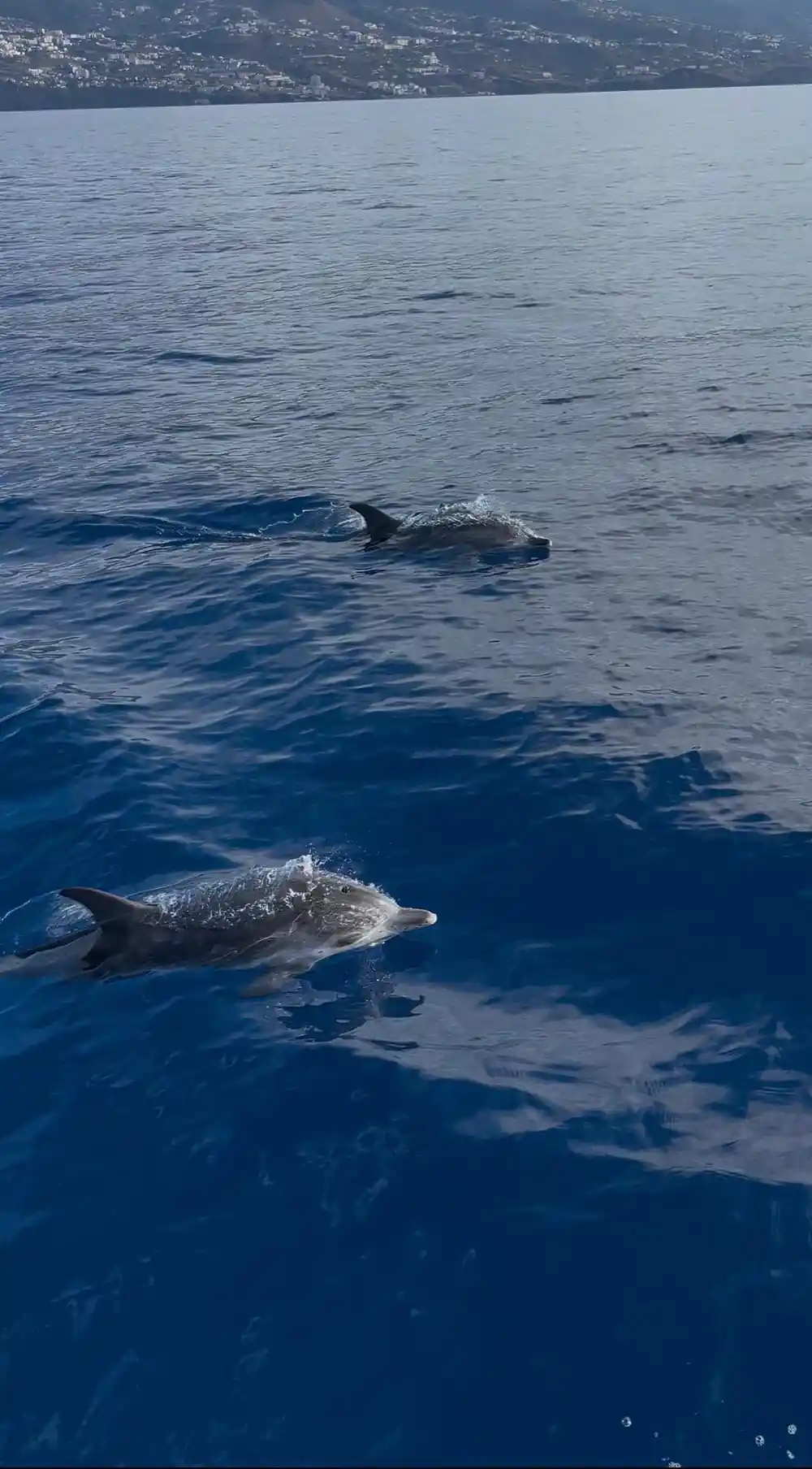
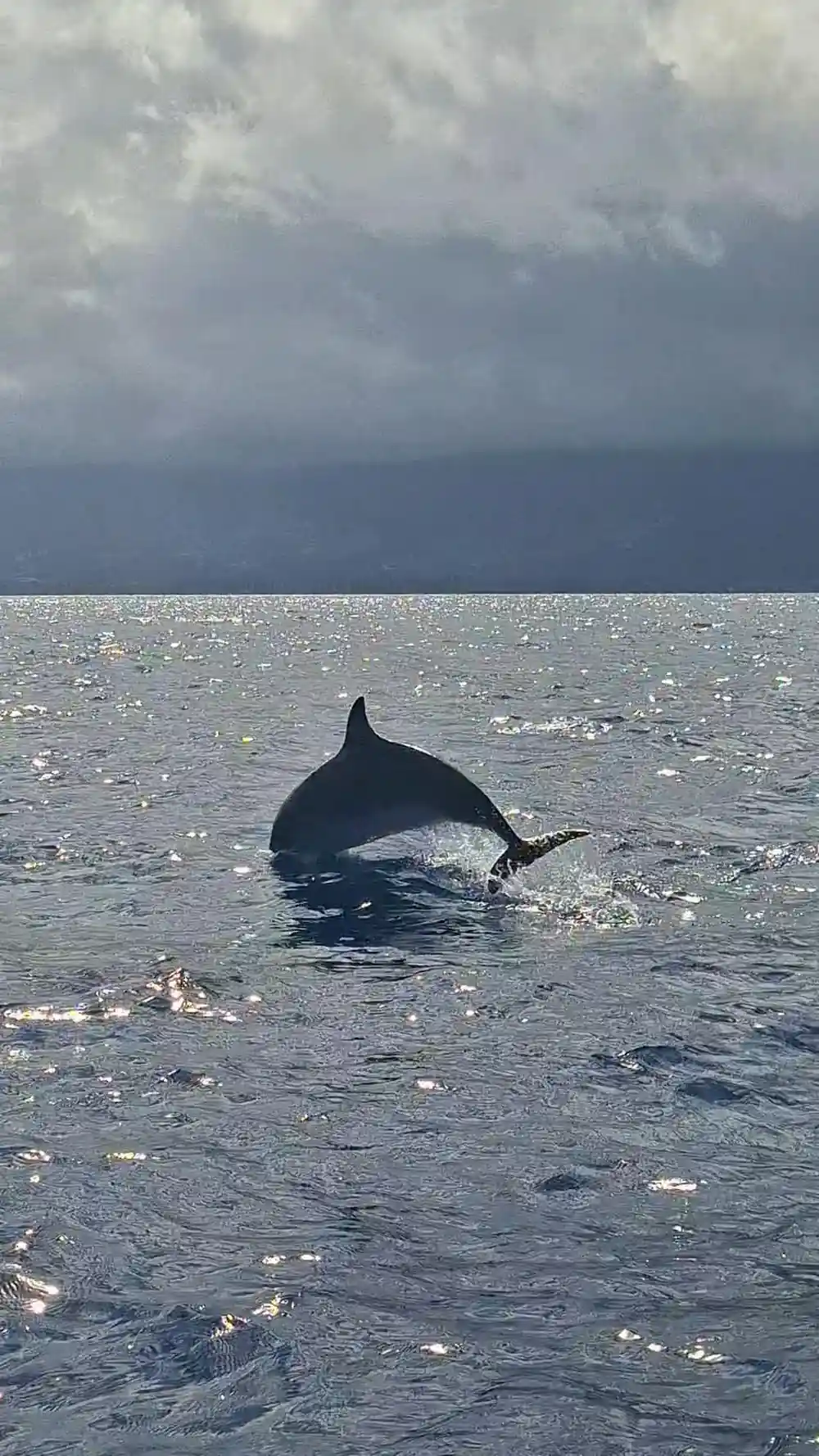
The waters around Madeira hold resident species all year: bottlenose dolphins and short-finned pilot whales are seen throughout the year, while Atlantic spotted dolphins and the occasional blue whale pass through seasonally.[2] Spotted dolphins are the most commonly encountered species on Madeira whale watching tours between March and November, and short-beaked common dolphins are frequently encountered in winter.[3][4] Any time you can go is a good time; the resident cast rarely disappoints.
Plan your clothing around the season. In the cooler months you will want a jumper under that waterproof layer, while in summer a light long-sleeved top keeps the sun off your arms without feeling heavy. Sunscreen is worth it even on cloudy days, because the breeze hides how strong the light is. A small dry bag for your phone and camera is a simple way to keep them safe.
Know the rules on the water
Madeira operates a clear code for approaching wildlife: boats must keep at least 50 meters from whales and dolphins, 25 meters from sea turtles, and reduce speed to no more than 12 knots within 300 meters and 8 knots within 100 meters.[6] The crew will keep you on the right side of these rules, so you can relax and watch.
Madeira's waters are known for their cetacean diversity: researchers have confirmed 27 species, and just five kilometres offshore the sea is more than 3,000 metres deep, allowing deep-water whales to come close to the coast.[2][8] A land-based spotter helps skippers by relaying details such as mileage and landmarks.[9]
Where you end up
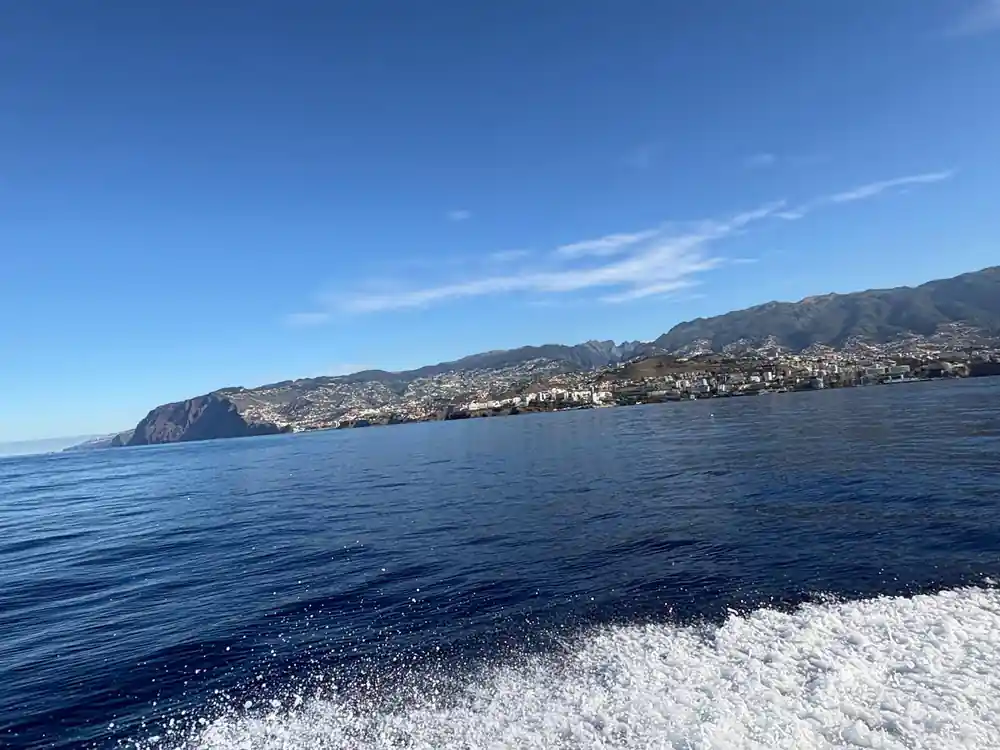
The trip returns to Funchal after 2.5 hours, so you finish where you started.[1] That is handy for lunch, a stroll through the old town or a quiet return to your hotel. On a clear day, look west towards the great sea cliff of Cabo Girão, which rises 580 metres above the Atlantic.[10]
A few things to keep in mind once you are back on land. In Madeira's waters, 27 cetacean species are confirmed, and the seafloor plunges to over 3,000 metres just five kilometres offshore, so deep-water whales can approach the coast.[2][8] Vessels keep at least 50 meters away from dolphins and whales and 25 meters away from sea turtles.[6] Bring binoculars for a closer look.
After you step ashore, the day is still young. Funchal's old town, markets and viewpoints are all close to the marina, so you can slip straight into exploring. Many travellers find that the calm of the sea stays with them for the rest of the day, and the dolphins they watched remain the highlight of their whole stay on Madeira.
Boat approach rules off Madeira
Distance and speed limits set by Madeira's responsible wildlife viewing rules.[6]
Whale and dolphin watching prices from Funchal
From-prices in US dollars from GetYourGuide tour listings.[1][11][12][13][14]
When to book
Planning your trip
Choose the tour
From Funchal: Whale and Dolphin Watching costs from US$62 and lasts 2.5 hours.[1]
Reserve now, pay later
Secure your spot by reserving now and paying later; you can cancel without charge until 24 hours before.[1]
Find the meeting point
Save the store number and the marina location before you set off.
Make your way to the marina
Walk, take a taxi or drive; allow extra time on busy days.
Board and enjoy
Listen for the live guide in English, French and Portuguese.[1]
Rebook if you are unlucky
Free rebooking is offered on this tour.[1]
Ready to watch dolphins from the harbour at Funchal?
from US$63Reserve now & pay later