The essentials
- A 2.5-hour RIB cruise from Funchal with optional dolphin swim, live guide in English, Portuguese and German, and from US$62.[1]
- A fast semi-rigid RIB that follows the Madeiran coast, with Cabo Girão Cliff among the stops.[1]
- Boats keep 50 meters from whales and dolphins, 25 meters from sea turtles, and slow to 12 knots within 300 meters and 8 knots within 100 meters.[2]
- Swimmers hold a secure rope attached to the boat at all times; free swimming away from the boat is not allowed.[3]
- Bottlenose dolphins and short-finned pilot whales are seen all year round, and Atlantic spotted dolphins are most common from March to November.[4][5]
| RIB + Dolphin Swim | Classic RIB from Funchal | VMT Dolphin Watch | |
|---|---|---|---|
| From | from US$62[1] | from US$62[6] | from US$46[7] |
| Duration | 2.5 hours[1] | 2.5 hours[6] | 3 hours[7] |
| Live guide | English, Portuguese, German[1] | English, French, Portuguese[6] | English, Portuguese[7] |
| Cancellation | Free up to 24 hours[1] | Free up to 24 hours[6] | Free up to 24 hours[7] |
| Traveller rating | rated 4.71 from 471 reviews[1] | rated 4.70 from 2,070 reviews[6] | rated 4.20 from 1,590 reviews[7] |
Swimmers must always remain attached to the boat by holding a secure rope. Free swimming away from the boat is not allowed.
Our pick for a responsible dolphin swim from Funchal
Read before booking
- Book the RIB Whale Watching Cruise and Optional Dolphin Swim
- Reserve now and pay later
- Free cancellation if plans change
- Plan the tour as a morning or afternoon activity
On the water
- Meet the boat in Funchal
- Live guide in English, Portuguese and German
- Wear sunscreen and a windproof layer
- Hold the secure rope during the dolphin swim
Swimming with Dolphins Madeira: The Wild Version
Madeira is not a marine park, and that is exactly the appeal. The island rises steeply from the Atlantic, and just five kilometres off the coast the ocean can be more than 3,000 metres deep, which is why deep-water whales can come close to shore.[8] The drop-off is visible from the water: turquoise shallows give way to deep blue within minutes, and the same walls that make the island so dramatic continue below the surface. Researchers have confirmed 27 species of cetaceans in Madeira's waters, equivalent to almost a third of the planet's known species.[4]
For visitors, the practical way to meet them is on a boat trip with an optional swim. The tour we recommend is the Funchal: RIB Whale Watching Cruise and Optional Dolphin Swim, a 2.5-hour cruise with a live guide in English, Portuguese and German and prices from US$62.[1] The RIB is a fast semi-rigid boat, so you cover more coastline than you would on foot and you feel the sea beneath you. Before the engine settles into a cruise, you are already looking for fins in the chop. Swimming with dolphins in Madeira is never a free-for-all: swimmers must always remain attached to the boat by holding a secure rope, and free swimming away from the boat is not allowed.[3]
Meet Madeira's Dolphins and Whales
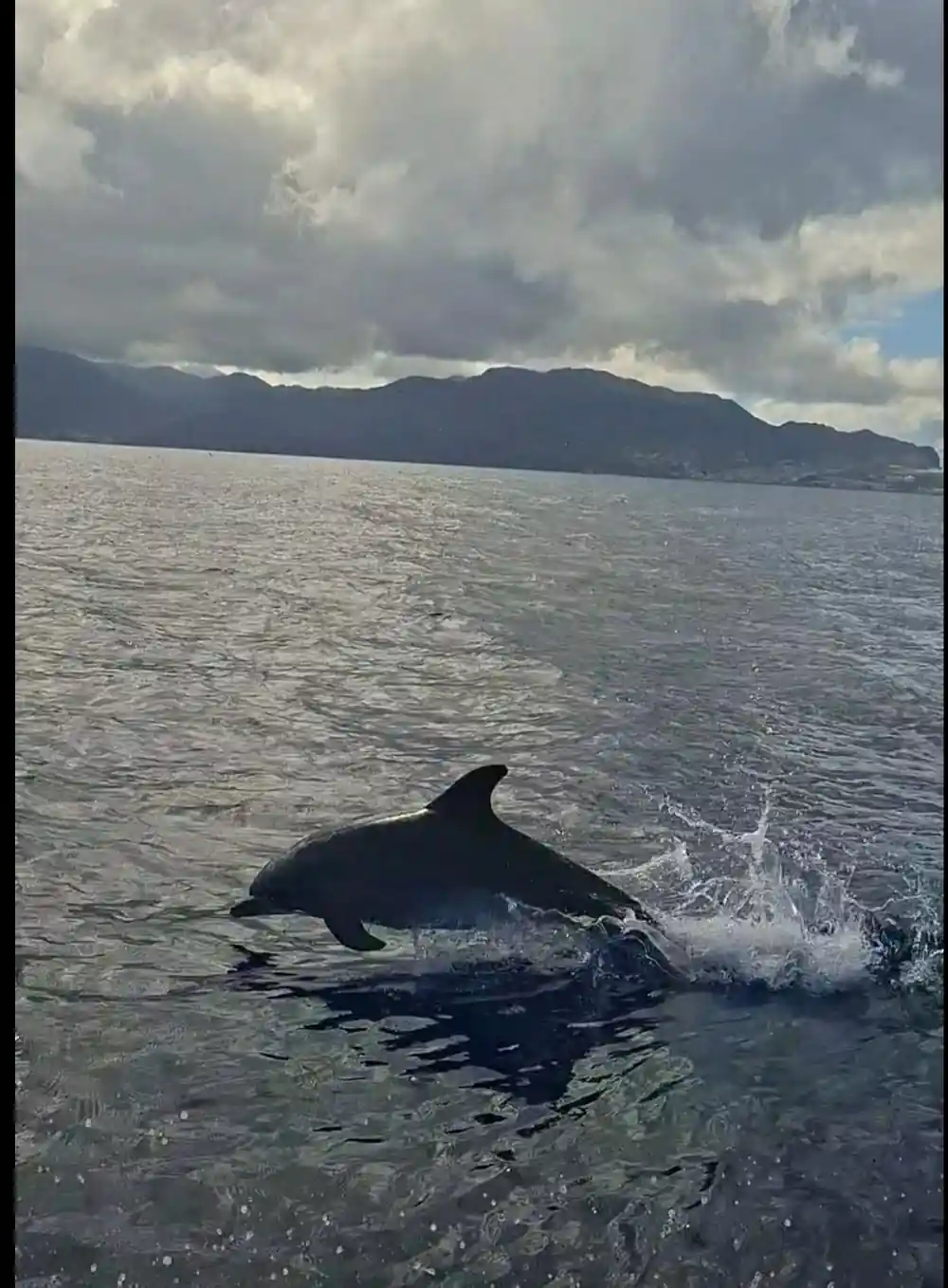
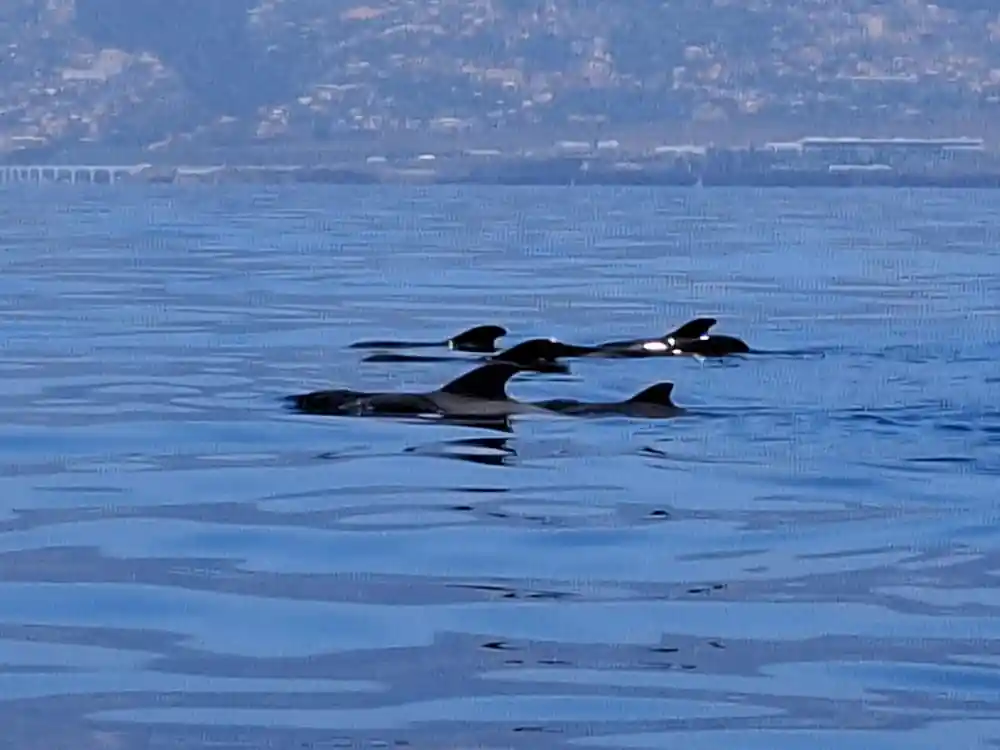
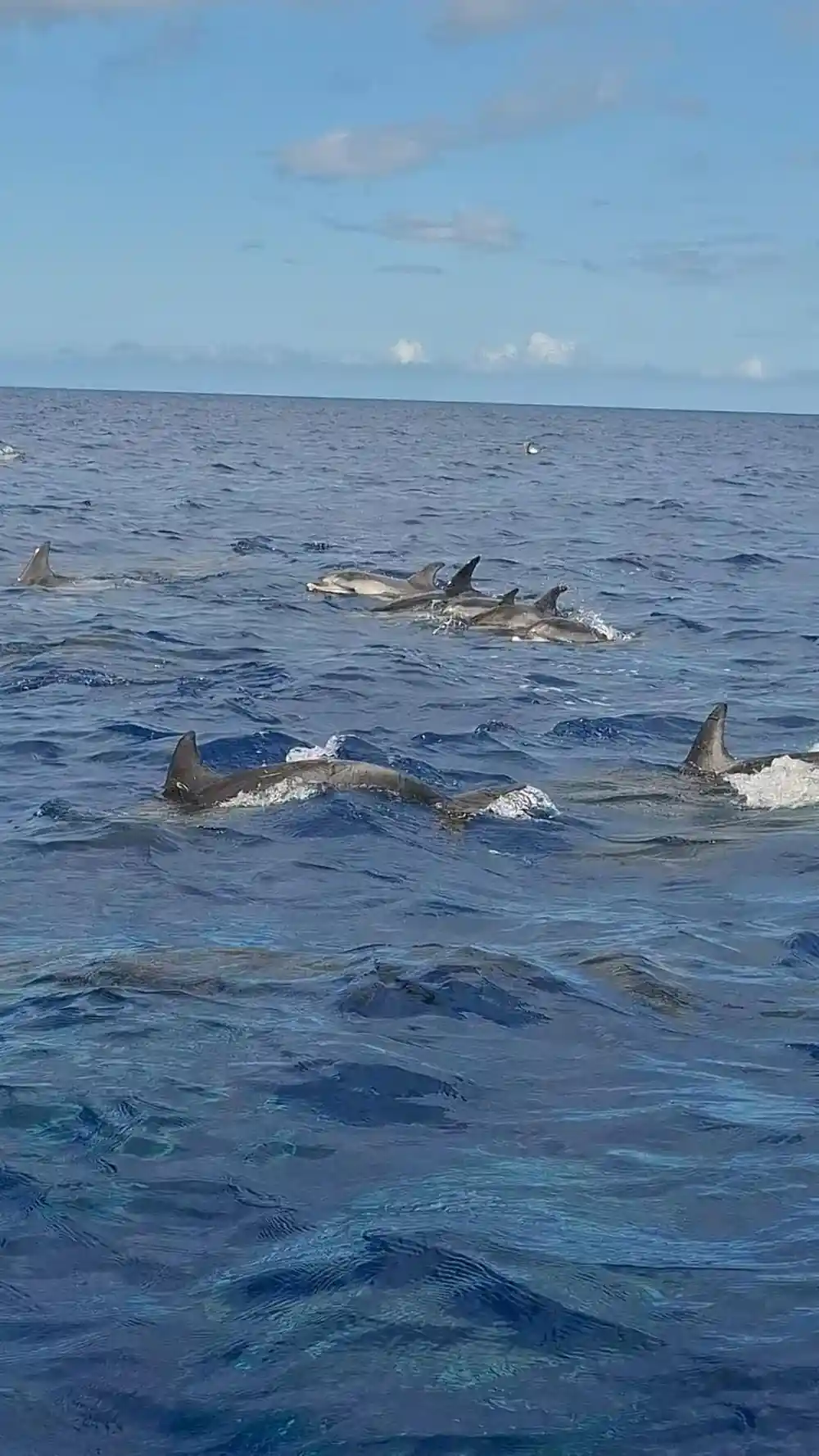
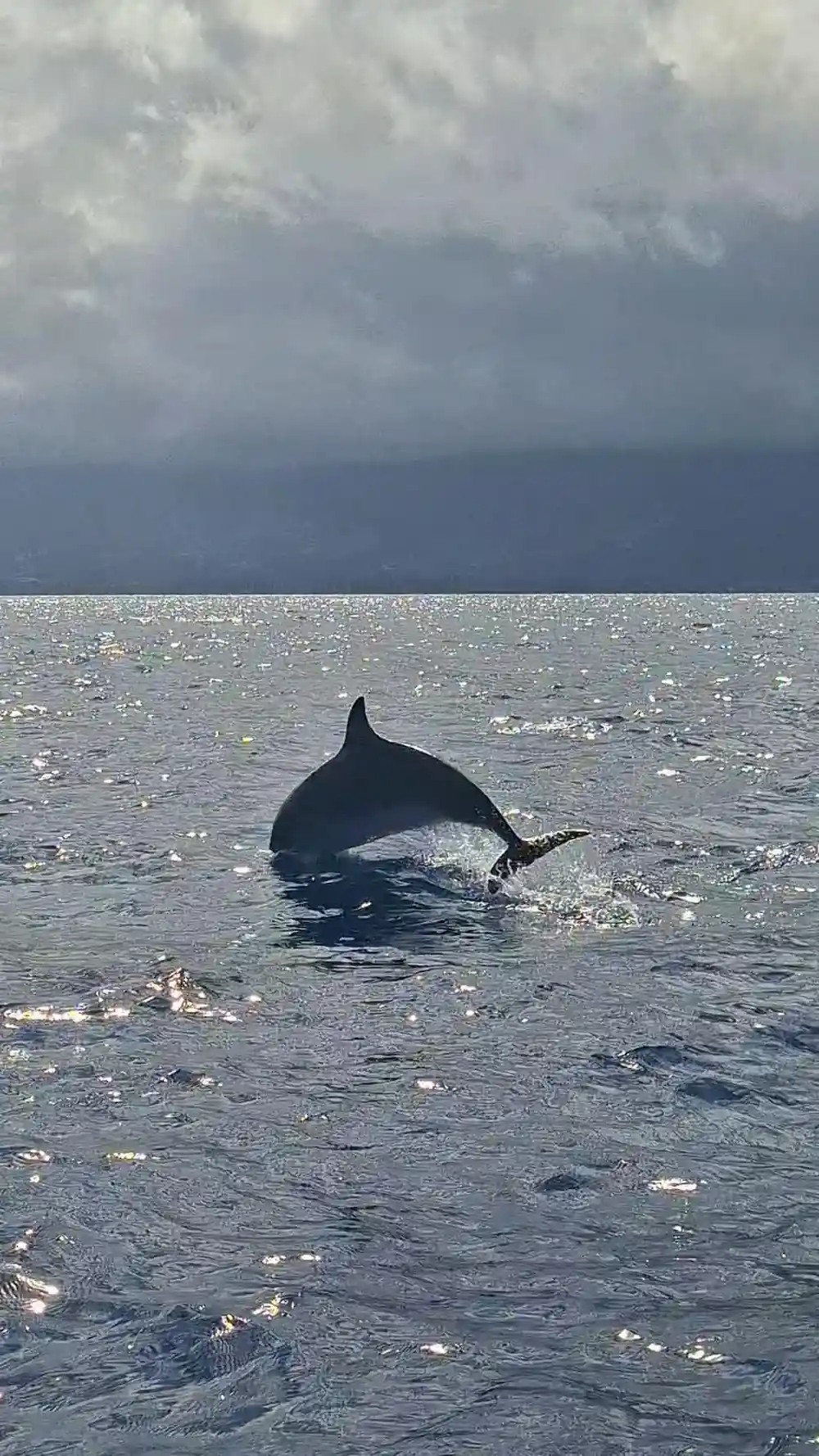
The resident cast is excellent. Bottlenose dolphins and short-finned pilot whales are seen all year round, while Atlantic spotted dolphins and occasional blue whales are seasonal visitors, and orcas and humpback whales are rarely seen.[4] That makes the waters around Madeira genuinely wild. Some days you watch a pod riding the bow wave; other days a pilot whale surfaces so close you can hear its breath. The guides know the regulars, but every encounter is dictated by the animals themselves. There is no dolphinarium here, no performance schedule, and that is the point.
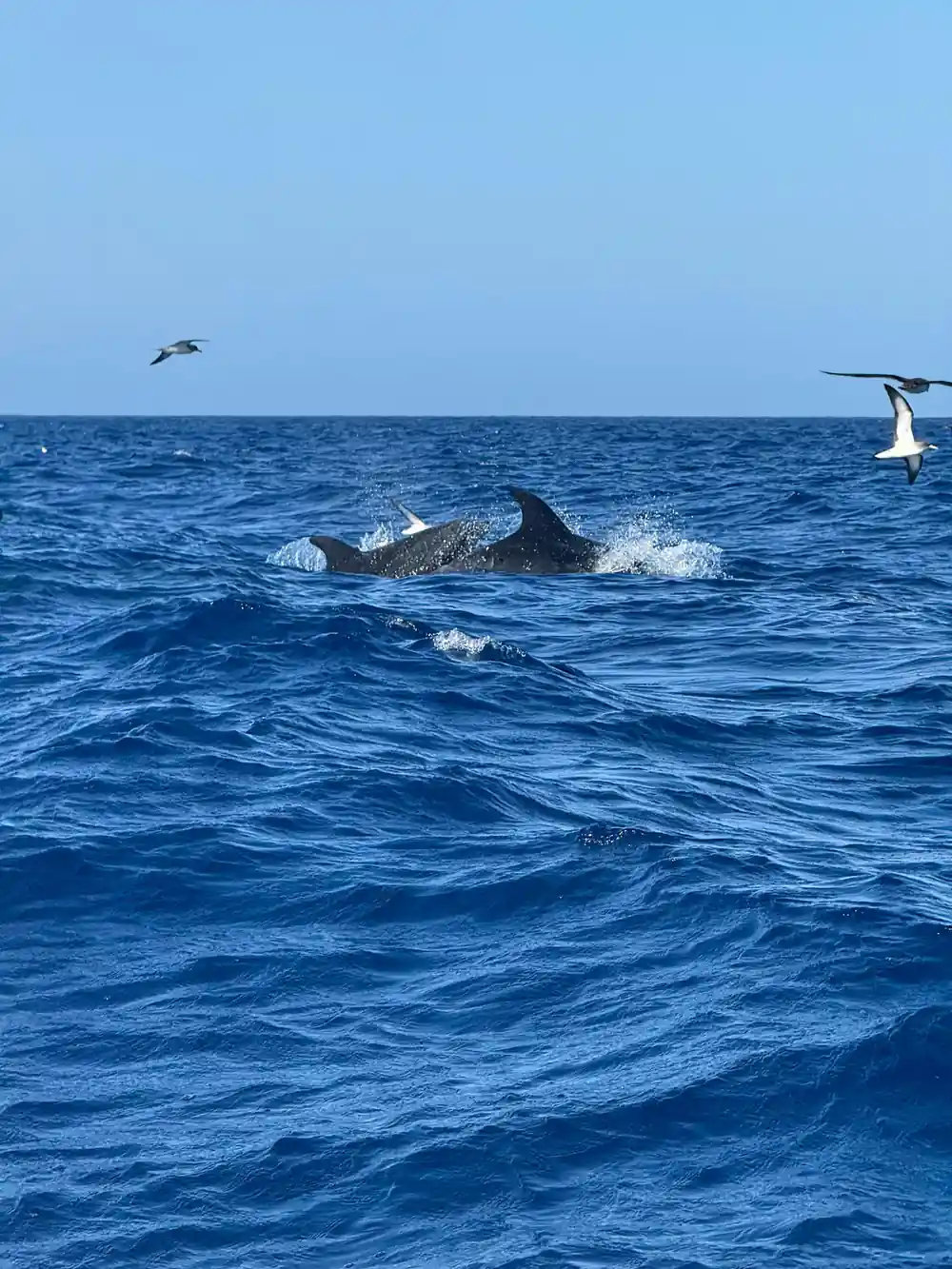
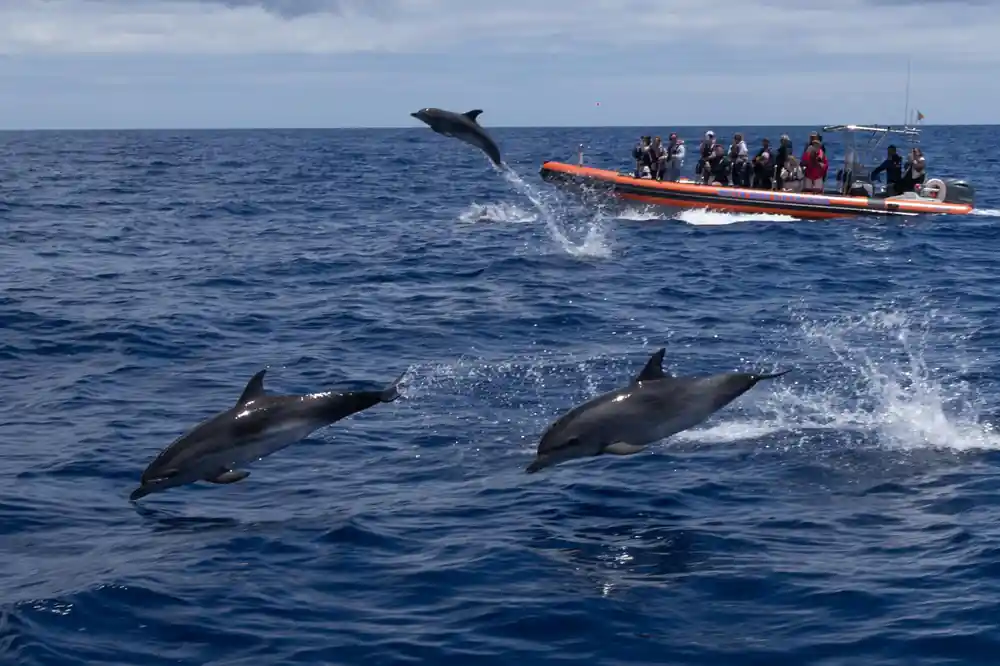
Atlantic spotted dolphins are a common transient species during the summer months and are the most commonly encountered species on Madeira whale-watching tours between March and November.[5] In winter, short-beaked common dolphins join the residents and are at their strongest from December.[9] You might also see rare visitors, though orcas and humpback whales are not something any operator can promise.[4] The guide can point out behaviour you might miss; this tour has live commentary in English, Portuguese and German.[1]
A good way to prepare is to look at the species list before you board. Bottlenose dolphins are the most familiar, with their curved dorsal fins and constant social chattering; pilot whales travel in tight family groups and are often seen resting at the surface.[4] If you are visiting between March and November, Atlantic spotted dolphins may show off with aerial leaps, while winter months belong to the fast-moving short-beaked common dolphins.[5][9]
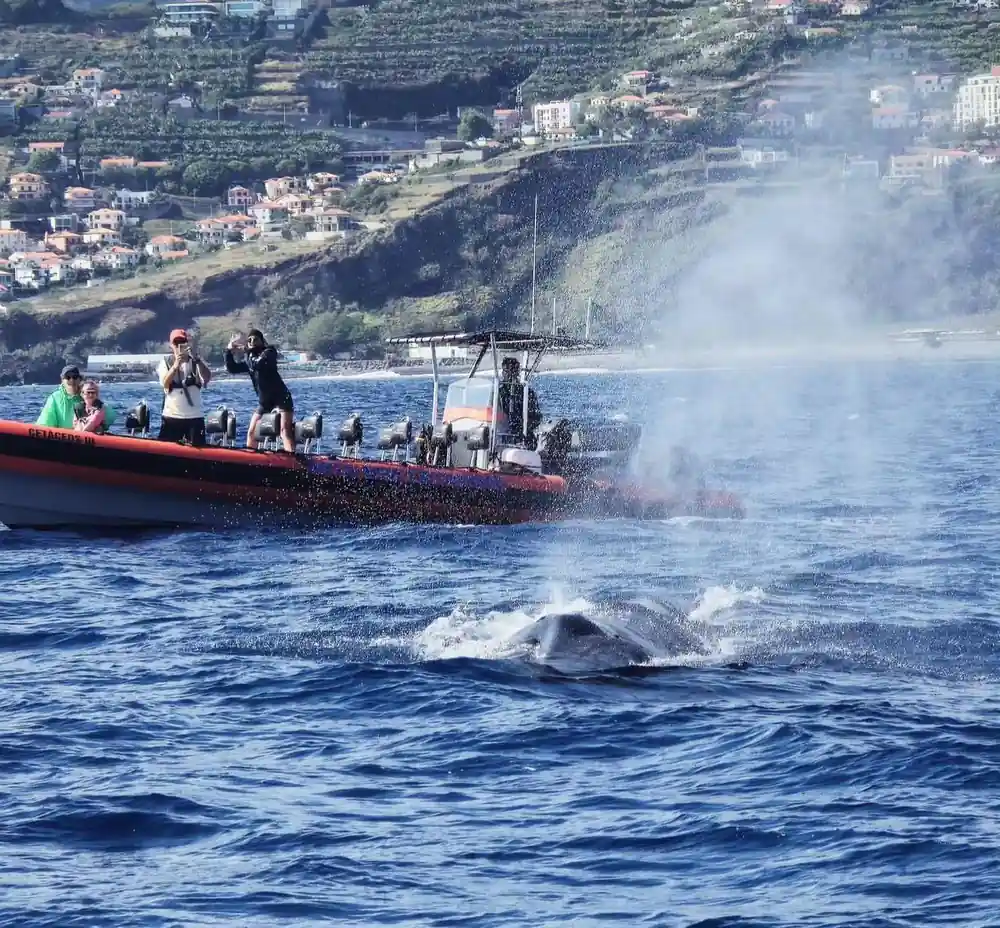
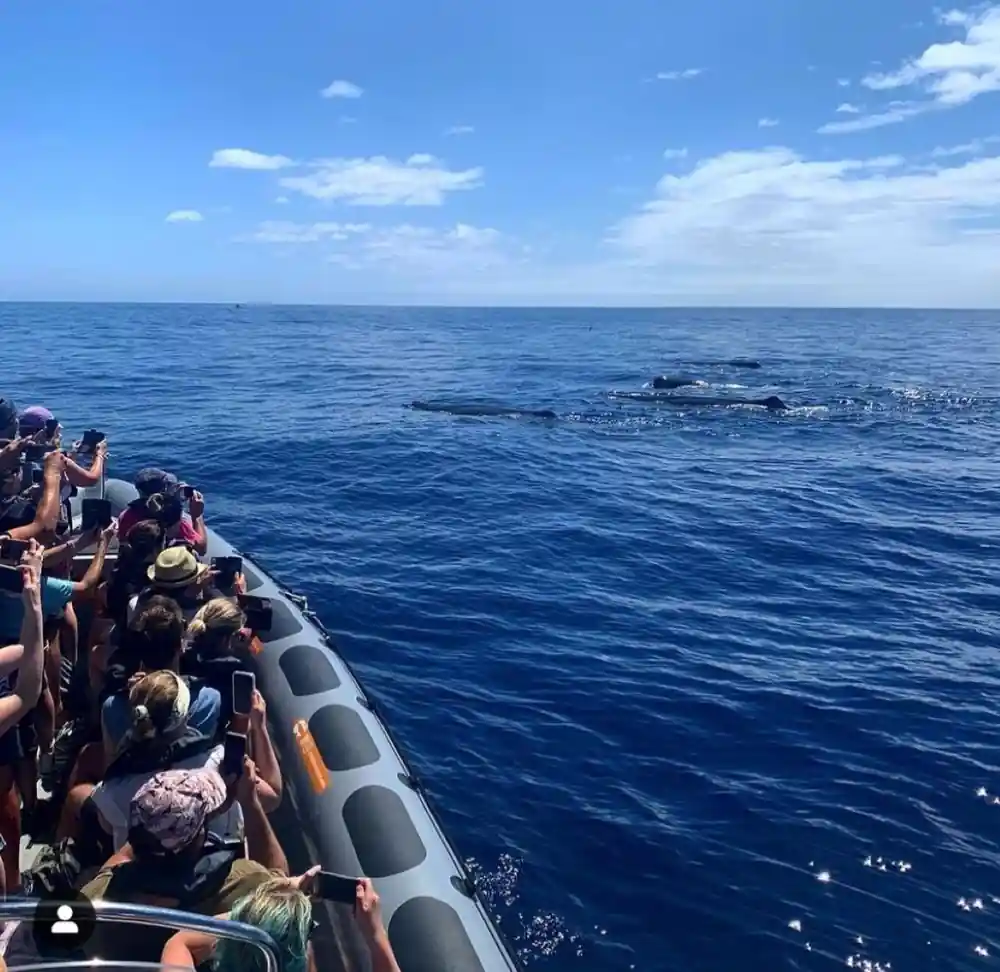
A fast RIB full of guests passes a green volcanic headland while everyone scans the water for fins.
The RIB Tour and Optional Dolphin Swim
The tour starts from Funchal and follows the Madeiran coast, with Cabo Girão Cliff listed among the stops.[1] Cabo Girão is a serious landmark: the sea cliff is 580 metres high, according to the official Madeira tourism board.[10] From the water, the cliff looks even taller, with green terraces clinging to its face and scattered houses far above the surf. It is a beautiful backdrop for a whale watch, and it gives you a sense of how small a boat is against the island.
The trip lasts 2.5 hours, and the booking includes reserve now and pay later, free rebooking, and free cancellation up to 24 hours in advance for a full refund.[1] Skipping the line through a separate entrance can save time at the dock.[1] When conditions allow, the optional dolphin swim is the headline. You enter the water while holding the rope attached to the boat; this is how the operator keeps the encounter safe for people and animals.[3] Do not expect to chase dolphins through open water. The format is closer to a guided, respectful meeting on their terms, with the RIB acting as a secure base.
Responsible Whale Watching in Madeira
Madeira has clear rules to protect the animals. Boats must keep a minimum distance of 50 meters from whales and dolphins and 25 meters from sea turtles. Speeds must be gradually reduced, no more than 12 knots within 300 meters and 8 knots within 100 meters.[2] These distances mean you watch from a respectful distance, which is better for the animals and often better for you. A whale that is not stressed is more likely to stay around long enough for everyone to get a good look.
Those rules are enforced in spirit as well as on paper. A land-based spotter guides whale-watching boats by relaying details such as mileage and landmarks to the skippers, so boats can head straight to the animals without unnecessary searching.[11] The south coast, where most trips run, is usually calmer because it lies in the rain shadow of the mountains and the trade winds arrive in a weakened form.[12] That calmer water is easier for wildlife watching and more comfortable for swimmers. Madeira's whaling industry lasted from 1941 until 1981, when it voluntarily stopped, and today the focus is on seeing the animals alive and in the wild.[13]
You can help by following the crew's instructions, keeping noise down near the animals and staying seated while the boat is moving. The same respect applies to the swim: hold the rope securely, do not let go, and let the dolphin decide how close it wants to come.[3]
from US$62
Reserve a RIB cruise from Funchal with a live guide and the option to swim with dolphins under Madeira's responsible wildlife rules.
When to Go and What to Bring
With resident species present all year, there is no bad month for a tour. The real question is which extras you want: Atlantic spotted dolphins are most commonly encountered between March and November, and short-beaked common dolphins are at their strongest from December.[5][9] If you are flexible, book a multi-day stay and take your trip on the day the sea looks calmest. The crew wants good sightings as much as you do, and conditions can change from morning to afternoon.
Sea temperatures off Funchal range from 19°C in winter to 24°C in summer.[14] In winter you will want a wetsuit or a hardy attitude for the swim; in summer the water is more forgiving. On deck, a windproof layer makes a difference even on sunny days. Pack sunscreen, a hat, seasickness tablets if you usually need them, and a small dry bag. Leave valuables ashore. If you plan to swim, have your swimsuit on under your clothes so you can slip into the water quickly when the crew gives the word.
For photographers, a lens with a bit of reach is useful, but a phone in a waterproof case can be enough when dolphins come to the bow. Small cameras are easier to manage on a RIB than a large DSLR, and you will want both hands free. Ask the crew where they prefer you to sit; a balanced boat is a safer boat.
Alternatives to the RIB: Catamarans and Sailing
The RIB is not the only way to watch whales from Funchal. The classic From Funchal: Whale and Dolphin Watching tour also lasts 2.5 hours, costs from US$62 and has a live guide in English, French and Portuguese.[6] The VMT Dolphin and Whale Watching Tour from Funchal is another option, with a 3-hour duration and prices from US$46.[7] You can compare dates, languages and prices in the table on this page, then choose the boat that matches your style.
A catamaran gives a steadier, more spacious platform, which suits families and anyone prone to seasickness. A sailing boat offers a slower, more traditional feel. A RIB is smaller and quicker, which means the boat can respond fast when a pod is spotted. The right choice depends on your group and your tolerance for motion. If your goal is a swim, choose the tour that includes it as an option.[1] Whichever boat you choose, the animals are always in charge; guides follow the same local rules and give you the best chance of a memorable encounter.
If you have a free day, you could combine a boat trip with a tuk-tuk tour of Funchal or a levada walk, but for a wildlife-focused trip the sea is the priority. The tours above all depart from Funchal, which makes it easy to add a dolphin watch to a wider Madeira itinerary.
Planning Your Booking
When you are ready to book, the key details are straightforward. The RIB trip from Funchal is priced from US$62, lasts 2.5 hours and is led by a live guide in English, Portuguese and German.[1] You can reserve now and pay later, and cancel free of charge up to 24 hours in advance for a full refund.[1] That gives you room to keep plans flexible, especially if you are travelling with children or watching the weather forecast.
Use the booking widget to check starting times for your travel dates. If your plans are uncertain, free rebooking is a useful safety net.[1] Arrive at the meeting point with time to spare, wear your swimwear under comfortable clothes if you plan to take the optional swim, and keep your expectations flexible. Wildlife is wild. On a good day you will remember the moment a dolphin surfaced beside the RIB for a long time. On a quiet day, the cruise along Madeira's coast and the sight of Cabo Girão rising above you are still a fine way to spend time on the Atlantic.
Tour duration
Duration values: 2.5 hours[1], 2.5 hours[6], 3 hours[7], 3 hours[15], 3 hours[16].
Compare from-prices
From-prices: US$62[1], US$62[6], US$46[7].
When to book your dolphin swim
How to book your dolphin swim
Choose your tour
Pick the RIB Whale Watching Cruise and Optional Dolphin Swim from Funchal. The trip lasts 2.5 hours and costs from US$62.[1]
Check your date
Availability varies with season and sea conditions, so use the booking widget to see starting times and live guide languages.[1]
Reserve now, pay later
You can reserve now and pay later, and cancel free of charge up to 24 hours in advance for a full refund.[1]
Pack for the sea
Bring swimwear, sunscreen, a windproof layer and any seasickness tablets you normally use.
Meet in Funchal
The tour departs from Funchal and heads out along the Madeiran coast. Listen to the safety briefing before boarding.[1]
Follow the swim rules
If you choose the dolphin swim, stay attached to the boat by holding a secure rope; free swimming away from the boat is not allowed.[3]
Book the RIB Whale Watching Cruise and Optional Dolphin Swim from Funchal
from US$62